
Palestinian history
How Britain Helped Create Israel: Balfour and the Mandate
How the Balfour Declaration, British rule, the Arab Revolt and immigration restrictions shaped Palestine and Israel's establishment in 1948.
Britain helped create the conditions for Israel's establishment by endorsing a Jewish national home in 1917, governing Palestine under a Mandate that supported immigration and settlement and giving Zionist institutions an official role. It also suppressed Palestinian resistance to that policy. Britain did not create Israel through a single decree: its policy later changed, and the state emerged in 1948 amid British withdrawal and war.
The people affected included Palestinian families seeking independence and Jewish immigrants seeking safety from persecution. British ministers made decisions about their future without securing an agreed political settlement. Our video follows those decisions and their consequences. For the towns, trade and communities that preceded the war, read Palestine before 1948.
What did the Balfour Declaration promise?
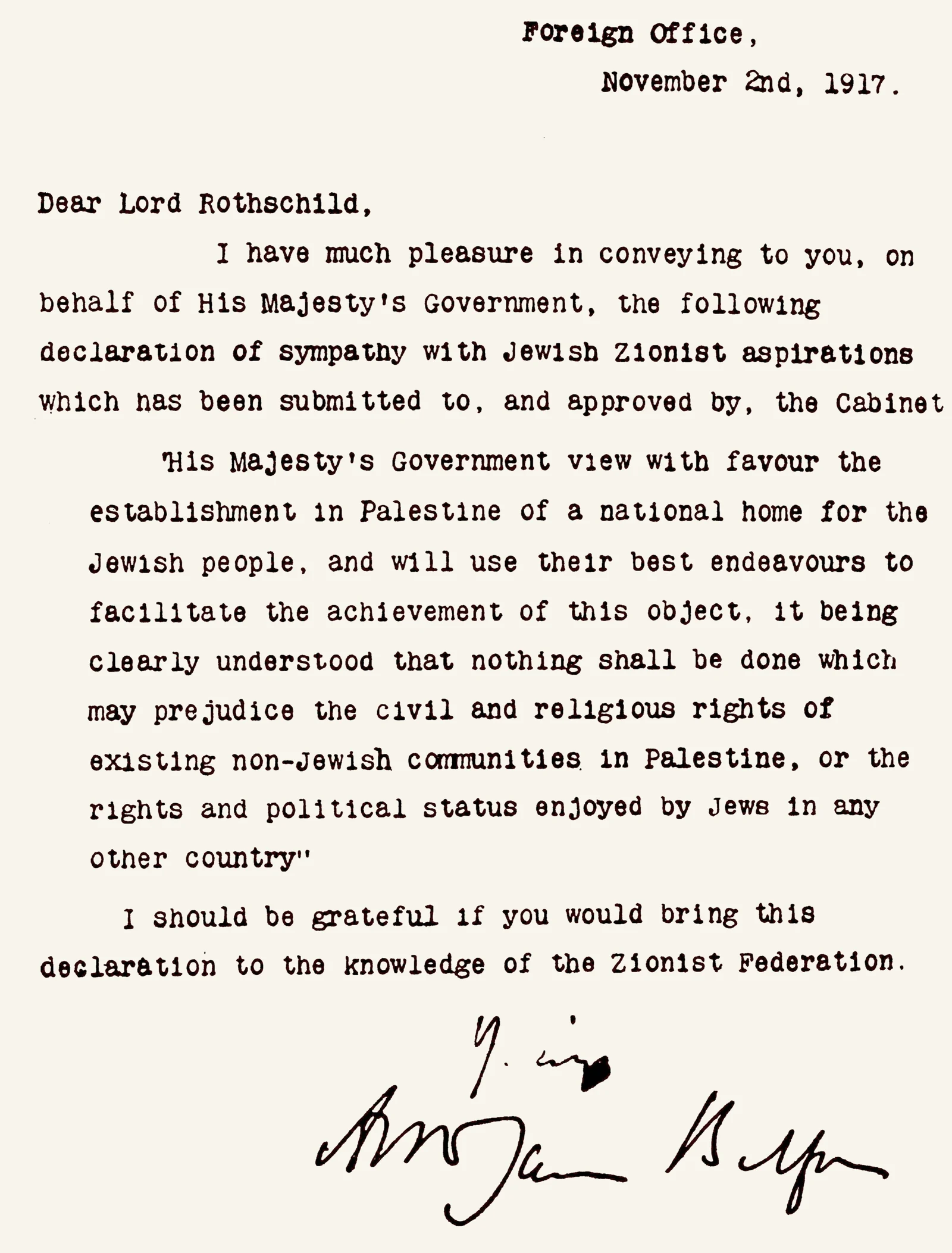
On 2 November 1917, Foreign Secretary Arthur Balfour sent Lord Rothschild a letter conveying a policy approved by the British Cabinet. Its central commitment was support for a Jewish national home in Palestine. Balfour asked Rothschild to communicate the declaration to the Zionist Federation. The original text makes clear that this was a government commitment, rather than a private agreement between two men.
The declaration included safeguards for the civil and religious rights of the existing non-Jewish communities in Palestine. It also protected the rights and political status of Jews in other countries. But it did not recognise a corresponding national right for Palestine's Arab majority. Nor did it ask that population to approve the proposed national home.
The wording left crucial questions unanswered. It specified neither borders nor a timetable for statehood. It did not transfer ownership of individual homes or farms. Its immediate significance was diplomatic: Britain had committed itself to promoting a national project in a country it did not yet govern.
Why did Britain make the declaration in 1917?
The First World War shaped the decision. Britain was fighting the Ottoman Empire in the Middle East, and British officials considered how a declaration might advance their wartime and imperial interests. The National Army Museum identifies both those regional interests and a desire to win Jewish support for the British war effort among the motivations.
These hopes were calculations by British policymakers. They should not be mistaken for evidence that Jewish people held a single political view. Zionism was a movement advocating a Jewish national homeland, not a synonym for every Jewish community or individual.
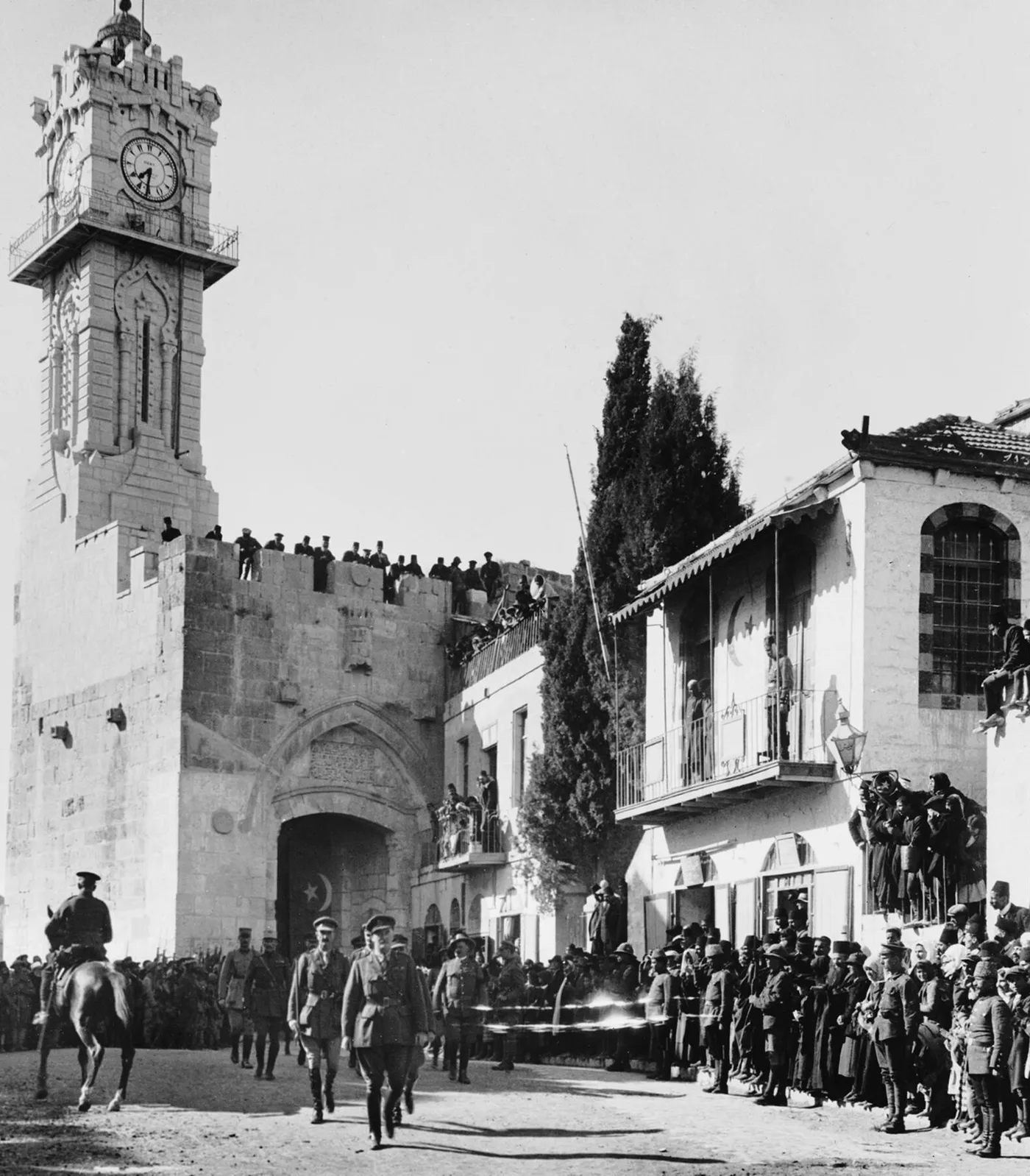
Britain had also exchanged assurances with Arab leaders about independence during the war. Those commitments and the Balfour Declaration left competing expectations about the future of former Ottoman territories. When General Edmund Allenby entered Jerusalem in December 1917, military conquest had put Britain in a position to make policy on the ground. It had not resolved those competing national claims.
How did the British Mandate put Balfour into practice?
The Palestine Mandate, approved by the League of Nations in 1922, incorporated the national-home commitment into the terms of British administration. Article 1 gave Britain legislative and administrative powers. Article 2 required conditions supporting the Jewish national home and the development of self-governing institutions, alongside safeguards for inhabitants' civil and religious rights.
Article 4 gave a recognised Jewish agency a role in advising and cooperating with the administration. Article 6 required Britain to facilitate Jewish immigration under suitable conditions and encourage settlement, while protecting the rights and position of other sections of the population. The Mandate also provided for citizenship legislation facilitating naturalisation for Jews settling permanently in Palestine.
These provisions connected diplomatic support to practical government. Immigration, settlement and institutional development were now responsibilities of the administering power. Palestinians lived under that administration without achieving the independent national government they sought. The promise of self-governing institutions coexisted with Britain's power to decide the country's direction.
Why did Palestinians revolt against British rule?
The Arab Revolt of 1936 to 1939 challenged British rule and Jewish immigration and settlement. It included a general strike and armed rebellion. Insurgents attacked British officials and forces, Jewish communities and Palestinians associated with the government. Britain responded with a large military campaign.
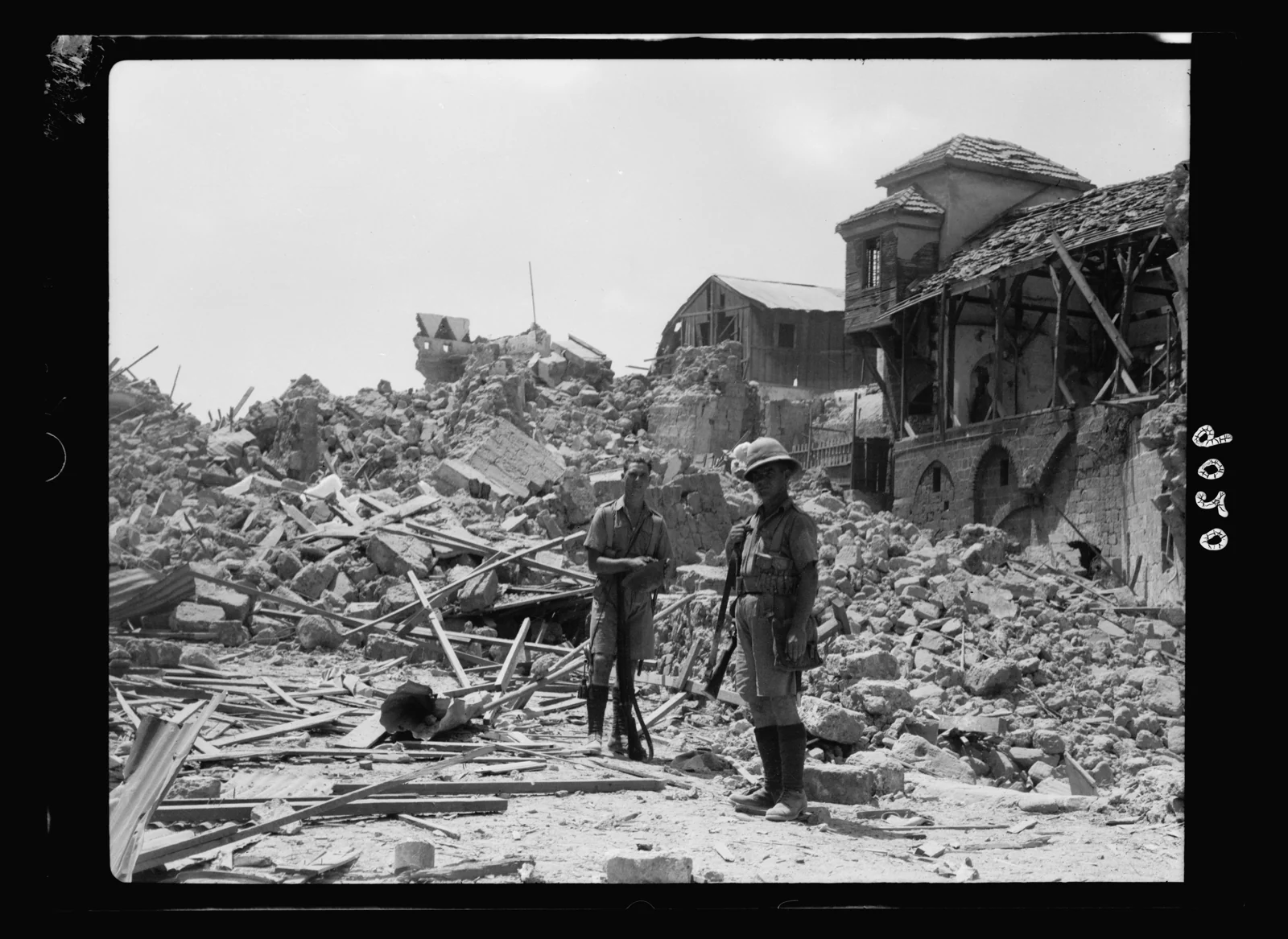
Demolition became one instrument of control. On 24 June 1936, MP Willie Gallacher challenged the government over the destruction of houses in Jaffa. Colonial Secretary William Ormsby-Gore acknowledged that Royal Engineers had demolished buildings with explosives. He defended the operation as necessary for roads through the old city and said inhabitants had been warned and accommodation arrangements made. Gallacher challenged that account of the operation's effects. Their Commons exchange records both the government's admission of demolition and the dispute over its conduct.
The photograph at the top of this article shows the wreckage of houses in Jaffa in 1936. It comes from the Matson collection. These ruins preceded the 1948 war by twelve years.
What happened at al-Bassa in 1938?
British repression included abuses beyond the measures ministers defended in public. Historian Matthew Hughes's study of the suppression of the revolt draws on British military and police material, private correspondence and Palestinian accounts. It documents torture and lethal reprisals.
At al-Bassa in September 1938, British troops carried out punitive attacks after a mine killed soldiers nearby. Hughes describes the burning of the village and an incident in which men were forced onto a bus that was then driven over a mine placed by British soldiers. Survivors were compelled to collect and bury the bodies.
The accounts differ over the number killed and the sequence of events. The central allegation is supported by British police testimony and correspondence as well as Palestinian material. This was a deliberate reprisal against people in British custody.
Such violence helped enforce the administration against which Palestinians had rebelled. British responsibility involved the conduct of soldiers and police as well as declarations issued in London.
Why did Britain restrict Jewish immigration in 1939?
British policy did not remain fixed. The White Paper of May 1939 explicitly rejected making Palestine a Jewish state against the wishes of its Arab population. It proposed an independent Palestine within ten years, with Arabs and Jews participating in government.
The paper allowed for 75,000 Jewish immigrants over five years, subject to stated conditions, then made further immigration dependent on Arab acquiescence. It also proposed powers to restrict land transfers. Britain argued that its obligations to the national home did not require unlimited immigration against Palestinian opposition.
For Jews threatened by Nazi persecution, these restrictions could close an escape route. The United States Holocaust Memorial Museum describes the severe obstacles facing people trying to leave Europe, including limits on entry to Mandatory Palestine. After the Holocaust, many survivors still lacked a secure home and sought a future outside Europe.
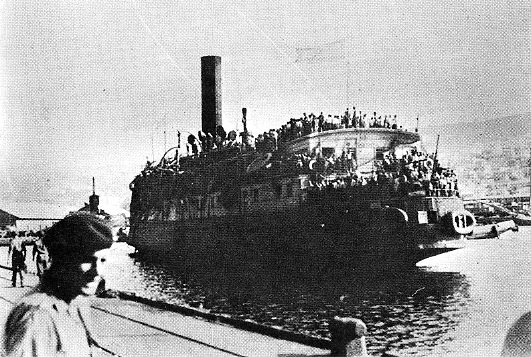
The refugee ship Exodus became part of that postwar struggle over entry. Britain's earlier support for a national home and its later enforcement of immigration restrictions belonged to the same administration. Calling Britain Israel's uninterrupted sponsor would erase that change and the refugees harmed by it.
How did British rule end in Palestine?
Britain faced armed opposition from Zionist groups as well as unresolved Palestinian demands. In July 1946, Irgun bombed a wing of Jerusalem's King David Hotel, killing more than ninety people. British forces also raided Jewish Agency offices and carried out arrests. The National Army Museum's account describes the escalation and the failed negotiations that preceded Britain's referral of the problem to the United Nations in 1947.
On 29 November 1947, the UN General Assembly adopted Resolution 181, recommending Arab and Jewish states and international administration for Jerusalem. The US Office of the Historian sets out that proposal and the diplomatic disagreements around it. The resolution was not an agreed transfer of power accepted by both national movements.
Fighting within Palestine intensified before the Mandate ended. David Ben-Gurion declared Israel's establishment on 14 May 1948. Britain's Mandate ended as 15 May began, and neighbouring Arab armies entered the conflict. The war therefore had an internal phase before the wider interstate fighting. British withdrawal did not begin a peaceful handover.
Did Britain create Israel on its own?
No. Britain supplied crucial diplomatic support and an administrative framework, but Zionist organisation, Jewish immigration, international diplomacy and military outcomes also shaped Israel's establishment. Its founding was not the automatic execution of Balfour's letter thirty years earlier.
Nor did Britain's departure end the consequences for Palestinians. During the war, hundreds of thousands fled or were expelled. The Palestinian Arab state proposed by the UN did not emerge. The Office of the Historian's account of the 1948 war distinguishes the partition proposal from the conflict that followed it. Palestinians remember their displacement and dispossession as the Nakba, or catastrophe.
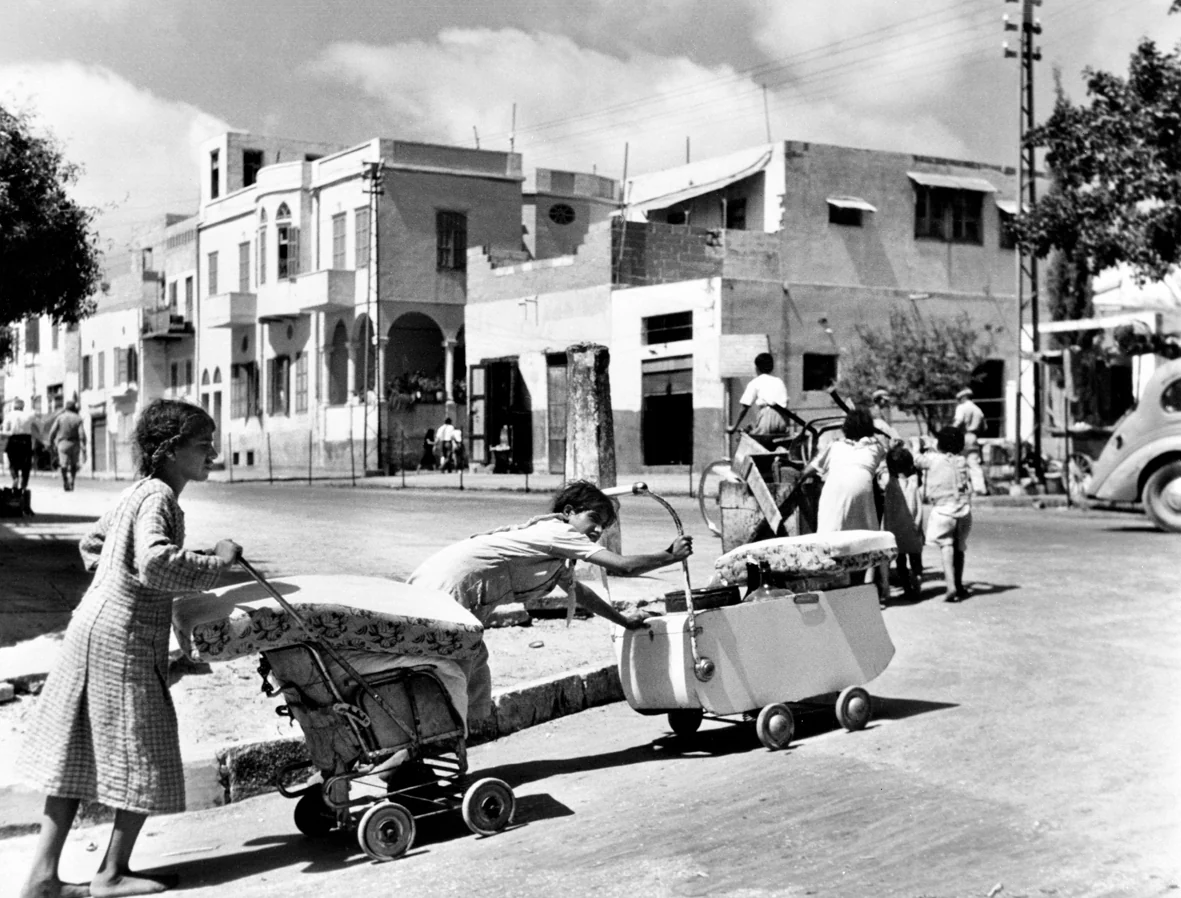
Britain's contribution can be traced through specific decisions: endorsing the national home, incorporating it into the Mandate, policing opposition, restricting immigration and withdrawing without an agreed settlement. Those decisions affected who could enter the country, which institutions received recognition and how resistance was treated. The families leaving Jaffa in the photograph below lived with the consequences of a war that diplomacy had failed to prevent.
For the later wars, occupation and negotiations, read our history of the Israel-Palestine conflict.
Frequently asked questions
Did the Balfour Declaration establish Israel?
No. The 1917 declaration committed Britain to supporting a Jewish national home in Palestine. It did not establish a state, define its borders or transfer individual property. Israel was declared in May 1948.
What was the difference between Balfour and the Mandate?
Balfour was a British policy declaration in 1917. The League of Nations Mandate approved in 1922 incorporated that commitment into Britain's responsibilities as the power administering Palestine.
Why did Britain limit Jewish immigration to Palestine?
In 1939 Britain sought to end conflict and reconcile its commitments to the Jewish national home with Palestinian Arab opposition. The White Paper limited immigration, closing a route to safety for many Jews facing Nazi persecution.
When did British rule in Palestine end?
The Mandate ended as 15 May 1948 began, following Israel's declaration on 14 May. Fighting within Palestine had already begun, and the conflict expanded with the entry of neighbouring Arab armies.
Sources & further reading
- Balfour Declaration, 1917 ↗
- Palestine Mandate, 1922 ↗
- British White Paper, 1939 ↗
- National Army Museum: British Army in Palestine ↗
- Hansard: Jaffa demolition of houses, 24 June 1936 ↗
- Matthew Hughes: The Banality of Brutality ↗
- USHMM: Holocaust Survivors and the Establishment of Israel ↗
- Office of the Historian: Creation of Israel ↗
- Office of the Historian: Arab-Israeli War of 1948 ↗
- UN Human Rights Council: historical background to Palestinian displacement, paragraph 18 ↗
Image credits
- People standing among houses demolished with explosives in Jaffa in 1936
American Colony Photo Department / Library of Congress, Matson collection · No known copyright restrictions
Resized and converted to WebP. No cropping or historical detail altered.
- The typed Balfour Declaration dated 2 November 1917 and signed by Arthur Balfour
UK Government / British Library, via Wikimedia Commons · Public domain (expired Crown copyright)
Resized and converted to WebP. No cropping or historical detail altered.
- General Allenby walking into Jerusalem with officers in December 1917
Underwood & Underwood / Library of Congress, via Wikimedia Commons · No known copyright restrictions
Resized where necessary and converted to WebP. No cropping or historical detail altered.
- The refugee ship Exodus crowded with passengers at Haifa in 1947
British Admiralty; scan by JGHowes / Wikimedia Commons · Public domain (expired Crown copyright)
Resized where necessary and converted to WebP. No cropping or historical detail altered.
- Girls pushing belongings in prams and carts as families leave Jaffa in 1948
Unknown photographer / UN Archives, via Wikimedia Commons · Public domain (expired photographic copyright)
Resized and converted to WebP. No cropping or historical detail altered.


Something we should correct? Send a correction.
Keep reading
More stories
World history · 8 min read
How the British Empire Rose and Fell
How Britain built its empire through conquest, trade and slavery, and how resistance, world wars and independence movements ended colonial rule.
Australian history · 7 min read
British Invasion of Australia: Land and Aboriginal Resistance
How Britain’s invasion of Australia took Aboriginal land, from Sydney Cove and Pemulwuy to Tasmania, Myall Creek, the Stolen Generations and Mabo.
Irish history · 7 min read
Thatcher’s Broadcasting Ban: Why Actors Voiced Gerry Adams
How Britain’s 1988 broadcasting ban silenced Sinn Féin voices, why actors dubbed Gerry Adams and what changed when the restrictions ended in 1994.