Irish history
Easter Rising 1916: The Executions That Changed Ireland
Why the Easter Rising failed, who was executed at Kilmainham and Cork, and how the British response helped build support for Irish independence.
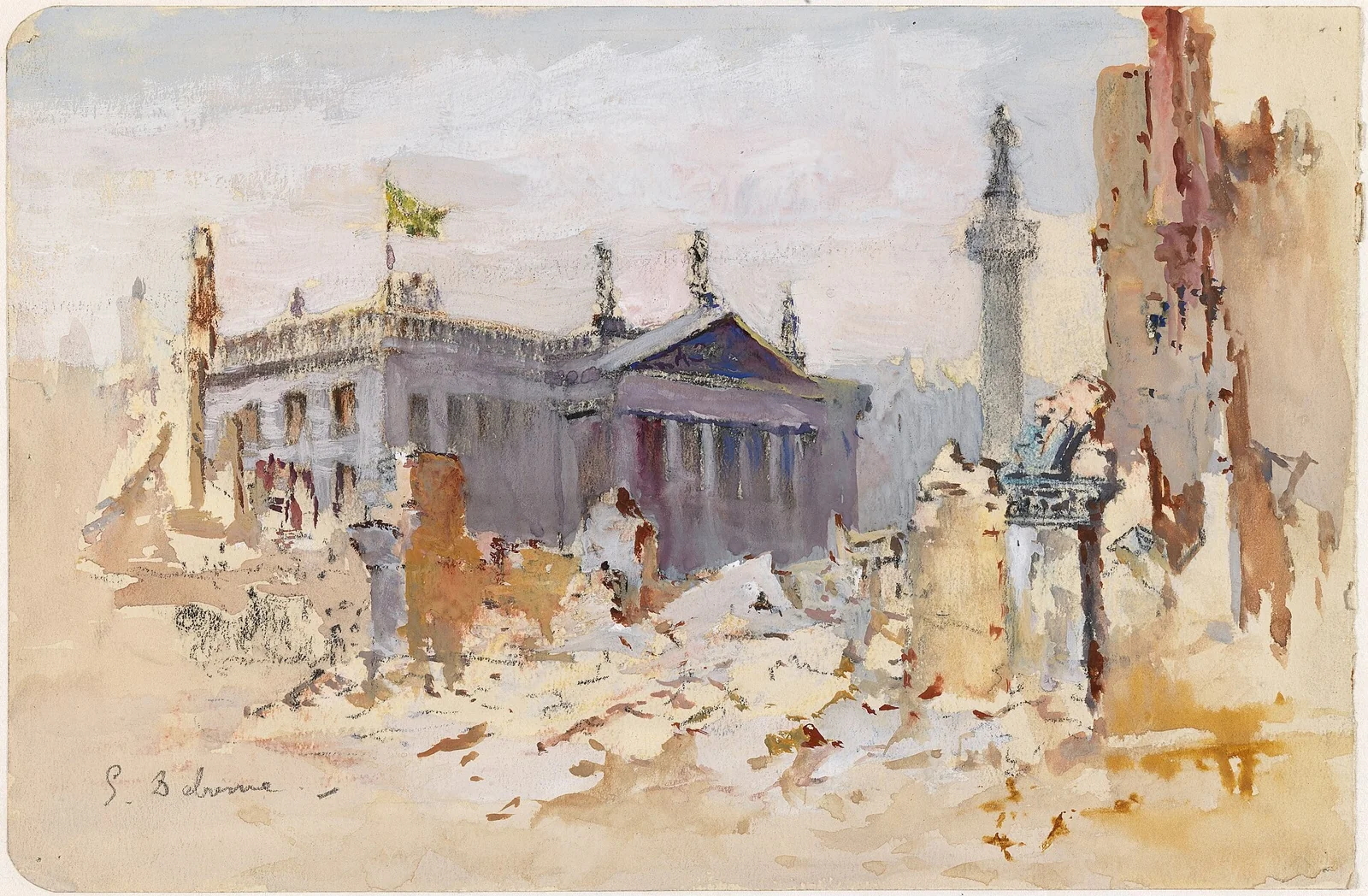
The Easter Rising of 1916 ended in military defeat, but the British executions that followed helped turn a defeated rebellion into a cause with much wider support. Fifteen men were shot between 3 and 12 May, including all seven signatories of the Irish Republic's proclamation. Anger at their treatment spread beyond those who had supported the fighting.
The change was neither immediate nor universal. Many Dubliners had opposed the rebellion, while the later rise of Sinn Féin also depended on political organising, imprisonment and the conscription crisis.
Why Irish republicans rebelled in 1916
Ireland was governed within the United Kingdom. John Redmond's Irish Parliamentary Party had spent years seeking Home Rule, a form of Irish self-government that would preserve the connection with Britain. The Government of Ireland Act passed in 1914, but its operation was suspended during the First World War. Opposition from Ulster unionists also left the territory to be covered by Home Rule unresolved.
Redmond encouraged Irishmen to support Britain's war effort. The Volunteers split over that policy: the much larger National Volunteers followed him, while a smaller Irish Volunteers organisation remained outside his leadership. The National Library of Ireland's account of Redmond explains how the postponement of Home Rule and the split weakened the prospect of a united nationalist movement.
Republican conspirators sought a complete break with Britain. Members of the Irish Republican Brotherhood's Military Council planned an insurrection with the support of the Irish Citizen Army and sections of the Volunteers. Britain's involvement in the European war provided the opportunity they intended to use.
The proclamation and the failure to mobilise
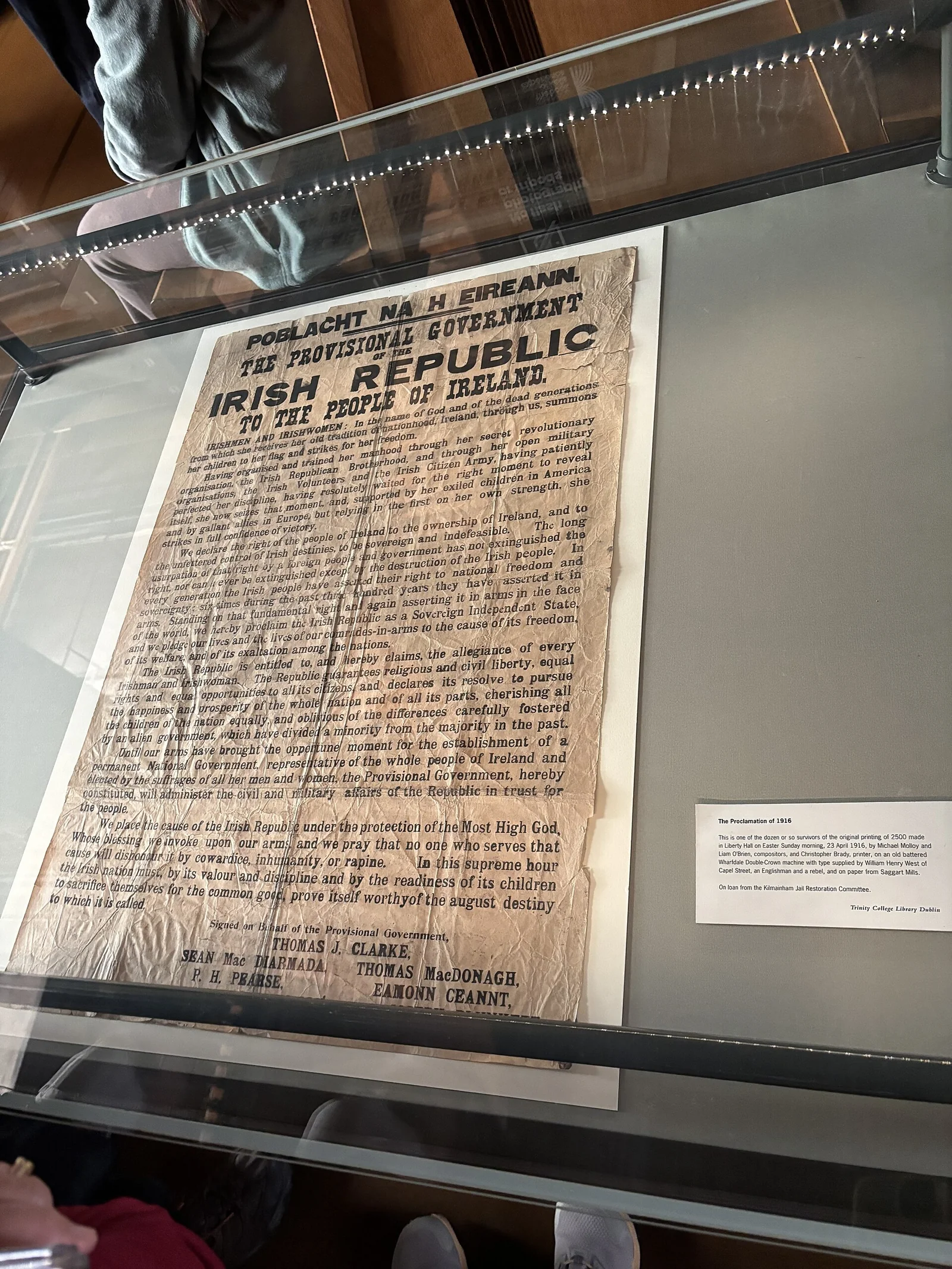
On Easter Monday, 24 April, rebels occupied buildings across Dublin. Patrick Pearse proclaimed an Irish Republic after the occupation of the General Post Office. The GPO became the headquarters, with James Connolly directing operations, although outlying garrisons often had to manage without reinforcements or supplies from the centre. The National Library's Easter Monday chronology describes that gap between the command structure and the fighters' practical isolation.
The rebellion had already lost much of its intended strength. A shipment of German weapons had been lost, and Volunteer leader Eoin MacNeill issued a countermand that prevented a general mobilisation. Most Volunteers outside Dublin stayed at home. The plan to hold positions while a wider insurrection developed therefore began with far fewer participants than its organisers had wanted.
The proclamation announced a government, but the rebels lacked control of the country they claimed to govern. Holding a post office or a factory could obstruct British troops. It could not by itself bring the rest of Ireland into the rebellion.
Dublin under fire
British reinforcements entered the capital and attacked the rebel positions. By Wednesday, 26 April, the gunboat Helga and field artillery were shelling Liberty Hall and the area around the GPO. Troops arriving through Kingstown, now Dún Laoghaire, encountered fierce resistance near Mount Street Bridge. Food became scarce in the inner city, including bread and milk, according to the National Library's account of that day.
Civilians lived among the positions being defended and attacked. More than 400 people died during the Rising and well over 1,000 were injured. The National Library identifies civilians as the majority of the casualties in its overview of the fighting.
There was no single Dublin response. Some residents had relatives serving in the British Army; others resented the violence and the interruption of food supplies. The National Army Museum's discussion of public opinion describes hostility, curiosity and indifference as well as the later growth of sympathy.
Surrender and the executions at Kilmainham
On Saturday, 29 April, five members of the rebel provisional government met at 16 Moore Street after retreating from the GPO. They decided to surrender to prevent further deaths. Nurse Elizabeth O'Farrell carried their approach to General Lowe. Pearse then surrendered unconditionally, although some outposts did not receive the order until Sunday. The surrender account distinguishes the central decision from the time it took to stop the remaining fighting.
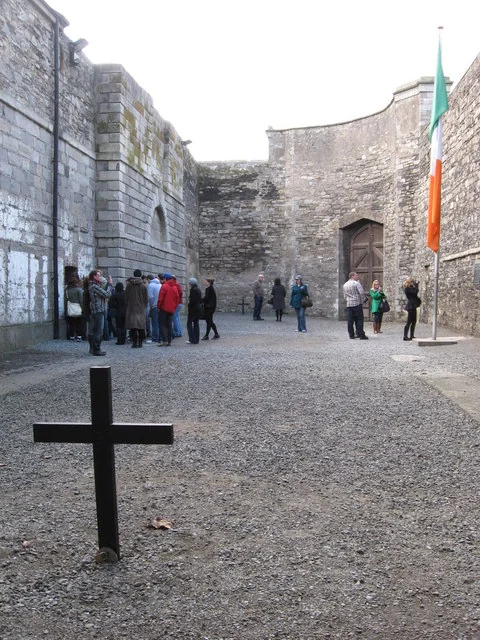
Military courts tried the captured leaders. Fourteen men were subsequently shot in the Stonebreakers' Yard at Kilmainham Gaol between 3 and 12 May. All seven proclamation signatories were among them: Thomas Clarke, Seán Mac Diarmada, Thomas MacDonagh, Patrick Pearse, Éamonn Ceannt, James Connolly and Joseph Plunkett.
Kilmainham Gaol Museum records the prisoners' final visits and letters. Plunkett married Grace Gifford in the prison chapel the night before his execution. These individual farewells became part of how the dead were remembered beyond the military defeat.
Why accounts give different execution totals
Fourteen executions at Kilmainham and fifteen in May are both correct. The additional man was Thomas Kent, executed in Cork on 9 May.
Kent had not fought in Dublin. After the Rising, police surrounded his family's house near Castlelyons while arresting Volunteers. A gun battle followed in which Head Constable W. C. Rowe was killed. Kent was tried by court martial and sentenced to death. His brother William was acquitted. The National Library's biography of Kent treats the Cork events separately from the Dublin garrisons.
The frequently cited total of sixteen includes Roger Casement, who was executed later, at Pentonville Prison in London in August 1916. University College Cork's account of the aftermath separates his death from the fifteen May executions. Combining all sixteen into one series of shootings at Kilmainham confuses both the locations and the chronology.
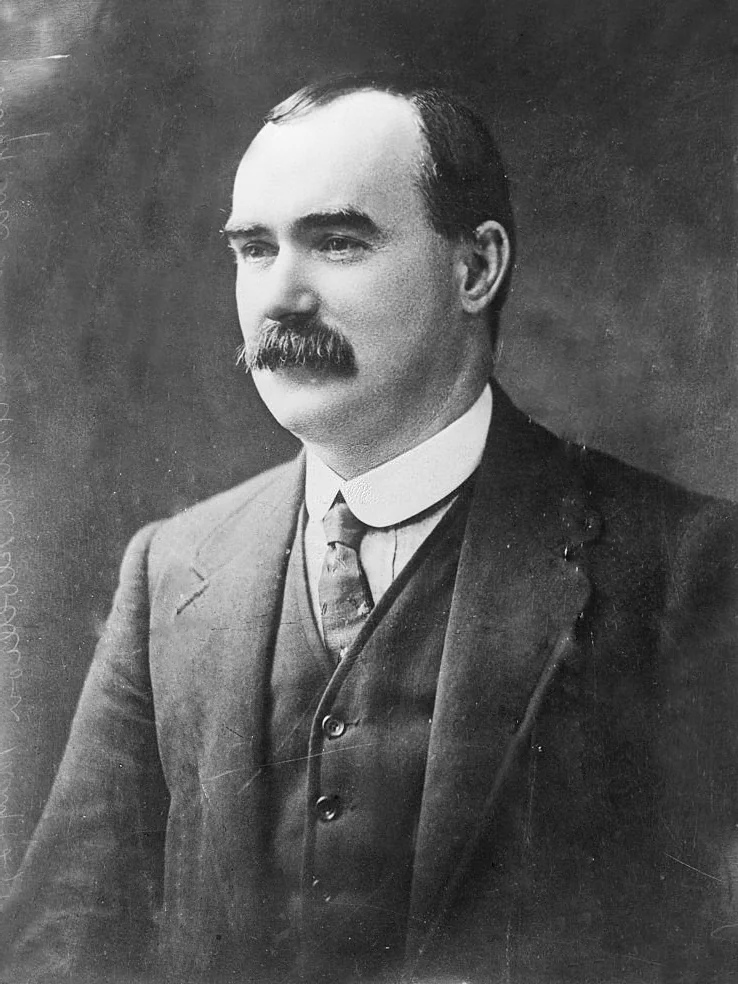
James Connolly's execution
Connolly's condition made his execution particularly notorious. A socialist and trade union organiser, he had helped establish the Irish Citizen Army and directed military operations during the Rising. He was badly wounded in the fighting.
After the surrender, a court martial sentenced him to death. On 12 May he was brought by stretcher to Kilmainham's yard, tied to a chair and shot. The Central Statistics Office's biographical account records those details and his burial at Arbour Hill alongside the other men executed in Dublin.
Seán Mac Diarmada was also executed that day. Prime Minister H. H. Asquith had already sent General John Maxwell a telegram limiting further executions to exceptional circumstances. Asquith arrived in Dublin on 12 May, as opposition to the punishments grew. Connolly and Mac Diarmada were the last men shot in the May sequence, as described in the National Library’s account of the aftermath.
How the executions changed public opinion
Opposition to the rebellion did not necessarily mean support for executing its leaders. Redmond himself condemned the Rising yet appealed for leniency. Other constitutional nationalists protested against British policy, including John Dillon in the House of Commons.
The executions also formed part of a wider response. Arrests reached beyond the people who had fought. Martial law extended across Ireland, although most of the fighting had been concentrated in Dublin. Historian Gillian O'Brien's account for the American Historical Association connects the arrests, courts martial and executions with the widening sympathy for republicanism.
Public mourning gave that sympathy a visible form. Masses and commemorations for the dead, followed by receptions for released prisoners, offered occasions to gather and organise. The National Library's history of the aftermath describes returning prisoners converting resentment into political activity. The army had broken the rebel positions, but the repression helped the surviving movement recruit beyond them.
From the Rising to the first Dáil
The route from 1916 to Sinn Féin's electoral success in 1918 involved further events. The attempt to impose conscription on Ireland deepened opposition to British policy. Organising by former prisoners helped build the movement, while a greatly enlarged electorate changed the setting in which it competed.
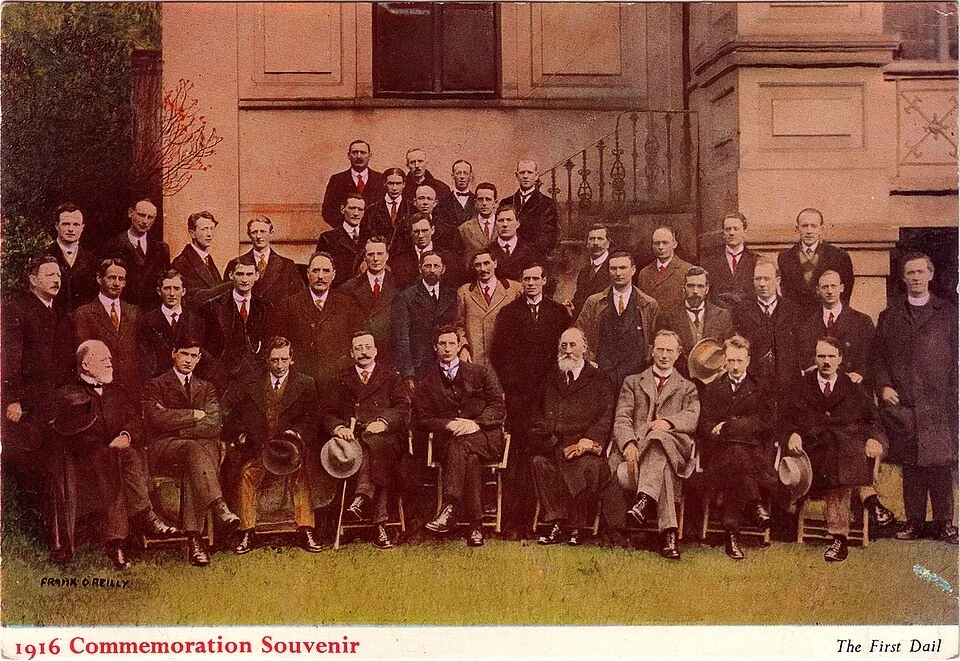
The Oireachtas's centenary history of Dáil Éireann records the expansion from just over 700,000 Irish electors to almost two million. The 1918 election was the first general election in which women could vote.
Sinn Féin won the election in Ireland and refused to send its elected representatives to Westminster. On 21 January 1919, those who assembled at Dublin's Mansion House met as Dáil Éireann and declared Irish independence. The proclamation of 1916 now had a successor claiming authority through an election. That claim remained contested, and the War of Independence followed in 1919–21.
What the Easter Rising achieved
The Rising did not expel the British Army or establish lasting republican control in April 1916. Its leaders surrendered, and the military imbalance had been decisive. Yet suppressing the rebellion did not restore the earlier political position. The executions damaged British authority among people who had previously sought change through constitutional nationalism.
Independence still required years of political struggle and war. The eventual settlement also divided the island and split the independence movement. Our history of English conquest, British rule and Ireland's partition follows that longer sequence.
The men executed in May became central to republican remembrance. Their deaths helped a wider movement gain support, but that support had to be organised and sustained. The failed rebellion and its political consequences belong to the same history, without turning the fighting into a victory it never was.
Frequently asked questions
How many Easter Rising leaders were executed?
Fifteen men were shot in May 1916: fourteen at Kilmainham Gaol in Dublin and Thomas Kent in Cork. The broader total of sixteen includes Roger Casement, executed in London in August.
Why was James Connolly tied to a chair?
Connolly had been badly wounded during the Rising. He was taken to Kilmainham by stretcher and tied to a chair for his execution on 12 May 1916.
When did the Easter Rising end?
Pearse surrendered on 29 April 1916 after six days of fighting in Dublin. Some outposts did not receive the surrender order until 30 April.
Did the Easter Rising immediately win Irish independence?
No. The rebellion was defeated. The executions and repression helped expand support for republicanism, but years of political organising and the War of Independence followed.
Sources & further reading
- National Library of Ireland's account of Redmond ↗
- National Library's Easter Monday chronology ↗
- National Library of Ireland: Wednesday 26 April 1916 ↗
- National Library of Ireland: The Rising Day by Day ↗
- National Army Museum's discussion of public opinion ↗
- National Library of Ireland: The Surrender ↗
- Kilmainham Gaol Museum ↗
- National Library's biography of Kent ↗
- University College Cork's account of the aftermath ↗
- Central Statistics Office: James Connolly ↗
- Gillian O'Brien's account for the American Historical Association ↗
- National Library of Ireland: Aftermath ↗
- centenary history of Dáil Éireann ↗
Image credits
- Edmond Delrenne's 1916 watercolour of ruined buildings on Sackville Street in Dublin
Edmond Delrenne / National Gallery of Ireland, via Wikimedia Commons · Public domain
Resized where necessary and converted to WebP. No cropping or historical detail altered.
- A framed copy of the proclamation of the Irish Republic displayed at Trinity College Dublin
AAIbarra / Wikimedia Commons · CC0 1.0
Resized where necessary and converted to WebP. No cropping or historical detail altered.
- Visitors and a memorial cross in the Stonebreakers Yard at Kilmainham Gaol
Gareth James / Geograph, via Wikimedia Commons · CC BY-SA 2.0
Resized where necessary and converted to WebP. No cropping or historical detail altered.
- Portrait of James Connolly wearing a dark suit and tie
David Granville / Wikimedia Commons · Public domain
Resized where necessary and converted to WebP. No cropping or historical detail altered.
- A commemorative postcard showing members of the First Dáil in April 1919
Cliffoney / Wikimedia Commons · CC BY-SA 4.0
Resized where necessary and converted to WebP. No cropping or historical detail altered.


Something we should correct? Send a correction.
Keep reading
More stories
World history · 8 min read
How the British Empire Rose and Fell
How Britain built its empire through conquest, trade and slavery, and how resistance, world wars and independence movements ended colonial rule.
Australian history · 7 min read
British Invasion of Australia: Land and Aboriginal Resistance
How Britain’s invasion of Australia took Aboriginal land, from Sydney Cove and Pemulwuy to Tasmania, Myall Creek, the Stolen Generations and Mabo.
Irish history · 7 min read
The Guildford Four: False Confessions and Wrongful Convictions
How police evidence put the Guildford Four in prison, why their convictions collapsed and what happened to Giuseppe Conlon and the Maguire Seven.