
Irish history
The Guildford Four: False Confessions and Wrongful Convictions
How police evidence put the Guildford Four in prison, why their convictions collapsed and what happened to Giuseppe Conlon and the Maguire Seven.
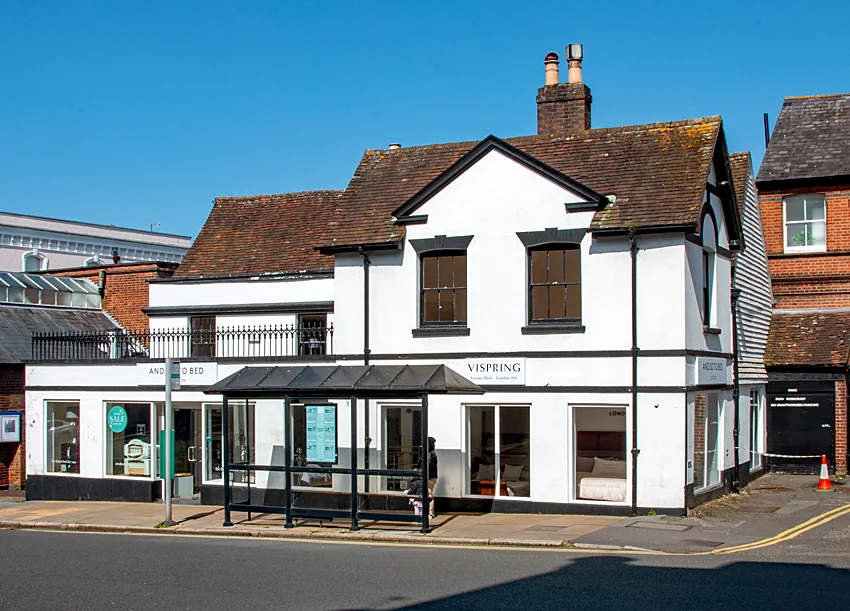
Surrey police obtained confessions from four people who had not carried out the Guildford pub bombings. Those statements helped put Gerry Conlon, Paul Hill, Paddy Armstrong and Carole Richardson in prison for almost fifteen years. When investigators uncovered altered interview records and misleading police evidence, the prosecution could no longer defend their convictions.
The Guildford Four case also drew relatives and friends into a separate prosecution. Gerry’s father, Giuseppe Conlon, travelled to England to find help for his son. He died while still a prisoner. The struggle to clear their names continued long after the original trials.
The Guildford pub bombings
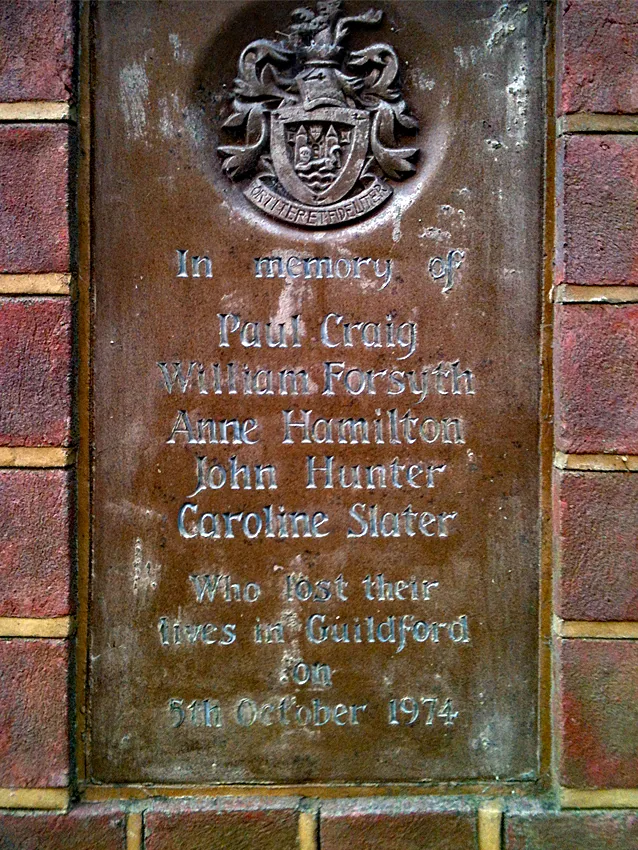
On 5 October 1974, the Provisional IRA attacked two pubs in Guildford, Surrey. A bomb exploded in the Horse and Groom on North Street, killing Paul Craig, William Forsyth, Ann Hamilton, John Hunter and Caroline Slater. Four were soldiers; Craig was a civilian. Dozens of people were injured.
The nearby Seven Stars was evacuated before a second bomb exploded there. All five deaths were associated with the Horse and Groom. The Surrey coroner’s findings preserve that distinction between the attacks and identify the people killed.
The police investigation eventually produced murder convictions. Those convictions would wrongly tell the bereaved families that the people responsible had been caught.
Who were the Guildford Four?
Conlon, Hill and Armstrong came from Belfast. Richardson was English and seventeen when arrested. Armstrong and Richardson had been living in London’s squatting community; Conlon had travelled to England and worked casual jobs.
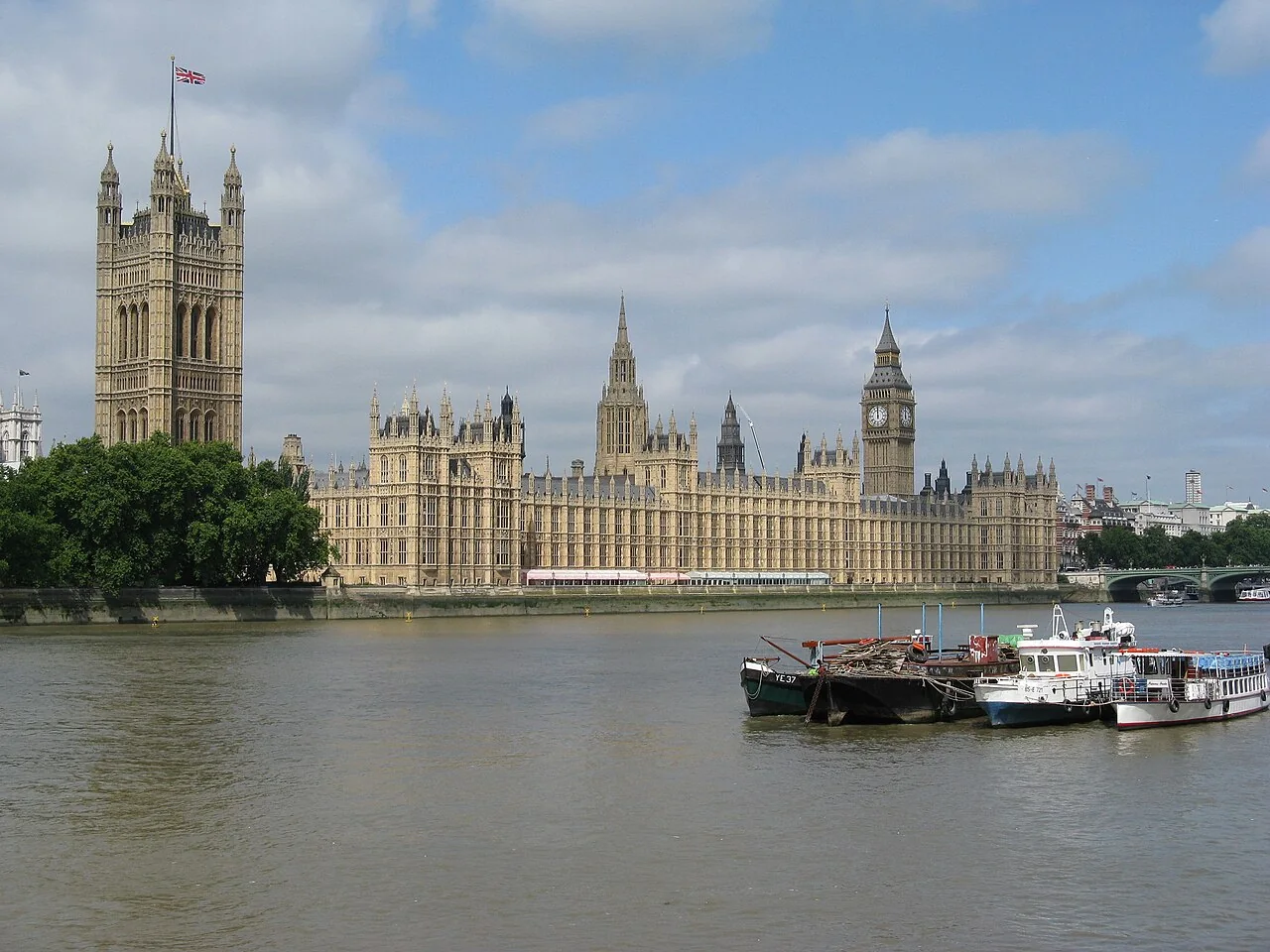
The arrests came amid the IRA’s bombing campaign in Britain. After the Birmingham pub bombings in November 1974, Parliament passed emergency anti-terrorism legislation. The Prevention of Terrorism Act allowed detention for forty-eight hours, with a further five days authorised by the Home Secretary. It gave police prolonged control over suspects before charge.
The later May inquiry criticised both arrests made on inadequate grounds and the treatment of people in custody. The government’s 1994 account of its findings acknowledged that police had exceeded the Act’s powers in many arrests during the investigation.
How confessions became life sentences
The Four described beatings, threats and pressure during questioning. Conlon said police threatened his family. All four signed confessions, then repudiated them after obtaining legal advice. At trial, the jury heard competing accounts from the defendants and the officers who had questioned them.
On 22 October 1975, all four were convicted and sentenced to life imprisonment. Hill and Armstrong were also convicted over the Woolwich pub bombing of 7 November 1974, which killed two people. The Guildford and Woolwich convictions depended on confession evidence.
The University of Exeter’s case record identifies coerced confessions and extensively edited interview notes as central failures. The later discoveries went to the basis of the prosecution: whether police had accurately reported what happened in custody and whether the statements could be trusted. These were the statements for which the defendants had received life sentences.
Giuseppe Conlon and the Maguire Seven
Giuseppe Conlon went to London to obtain legal help for Gerry and stayed with relatives, Annie and Patrick Maguire. Police arrested him, the Maguires, their sons Vincent and Patrick junior, Annie’s brother Sean Smyth and their friend Patrick O’Neill. They became known as the Maguire Seven.
Their prosecution was separate from the Four’s murder trial. In 1976 they were convicted of possessing explosives, on the strength of tests said to reveal nitroglycerine on hands and gloves. Two teenage boys were among those sent to prison.
The forensic case later collapsed. Innocent transfer of contamination could not be excluded, and the prosecution had failed to disclose other test results that might have helped the defence. The Exeter record for Sean Smyth explains these failures.
Giuseppe died on 23 January 1980 while still a prisoner. His conviction remained in place for another eleven years.
Why the IRA admissions did not free them
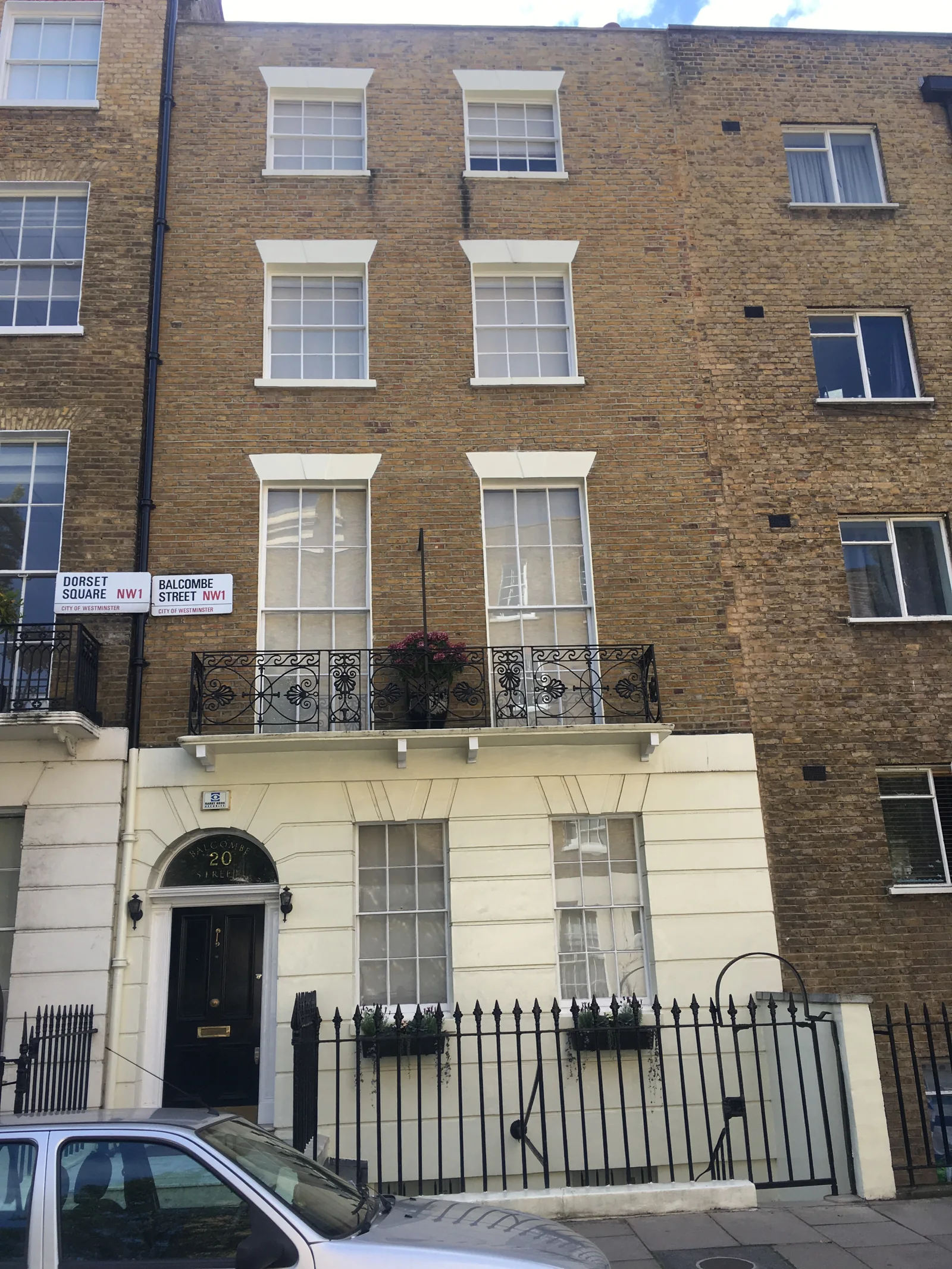
In December 1975, police captured an IRA unit after the Balcombe Street siege in London. Admissions by members of that group to the Guildford and Woolwich attacks challenged the convictions already secured against the Four.
The Court of Appeal nevertheless refused the Four’s applications in October 1977. The prisoners remained behind bars. Years later, former law lords Patrick Devlin and Leslie Scarman argued that a jury should have been allowed to consider the new admissions alongside the original prosecution case.
The January 1989 parliamentary statement records that argument and the government’s reluctance to reopen questions already considered by the courts. The eventual referral rested on additional material judged new and substantial. The admissions had been available for years without securing the Four’s freedom.
The families kept the case alive
Sarah Conlon wrote letters after work, saved money for prison visits and pressed for her husband and son to be cleared. Her campaign continued through Giuseppe’s deteriorating health and death. Support initially came from a small group that included Sister Sarah Clarke, priests Denis Faul and Raymond Murray, solicitor Alastair Logan and MP Gerry Fitt.
Lawyers, relatives, journalists and other campaigners kept challenging the convictions. Public attention grew through books and television reporting. Patrick Maume’s biography of Sarah Conlon describes the years of work behind the eventual breakthrough.
There was also evidence the original defence had never received. The Law Commission’s retrospective discusses failures involving alibi evidence, including a statement capable of providing Conlon with a complete alibi. Police also sought to discredit Richardson’s alibi even after learning that its underlying basis was true. The defence could not challenge the prosecution with material withheld from it. Re-examining the police files was essential to exposing those failures.
Why the convictions were overturned in 1989
A review by Avon and Somerset police uncovered documents that contradicted Surrey officers’ testimony. A record of Armstrong’s questioning could not have been the contemporaneous account police had claimed it was. Investigators also found misleading evidence about information obtained from Hill after charge and serious inconsistencies in detention records.
On 19 October 1989, the Court of Appeal quashed the convictions. The Crown had accepted that it could no longer support them. The statement to Parliament that day explained how the discoveries destroyed confidence in the confession evidence on which the convictions rested.
Hill’s position was complicated by a separate conviction for the killing of Brian Shaw. The Guildford ruling did not overturn that conviction; it was quashed in 1994. The Maguire Seven’s convictions were overturned in 1991.
The May inquiry later criticised non-disclosure but attributed particular failures to human error rather than a deliberate prosecution conspiracy. That conclusion did not restore the credibility of the altered police records or reverse the acquittals.
The years that freedom could not restore
Conlon struggled with nightmares, addiction and the effects of imprisonment after release. He later campaigned for others he believed had been wrongly convicted. His biography traces a life in which the prison experience continued to shape relationships, health and work.
In February 2005, Tony Blair publicly apologised to the Guildford Four and Maguire Seven. The apology acknowledged an injustice already established by the courts. It could not return Giuseppe to his family or restore the years the prisoners had lost.
Guildford was one of several cases that exposed failures in British criminal justice. The Criminal Cases Review Commission links its creation to the wider crisis involving the Birmingham Six, Maguire Seven and Judith Ward as well as the Four. It began work in 1997, with powers to refer possible miscarriages back to the appeal courts.
The bombing victims’ families also waited decades for further examination of the deaths. Resumed inquests concluded in 2022. Their scope excluded identifying individual perpetrators. Five people had been killed, and the wrongful convictions had imprisoned innocent people while leaving the bereaved without a reliable criminal verdict against the bombers.
For an earlier period of British policing in Ireland, read our account of the Black and Tans and the later transfer of personnel to Palestine.
For a separate account of state restrictions on reporting during the Troubles, read how Thatcher’s broadcasting ban replaced Sinn Féin voices with actors.
Frequently asked questions
Who were the Guildford Four?
Gerry Conlon, Paul Hill, Paddy Armstrong and Carole Richardson were wrongly convicted of the 1974 Guildford pub bombings. Conlon, Hill and Armstrong were from Belfast; Richardson was English.
Why were the Guildford Four convictions overturned?
Investigators found altered interview records and misleading police evidence that undermined the confessions used to convict them. The prosecution no longer defended the convictions, which the Court of Appeal quashed on 19 October 1989.
Were the Maguire Seven part of the same trial?
No. The Maguire Seven faced a separate trial for possessing explosives and were convicted in 1976. Their convictions were overturned in 1991 after the forensic evidence was discredited.
Did Gerry Conlon’s father live to be cleared?
No. Giuseppe Conlon died on 23 January 1980 while still a prisoner. His conviction was overturned with those of the other Maguire Seven defendants in 1991.
Was the 2005 apology what freed the Guildford Four?
No. Their Guildford convictions had already been quashed in 1989. Tony Blair’s 2005 apology publicly acknowledged the injustice suffered by the Four and the Maguire Seven.
Sources & further reading
- Surrey coroner: Guildford pub bombings, findings and conclusions, 2022 ↗
- Prevention of Terrorism Act ↗
- government’s 1994 account of its findings ↗
- University of Exeter’s case record ↗
- Exeter record for Sean Smyth ↗
- January 1989 parliamentary statement ↗
- Patrick Maume’s biography of Sarah Conlon ↗
- Law Commission: Criminal Appeals consultation paper, Appendix 1, paragraphs 1.55–1.65 ↗
- statement to Parliament that day ↗
- Patrick Maume: Gerry Conlon, Dictionary of Irish Biography ↗
- Criminal Cases Review Commission ↗
Image credits
- The former Horse and Groom pub on North Street in Guildford
Graeme Wall (Murgatroyd49) / Wikimedia Commons · CC BY-SA 4.0
Orientation corrected where needed, resized without enlargement and converted to WebP. No cropping or alteration of historical detail. This version retains the same CC BY-SA 4.0 licence.
- The Palace of Westminster viewed from across the River Thames
Yair Haklai / Wikimedia Commons · CC BY-SA 3.0
Orientation corrected where needed, resized without enlargement and converted to WebP. No cropping or alteration of historical detail. This version retains the same CC BY-SA 3.0 licence.
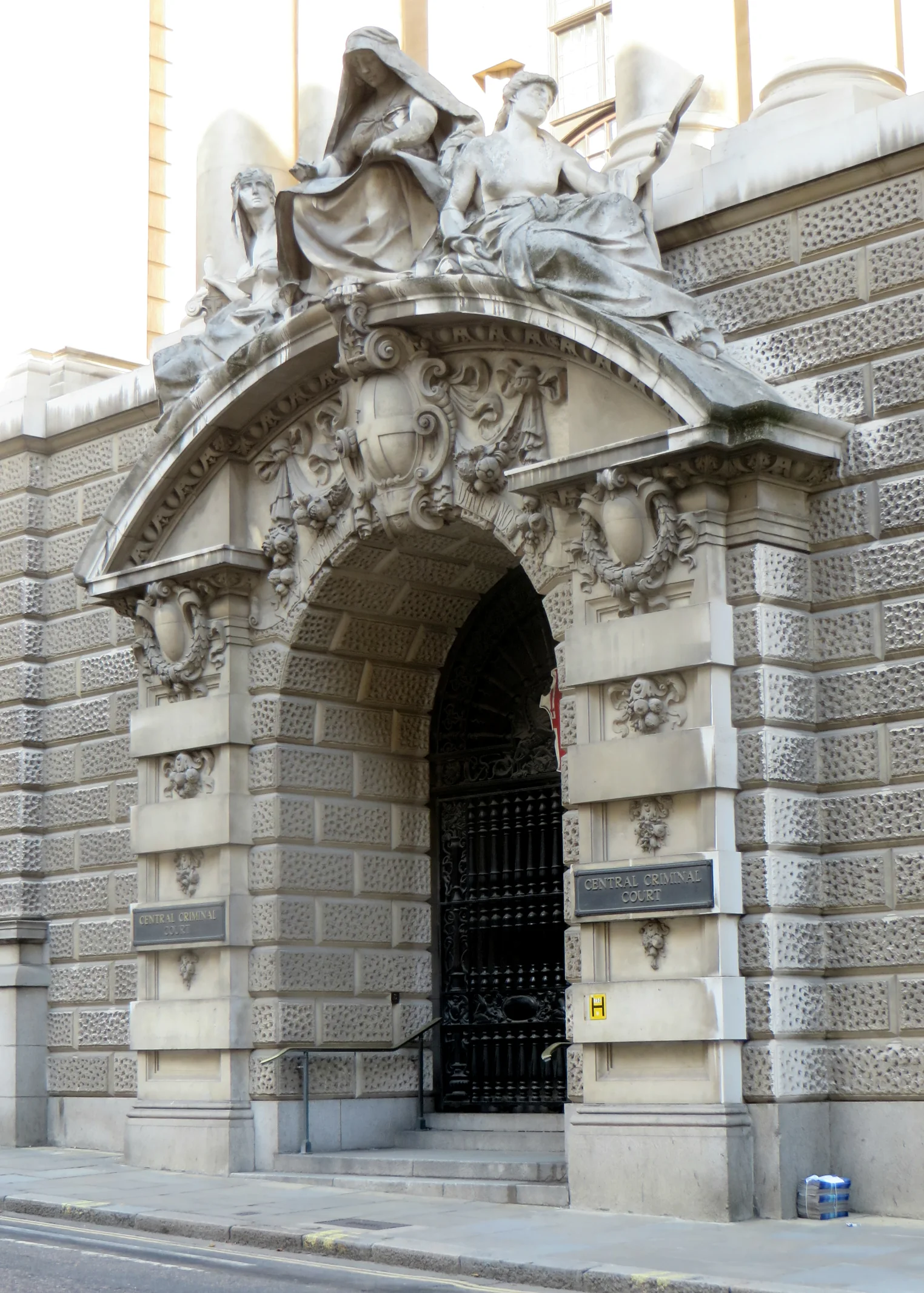
- Stone archway at the entrance to the Central Criminal Court
Eden, Janine and Jim / Wikimedia Commons · CC BY 2.0
Orientation corrected where needed, resized without enlargement and converted to WebP. No cropping or alteration of historical detail.
- Brick facade and doorway of number 20 Balcombe Street in London
No Swan So Fine / Wikimedia Commons · CC BY-SA 4.0
Orientation corrected where needed, resized without enlargement and converted to WebP. No cropping or alteration of historical detail. This version retains the same CC BY-SA 4.0 licence.
- Guildford bombing memorial bearing the names of the five people killed
Murgatroyd49 / Wikimedia Commons · CC BY-SA 4.0
Orientation corrected where needed, resized without enlargement and converted to WebP. No cropping or alteration of historical detail. This version retains the same CC BY-SA 4.0 licence.


Something we should correct? Send a correction.
Keep reading
More stories
World history · 8 min read
How the British Empire Rose and Fell
How Britain built its empire through conquest, trade and slavery, and how resistance, world wars and independence movements ended colonial rule.
Australian history · 7 min read
British Invasion of Australia: Land and Aboriginal Resistance
How Britain’s invasion of Australia took Aboriginal land, from Sydney Cove and Pemulwuy to Tasmania, Myall Creek, the Stolen Generations and Mabo.
Irish history · 6 min read
Connaught Rangers Mutiny: Why Irish Soldiers Refused Duty in India
Why the Connaught Rangers mutinied in India in 1920, how British guards killed two soldiers and why James Daly faced a firing squad.