Irish history
Black and Tans: From Ireland to Palestine
Why former Black and Tans and Auxiliaries joined Britain’s Palestine Gendarmerie in 1922, from reprisals in Balbriggan to policing under the Mandate.
Some of the men recruited to suppress Irish independence later enforced British rule in Palestine. In 1922, Britain recruited a new gendarmerie largely from the Royal Irish Constabulary and its Auxiliary Division. Former Black and Tans were among them. Winston Churchill defended the scheme in Parliament as a way to replace cavalry regiments and reduce expenditure.
The connection ran through recruitment, command and the use of armed police. It also joined two places facing different political struggles. In Ireland, the RIC was being dismantled after the War of Independence. In Palestine, Britain was building an administration committed to the Jewish national home promised in the Balfour Declaration.
Who were the Black and Tans?
The Black and Tans were recruits brought into the Royal Irish Constabulary during the Irish War of Independence. Many had served in the First World War. Shortages of police clothing left some wearing a mixture of dark RIC uniforms and khaki army garments, which gave them their nickname.
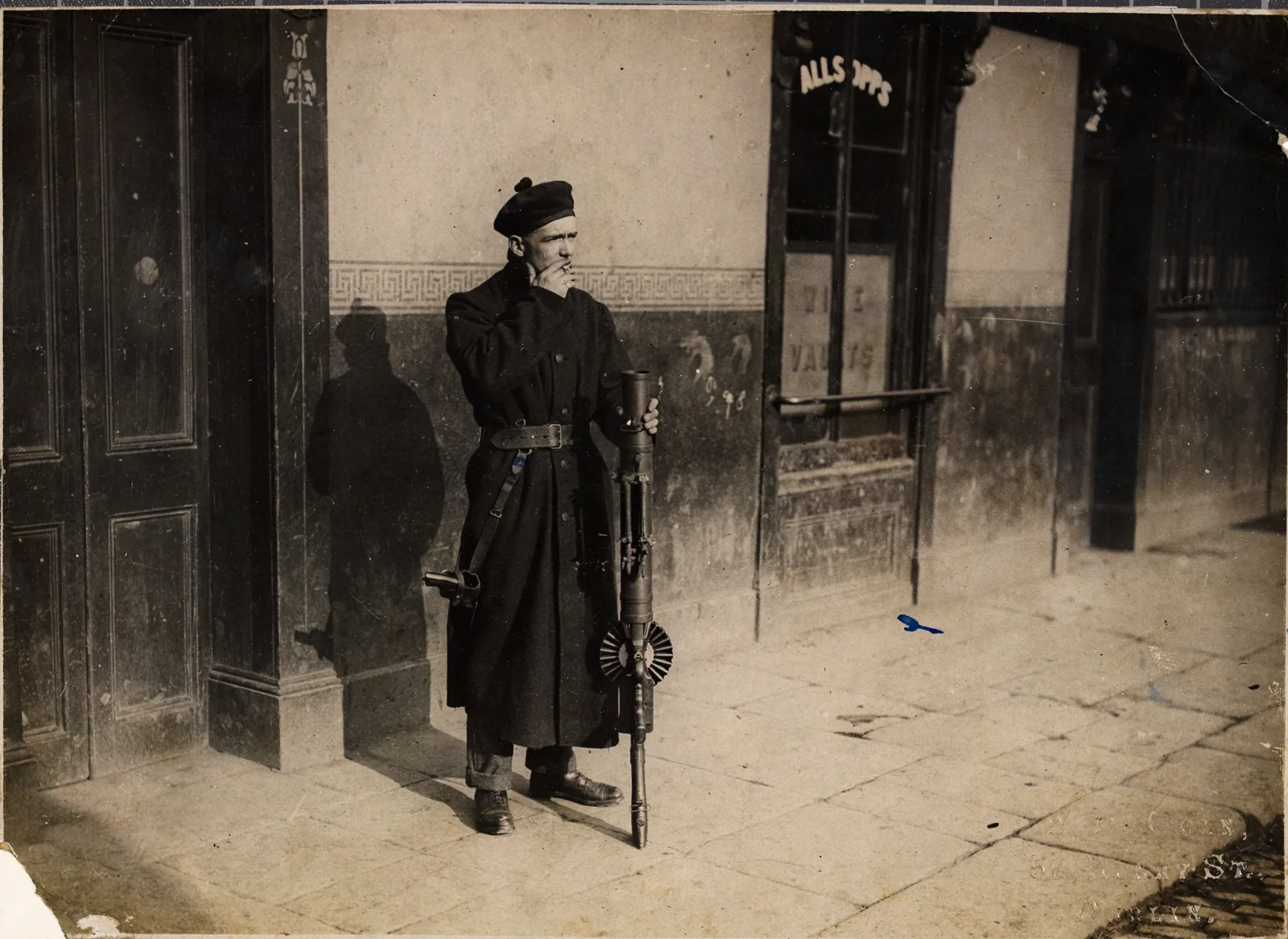
They should be distinguished from the Auxiliaries, a separate division recruited from former military officers in 1920. Both belonged to the police structure, but their organisation and terms of service differed. Calling every armed British policeman a Black and Tan obscures who carried out particular operations. Cork Public Museum describes the two forces separately.
Their arrival followed a collapse in the RIC's position. IRA attacks, boycotts and resignations weakened the force. Vulnerable rural barracks were abandoned and policing concentrated in larger posts. Historian John Borgonovo describes how British recruitment strengthened a counter-offensive that increasingly used reprisals against civilian communities.
The sack of Balbriggan, September 1920
On 20 September 1920, Head Constable Peter Burke was shot dead in a Balbriggan pub and his brother Michael was wounded. Accounts differ over the confrontation that preceded the shooting. That night, armed men arrived from nearby Gormanstown and attacked the town.
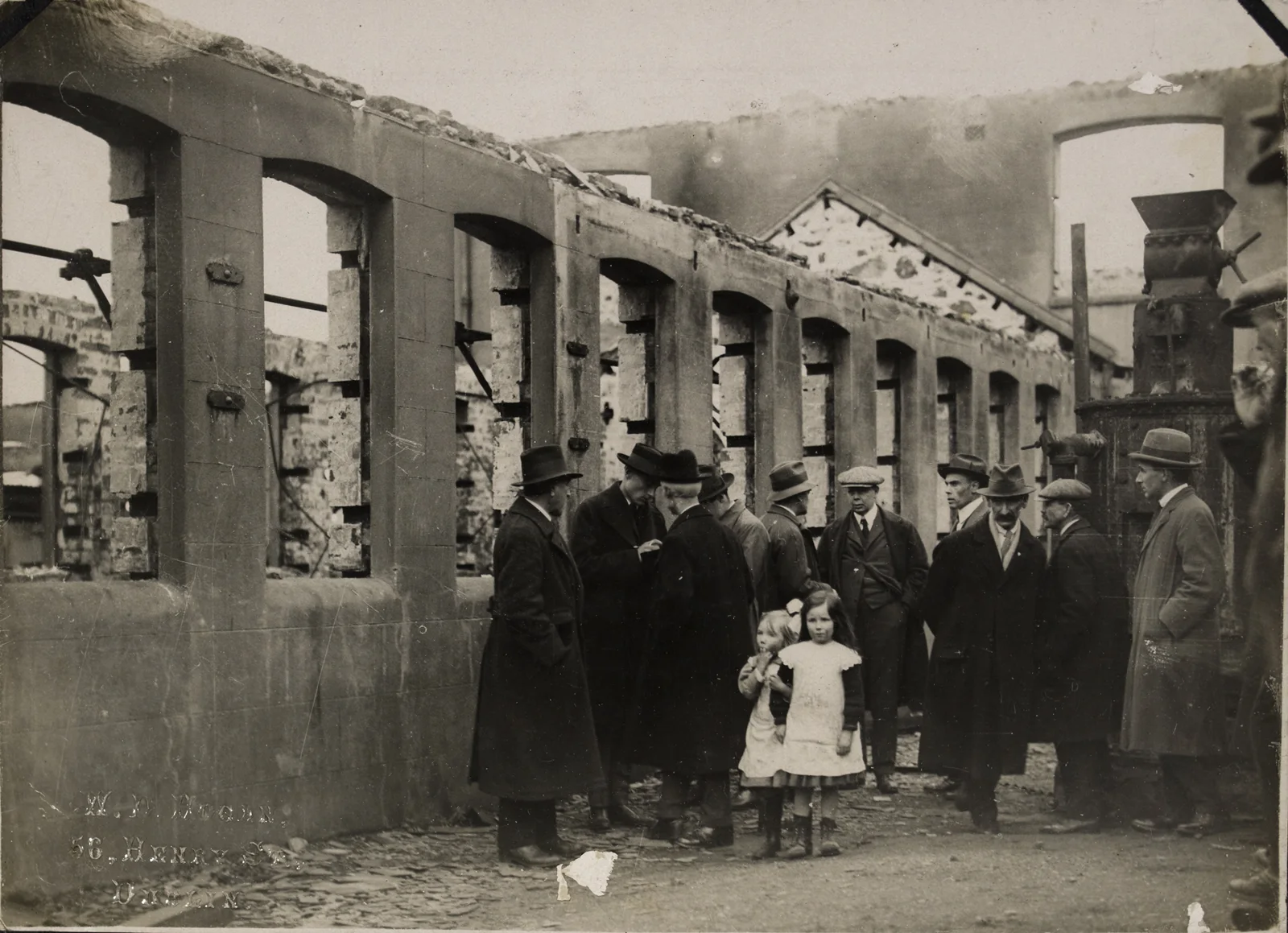
They burned homes and businesses. James Lawless and John Gibbons were taken from their homes and killed. Residents fled into surrounding fields, finding shelter in sheds and under haystacks. The destruction reached the Sea Mills hosiery factory, where the loss of the building also meant the loss of hundreds of jobs.
Fingal's local-history exhibition records the immediate practical consequences: families needed accommodation, food, clothing and money to travel to relatives. A relief committee distributed help and arranged temporary shelter. The attack punished an entire community for a policeman's killing. The effects continued after the fires went out, as residents tried to replace homes and livelihoods.
The RIC disbands and men seek new work
The fighting in Ireland did not end with a British military victory. A truce in July 1921 opened negotiations, followed by the Anglo-Irish Treaty on 6 December. The settlement created a path to the Irish Free State while Northern Ireland remained within the United Kingdom. It also divided Irish republicans over the terms of independence.
The RIC's disbandment in 1922 left serving men facing retirement, unemployment or another posting. Palestine offered one destination, but it was not the fate of every former constable. Some left police work and others entered different forces.
The National Army Museum's account of the war sets out the truce and treaty that changed the political position. For the earlier events that helped build support for independence, read our story on the Easter Rising and the executions of 1916. The longer struggle over land and government is covered in how England conquered Ireland.
Why did Churchill recruit them for Palestine?
Churchill gave Parliament a direct financial explanation on 9 March 1922. The new force drew heavily on constabulary and Auxiliary personnel who had served in Ireland and were being disbanded. He put their number at about 700 and said their deployment would allow Britain to dispense with at least two cavalry regiments.
His statement placed the gendarmerie inside a wider effort to reduce the cost of Britain's Middle Eastern commitments. It was an armed force intended to do work for which the government otherwise needed soldiers. Recruiting men already experienced in uniform also provided employment for personnel leaving service in Ireland.
Churchill assured MPs that recruits had been carefully selected. That assurance was the government's defence of the scheme, not an independent finding about every man's conduct. His Commons speech nevertheless establishes the transfer plainly: the Irish connection was part of an acknowledged British policy, not simply a later comparison between two conflicts.
What government were they defending in Palestine?
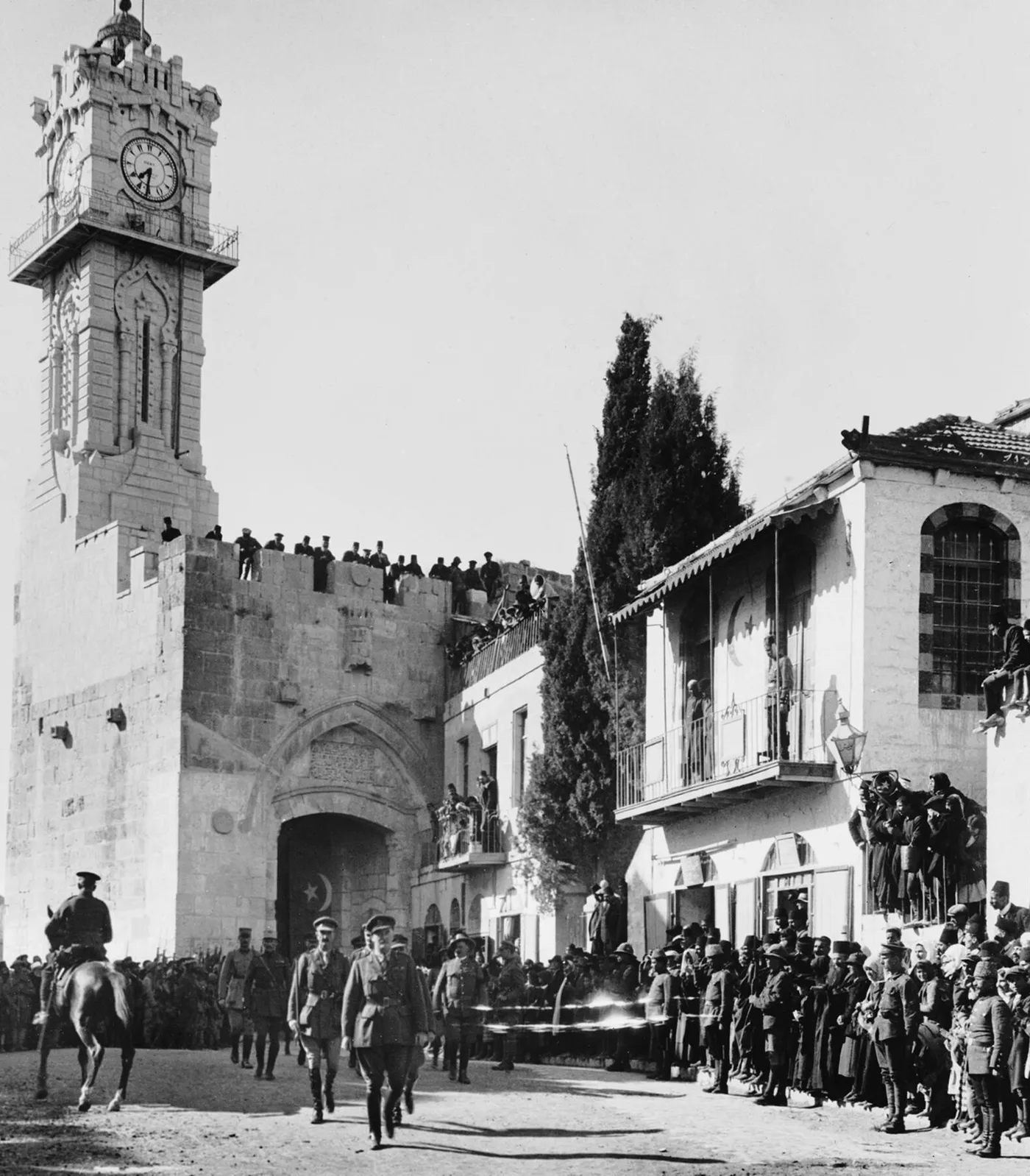
British rule in Palestine followed the defeat of Ottoman forces during the First World War. General Edmund Allenby entered Jerusalem in December 1917. Britain had already announced a policy that would shape its administration: support for a Jewish national home in Palestine.
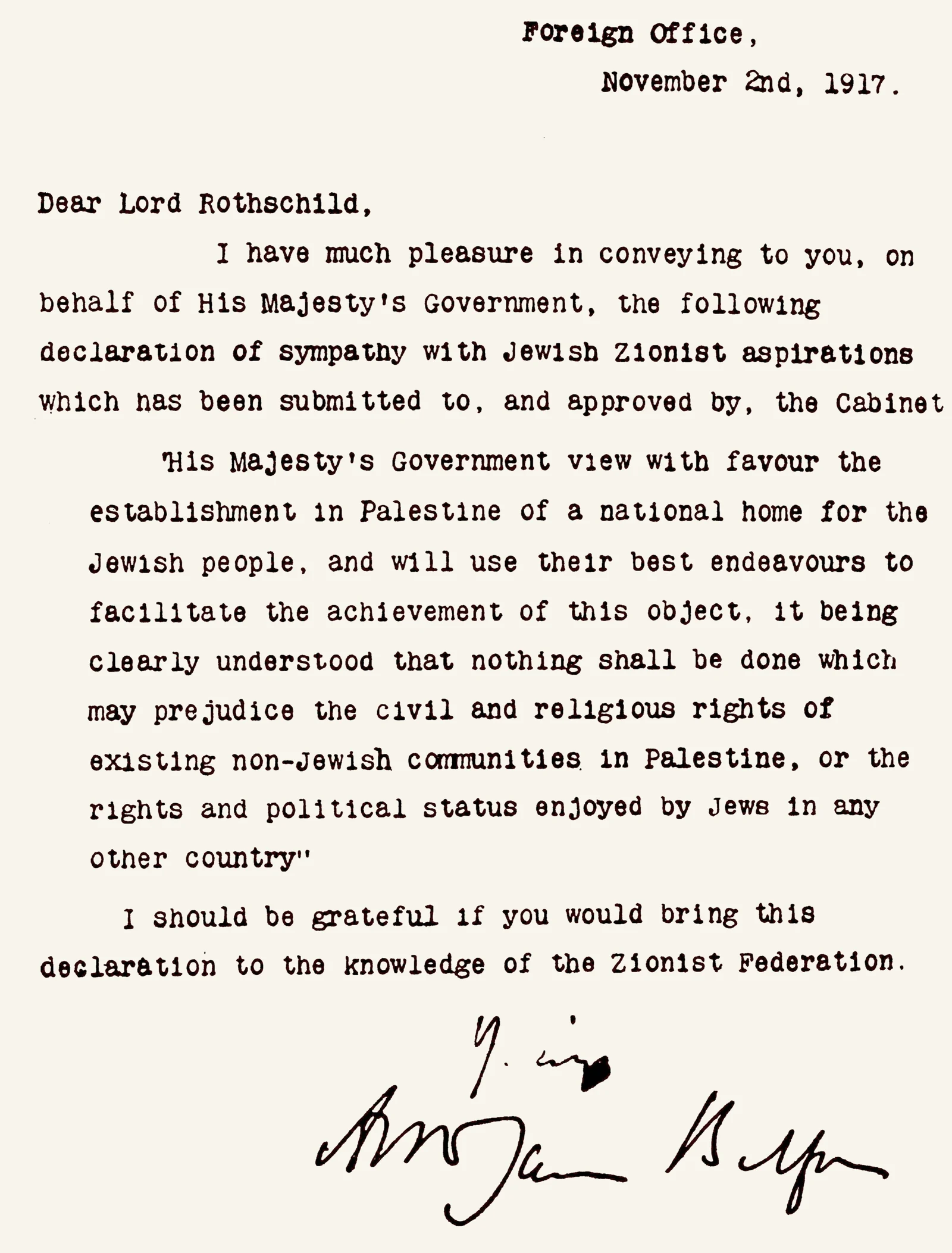
The Balfour Declaration of 2 November 1917 was a letter from Foreign Secretary Arthur Balfour to Lord Rothschild, conveying the Cabinet's position. It also promised protection for the civil and religious rights of the existing non-Jewish communities and the rights and political status of Jews elsewhere.
Those commitments were not identical. The letter recognised a Jewish national objective while describing the existing non-Jewish population through protections for civil and religious rights. It did not promise them a corresponding national government. The gendarmes served the British administration implementing that policy. Our account of Britain's role in the creation of Israel follows the wider history beyond this particular police force.
Armed policing under the Palestine Mandate
The League of Nations mandate gave Britain extensive authority over Palestine's administration. Its provisions joined the national-home commitment to responsibilities for government, public order and protection of rights.
Article 17 allowed the administration to organise forces voluntarily for public order and defence, under British supervision. It also permitted contributions towards the cost of British forces and guaranteed British access to roads, railways and ports for military movement and supplies. These were practical powers over policing, transport and expenditure.
The mandate's text therefore helps explain where a British gendarmerie fitted. It served an administration whose coercive powers were supervised by Britain. The transfer of personnel from Ireland took place within that structure. Neither the RIC's departure from southern Ireland nor the change in a recruit's uniform meant that he had left British imperial service.
What happened when the gendarmes confronted crowds?
The force's reputation arrived with its recruits. Historian Seán William Gannon's research identifies substantial recruitment from both the regular RIC and the Auxiliaries, including former Black and Tans. Colonel Angus McNeill commanded the British gendarmerie, while Hugh Tudor held wider authority over security in Palestine.
Gannon describes crowd dispersal using rifle butts and batons. After a confrontation in Nablus in October 1922, chief secretary Wyndham Deedes welcomed the deterrent effect of the news. British officials regarded the fear created by the force as useful.
Gannon also finds that its discipline and conduct did not simply reproduce the record of the Irish forces. His study of the gendarmerie supports a specific history of transferred men and coercive methods, rather than treating every later act of violence in Palestine as the work of the same contingent.
From the gendarmerie to the Palestine Police
The British gendarmerie was dissolved in 1926. Some personnel continued in the British section of the Palestine Police. Recruitment and reorganisation changed the force over time; its later membership cannot be treated as an unchanged group from Ireland.
Britain recruited from a police force being dismantled in Ireland to staff another instrument of British rule. Parliament discussed the savings. The mandate defined the administration's powers. In Balbriggan, residents had rebuilt lives damaged by reprisals; in Palestine, armed policing served a government they had not chosen. The same careers crossed both countries, even though the political struggles and the conduct of the forces differed.
For a separate account of British military violence in the same post-war period, read about the Jallianwala Bagh massacre in Amritsar.
For the ministerial decisions behind the campaign and the 1922 Treaty crisis, read Churchill’s role in reprisals and the Four Courts attack.
Frequently asked questions
Did Black and Tans serve in Palestine?
Yes. Former Black and Tans were among the men recruited from the Irish police for the British Palestine Gendarmerie in 1922. It also included former Auxiliaries and other personnel.
Were the Black and Tans and Auxiliaries the same force?
No. Both served within the RIC structure, but the Black and Tans and the Auxiliary Division were distinct groups. The Auxiliaries recruited former military officers.
Why did Churchill support the Palestine Gendarmerie?
He told Parliament in March 1922 that it would allow Britain to dispense with at least two cavalry regiments and reduce expenditure.
What happened in the sack of Balbriggan?
In September 1920, British police carried out reprisals after a policeman was killed. James Lawless and John Gibbons were killed, homes and businesses were burned and families were displaced.
Sources & further reading
- Cork Public Museum: The Crown Forces ↗
- John Borgonovo, UCC: The IRA Offensive against the Royal Irish Constabulary, 1920 ↗
- Fingal Local Studies and Archives: Sack of Balbriggan exhibition ↗
- National Army Museum: Irish War of Independence ↗
- Hansard: Middle Eastern Services, 9 March 1922 ↗
- Balfour Declaration, 2 November 1917 ↗
- Palestine Mandate, 1922 ↗
- Seán William Gannon: The Formation, Composition and Conduct of the British Section of the Palestine Gendarmerie, 1922–1926 ↗
Image credits
- Members of an American relief committee standing inside ruined factory buildings at Balbriggan
W. D. Hogan / National Library of Ireland, via Wikimedia Commons · No known copyright restrictions
Resized and converted to WebP. No cropping or historical detail altered.
- An Auxiliary posing beside a Lewis gun outside a Dublin pub in February 1921
W. D. Hogan / National Library of Ireland, via Wikimedia Commons · Public domain
Resized and converted to WebP. No cropping or historical detail altered.
- General Allenby walking into Jerusalem with officers in December 1917
Underwood & Underwood / Library of Congress, via Wikimedia Commons · No known copyright restrictions
Resized where necessary and converted to WebP. No cropping or historical detail altered.
- The typed Balfour Declaration dated 2 November 1917 and signed by Arthur Balfour
UK Government / British Library, via Wikimedia Commons · Public domain (expired Crown copyright)
Resized and converted to WebP. No cropping or historical detail altered.
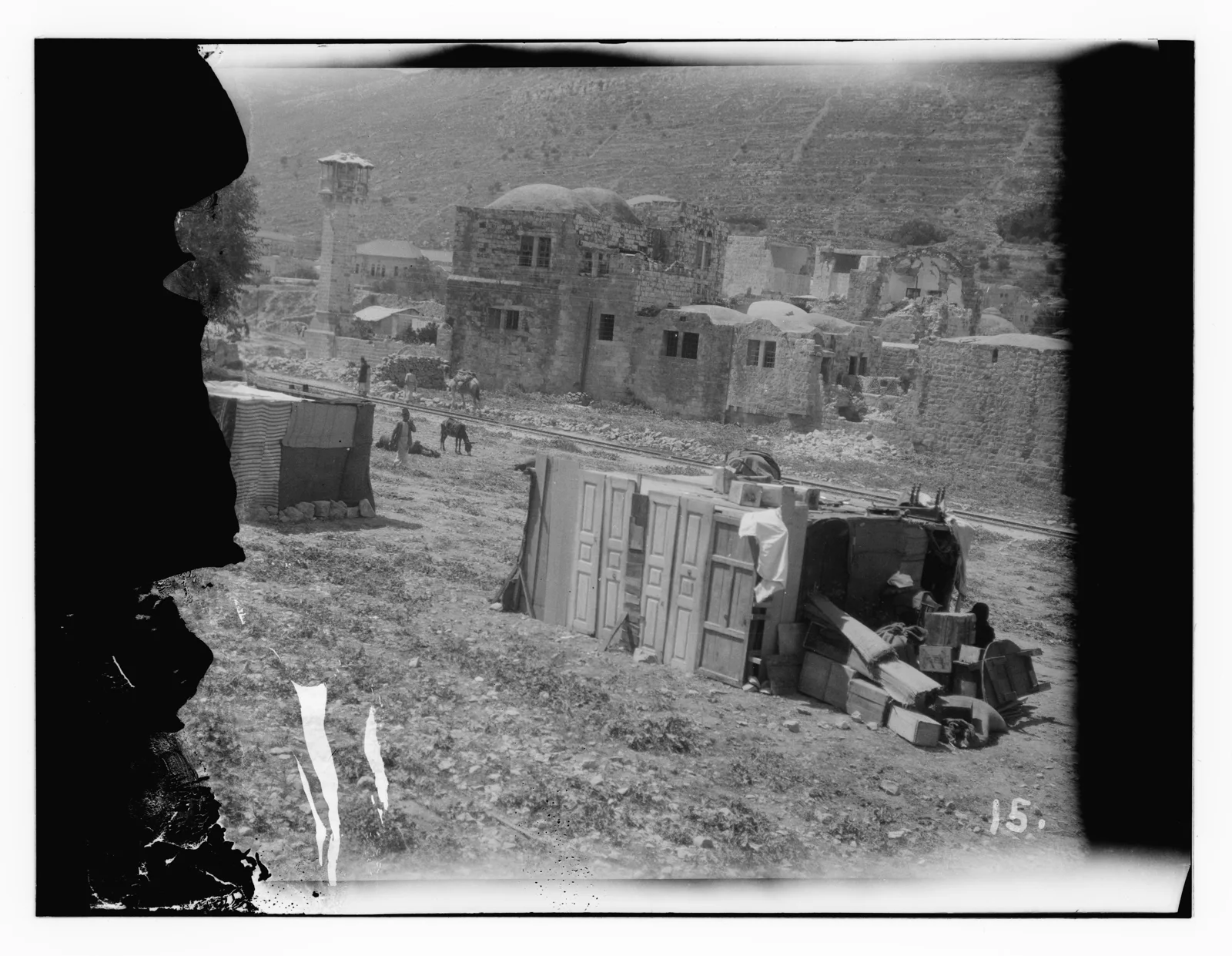
- Buildings and an open area in Nablus on a damaged historical negative
Matson Collection / Library of Congress, via Wikimedia Commons · No known copyright restrictions
Resized and converted to WebP. No cropping or historical detail altered.


Something we should correct? Send a correction.
Keep reading
More stories
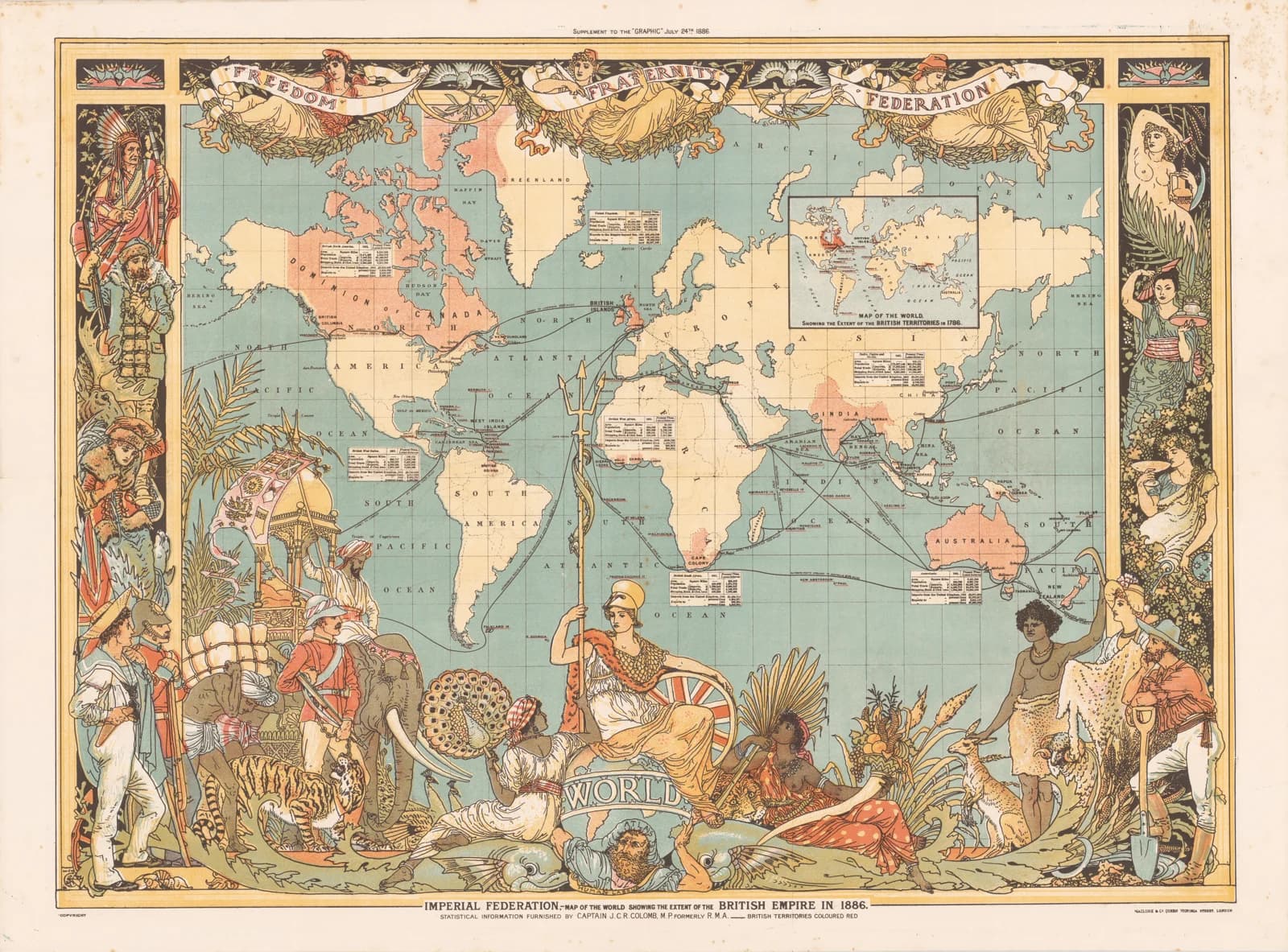
World history · 8 min read
How the British Empire Rose and Fell
How Britain built its empire through conquest, trade and slavery, and how resistance, world wars and independence movements ended colonial rule.
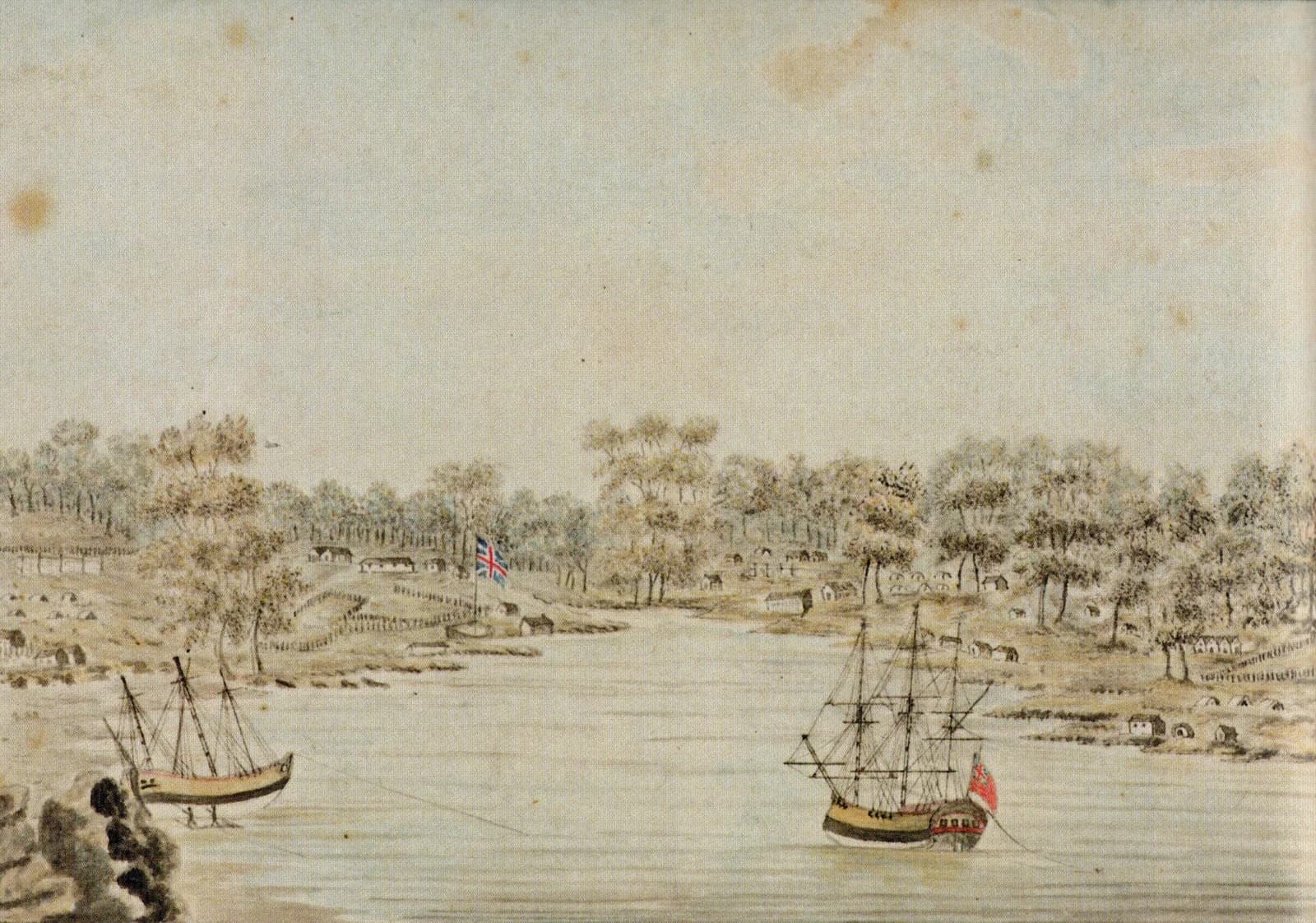
Australian history · 7 min read
British Invasion of Australia: Land and Aboriginal Resistance
How Britain’s invasion of Australia took Aboriginal land, from Sydney Cove and Pemulwuy to Tasmania, Myall Creek, the Stolen Generations and Mabo.
Irish history · 7 min read
The Guildford Four: False Confessions and Wrongful Convictions
How police evidence put the Guildford Four in prison, why their convictions collapsed and what happened to Giuseppe Conlon and the Maguire Seven.