Indian history
Jallianwala Bagh: The Amritsar Massacre of 1919
Why Dyer ordered the Amritsar massacre, what happened at Jallianwala Bagh on 13 April 1919 and how the killings changed opposition to British rule.
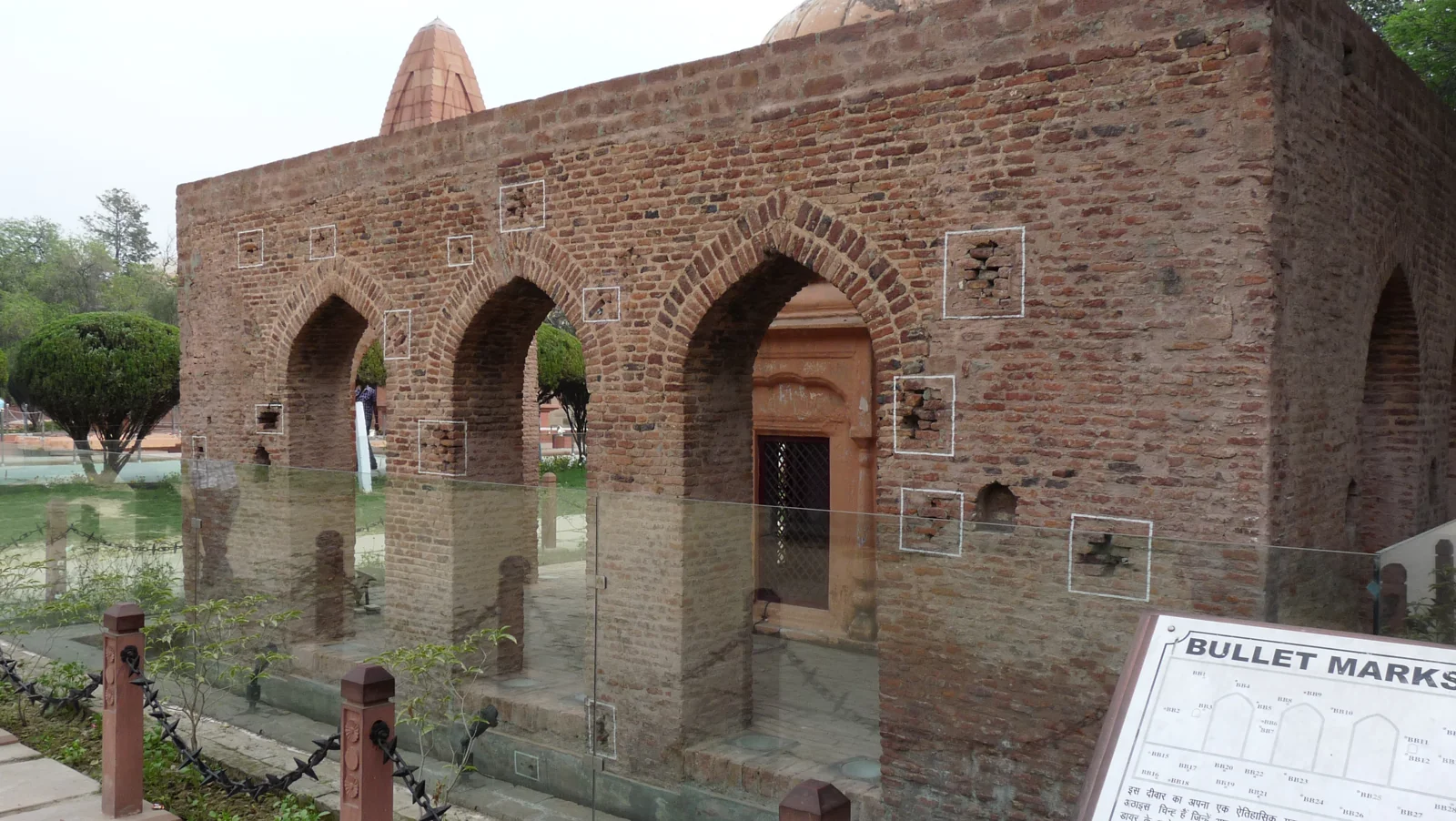
On 13 April 1919, Brigadier-General Reginald Dyer ordered troops of the British Indian Army to fire into a crowd at Jallianwala Bagh in Amritsar. They gave no warning to disperse. The shooting lasted about ten minutes and killed hundreds of people. British authorities recorded 379 deaths; the Indian National Congress inquiry estimated around 1,000. The exact toll remains disputed.
The crowd had gathered during Baisakhi, a major festival in Punjab, amid protests against British rule. Some people had come to a political meeting and others were visitors to the city. Dyer treated their presence as an act to be punished. The Amritsar massacre, also known as the Jallianwala Bagh massacre, intensified Indian opposition to British government and provoked a bitter argument in Britain over the violence used to maintain its empire.
Why was Amritsar in turmoil in 1919?
India had supplied soldiers and resources to Britain's war effort during the First World War. Peace brought growing demands for political change. Instead, the Rowlatt legislation provided exceptional powers of repression, including detention without ordinary trial. Gandhi organised opposition, while local leaders mobilised protests in Punjab.
In Amritsar, the authorities arrested Saifuddin Kitchlew and Satyapal on 10 April and removed them from the city. People demanding their release tried to reach the civil lines, the district occupied by British officials. Troops fired on demonstrators. Violence then spread through the city: banks and public buildings were attacked and five Europeans were killed.
The official Disorders Inquiry report documents the arrests, shootings and attacks. Its members disagreed over parts of the authorities' response. The violence of 10 April formed the background to Dyer's decisions, but it did not establish that the people gathered three days later were responsible for those attacks.
Who gathered at Jallianwala Bagh?
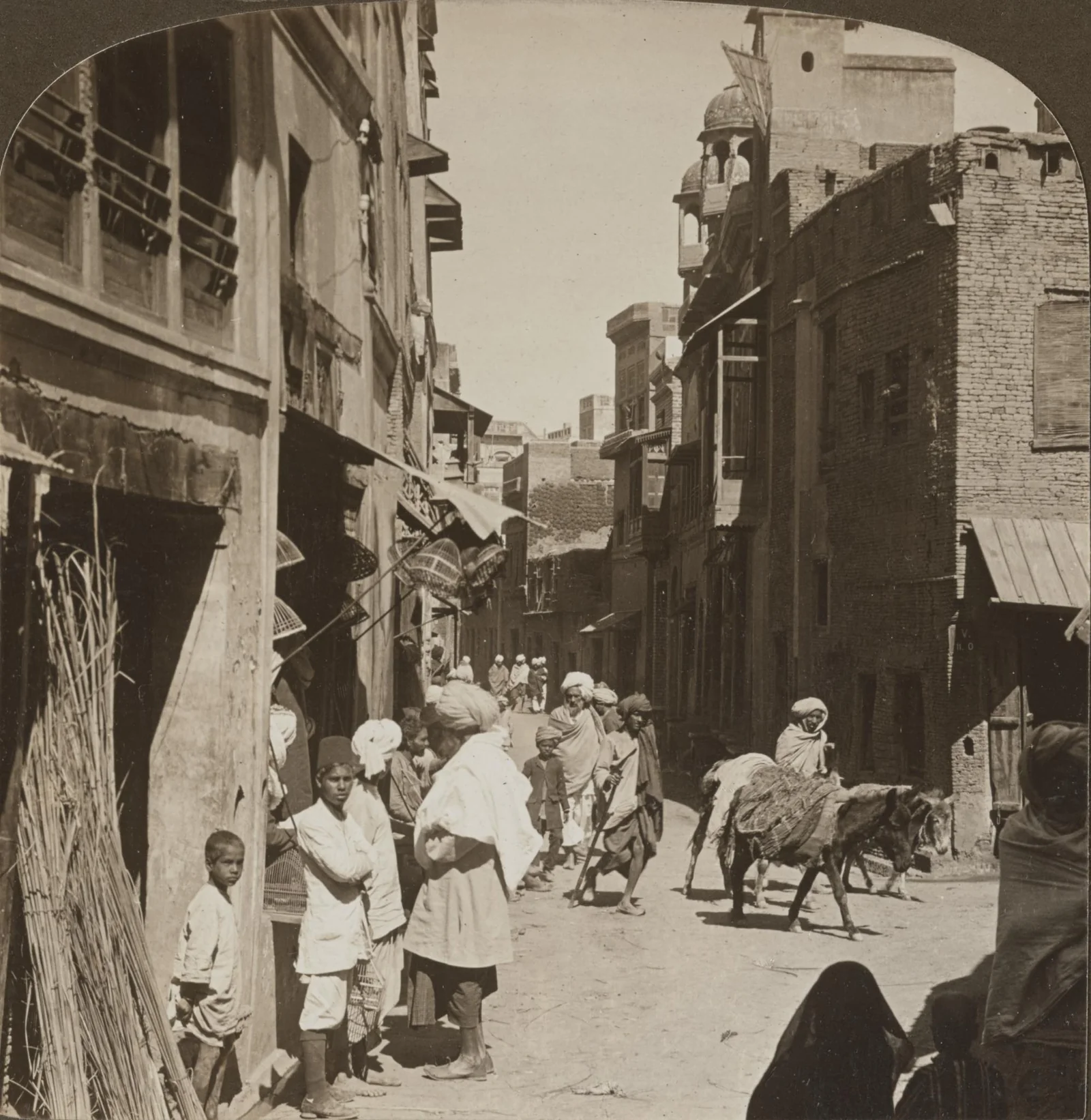
Jallianwala Bagh was an enclosed open space among buildings, rather than the landscaped memorial garden visitors see today. Its main approach was narrow and the surrounding walls and houses left few routes out. A large crowd could assemble inside much more easily than it could escape.
On 13 April, Baisakhi brought visitors into Amritsar. A political meeting also drew people to the Bagh. The gathering therefore cannot be described simply as a single organised body of protesters, still less as an attacking army. There were local residents, visitors and children among those present.
Dyer had proclaimed a ban on meetings that morning. Not everyone in the crowd had heard it. Crucially, the ban preceded the formal proclamation of martial law in Amritsar on 15 April. Later descriptions sometimes collapse these separate events into one. The distinction appears in the inquiry material and in the questioning of Dyer reproduced by the Congress investigation.
Dyer ordered fire without warning
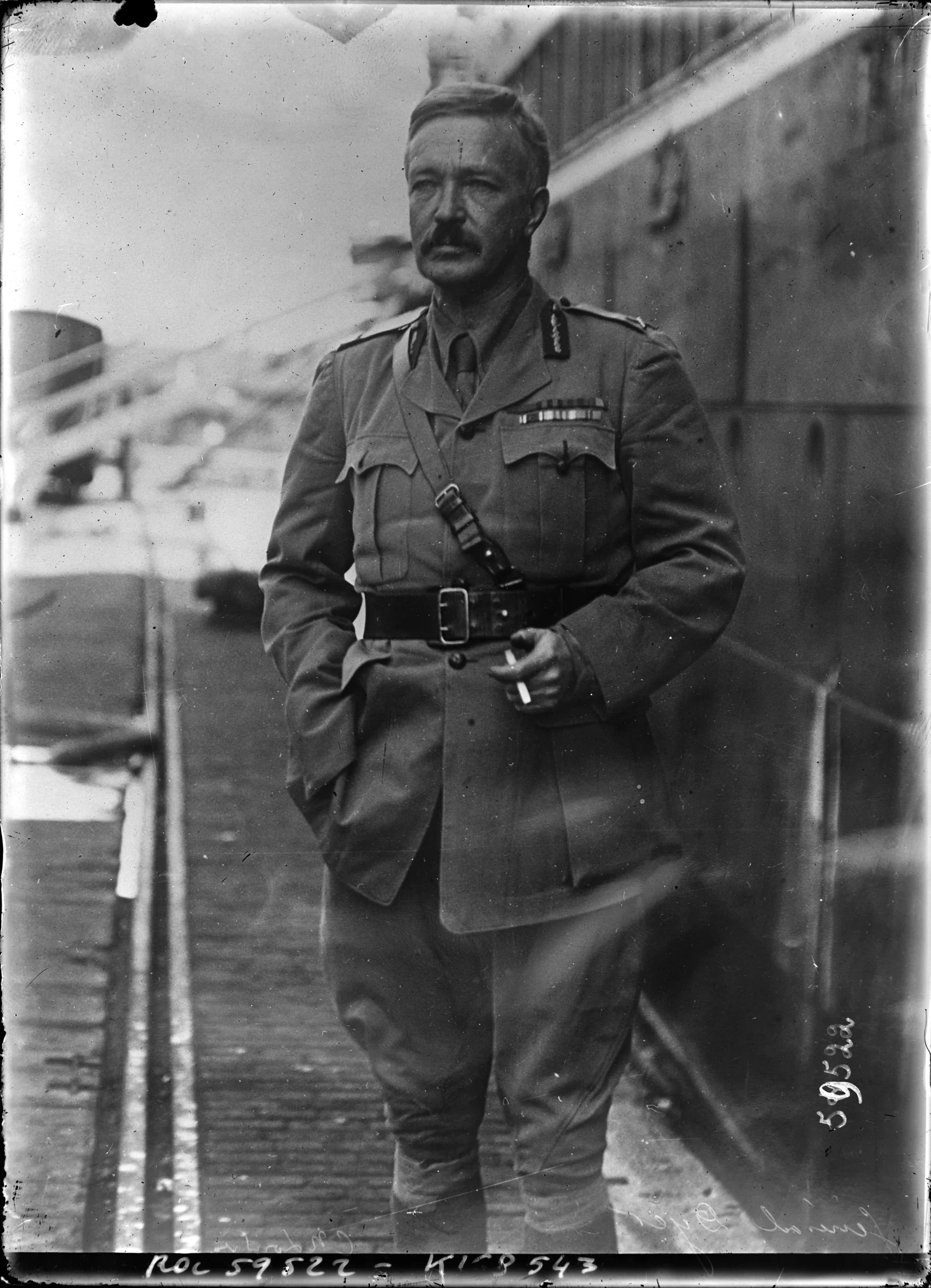
Dyer reached the Bagh late in the afternoon with troops of the British Indian Army. His force included Indian soldiers and Gurkhas under British command. Two armoured cars could not pass through the narrow entrance. The riflemen entered and took up positions facing the crowd.
He did not first tell the people to leave or give them time to find the exits. He ordered firing almost immediately. As people fled, shooting continued. Dyer directed fire towards dense groups, turning the restricted routes out into places of particular danger.
About 1,650 rounds were fired in roughly ten minutes. The crowd was not advancing on the troops. People were trying to escape or find protection from the bullets. In the Commons debate of 8 July 1920, Winston Churchill described the crowd moving away from each direction of fire and the troops eventually marching out.
The narrow entrance prevented the armoured cars from joining the shooting. It did not mean that there was literally only one possible opening through the surrounding buildings. The Congress report described several small outlets. None provided a safe, easy exit for a crowd under sustained fire.
How many people were killed?
The official British figure was 379 dead. It is often repeated as though it were a complete count, but the number was disputed from the beginning. Hundreds more were wounded and estimates of injuries also varied.
The Congress inquiry judged a death toll of around 1,000 credible. Its account drew on testimony and investigation undertaken separately from the government inquiry. The House of Commons Library's centenary briefing still identifies the total as disputed, distinguishing the official 379 from higher estimates.
These numbers should remain attached to their sources. Giving an exact total without qualification would conceal the uncertainty. Equally, the uncertainty does not make the scale of the killing doubtful: the official count alone records hundreds of deaths in a few minutes.
After the shooting, Dyer withdrew without arranging aid for the wounded. In testimony collected by Congress, Girdhari Lal described people leaving injured or dead relatives behind because they feared being shot after the evening curfew. Survivors faced a second danger after the troops had gone: reaching help without risking another encounter with the authorities.
Punishment continued after the massacre
The shooting was followed by a wider regime of coercion in Punjab. In Amritsar, Dyer imposed an order requiring Indians to crawl along a street where a British missionary, Marcella Sherwood, had been attacked on 10 April. Sherwood had survived the assault with help from Indians.
The punishment applied beyond her attackers. The National Army Museum's account of the crawling order records that even men who had helped her were subjected to it. An entire street became a place where the army enforced public humiliation.
The attack on Sherwood and the murders of Europeans were real acts of violence. Collective punishment did not distinguish the people responsible from residents who had taken no part. That failure to distinguish individuals also lay at the centre of the argument over Dyer's treatment of the Bagh crowd.
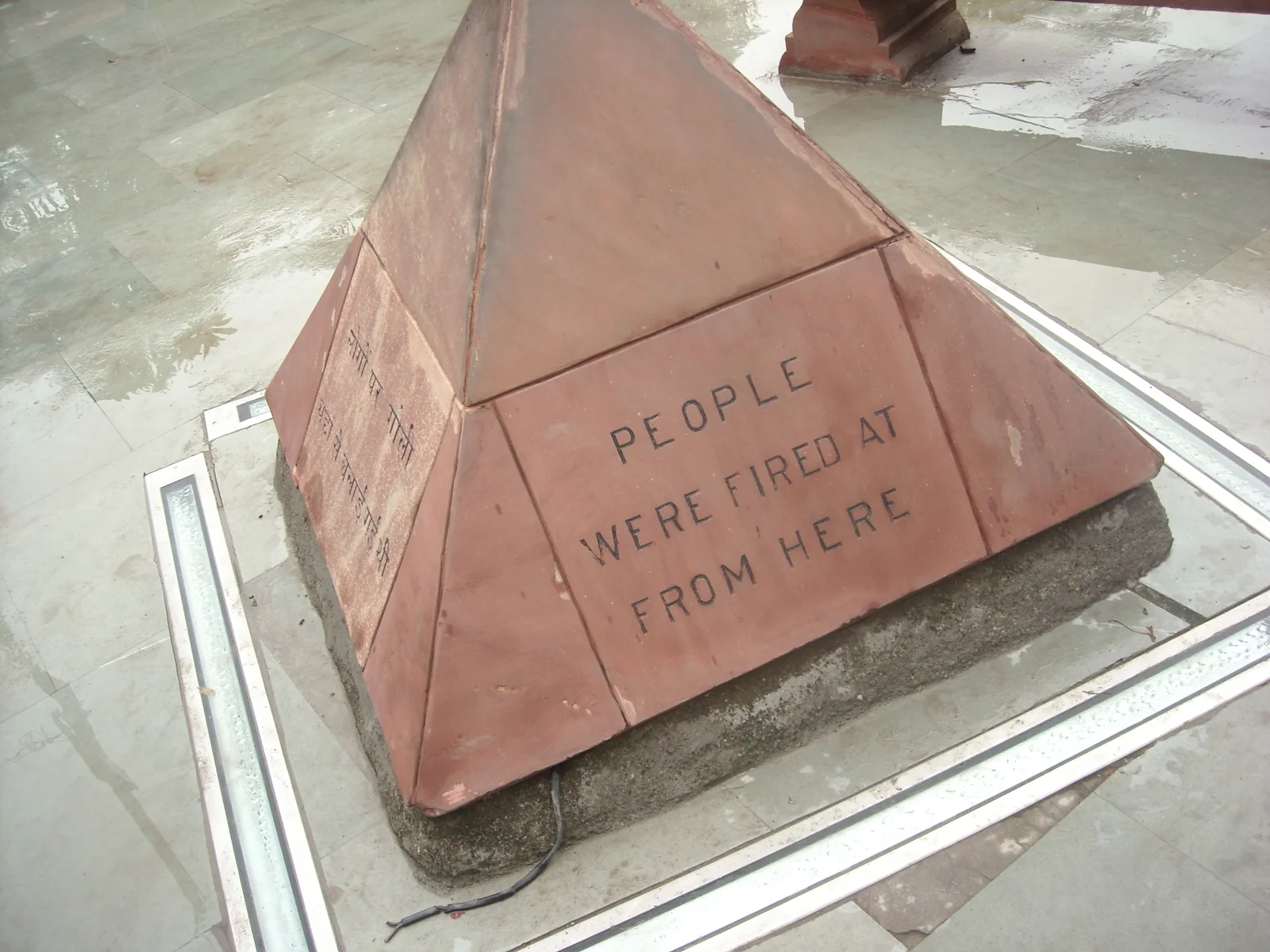
The modern marker identifying the firing position and the preserved bullet-marked walls commemorate different parts of the same event. They are later memorial features and surviving traces, not photographs of the shooting itself.
What did the inquiries conclude?
The British government appointed a committee chaired by Lord Hunter to investigate the disturbances. Its proceedings gathered evidence about events in Amritsar and elsewhere. Parliament's archive holds the minutes of evidence, published in 1920.
The committee's majority criticised Dyer for opening fire without warning and continuing after the crowd began dispersing. The Indian members' minority report condemned his conduct more strongly. The disagreement concerned the extent of his culpability and the wider official response, not whether he had ordered the shooting.
The Congress inquiry was a separate investigation, not another name for the Hunter Committee. Its members included Gandhi and prominent lawyers. The Indian Publications Division's account describes how examining the repression deepened Gandhi's distrust of the Raj. His expectation that the government would correct abuses by its officers was not fulfilled.
What happened to Dyer?
Dyer was forced to retire in July 1920. That ended his military career, but it did not produce a common verdict in Britain. Supporters treated him as a defender of the empire and raised money for him through the conservative Morning Post newspaper.
The National Army Museum records a collection of £26,000. The fund showed that official criticism coexisted with public approval of his actions. Retirement and acclaim were both part of his reception.
Churchill had condemned the massacre in the Commons. His speech challenged the use of slaughter to intimidate a whole province while defending continued British rule. Opposition to Dyer did not necessarily mean support for Indian independence. The argument within Britain included a dispute over how to govern the empire, alongside the much larger Indian demand to end colonial subordination.
How did Amritsar change opposition to British rule?
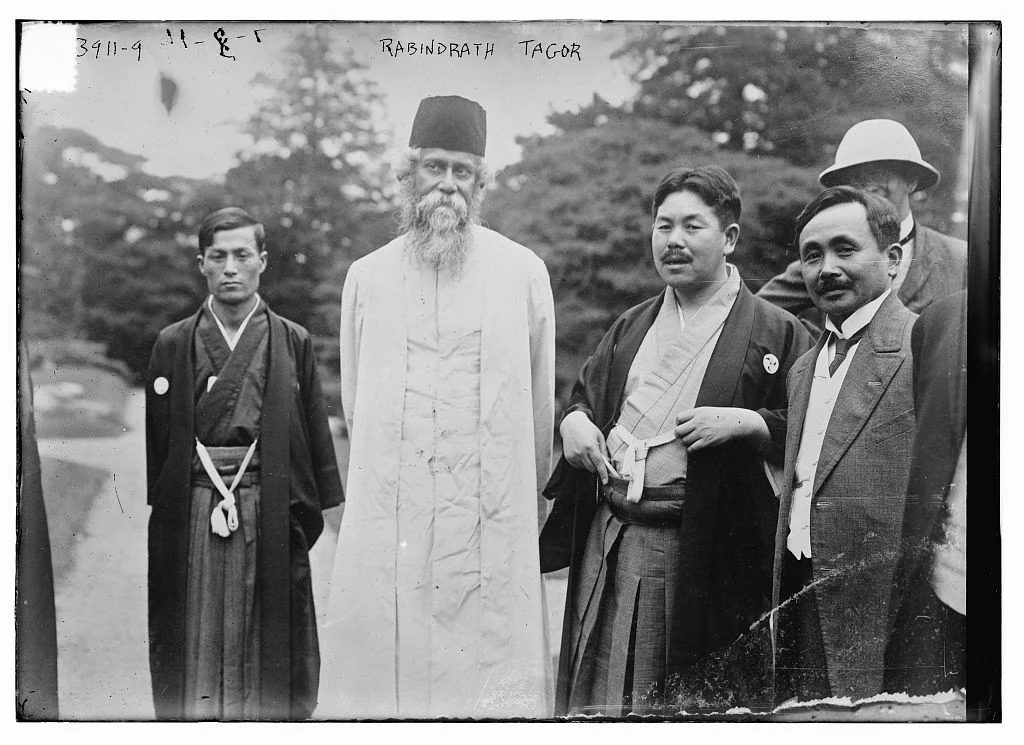
Rabindranath Tagore responded by asking to surrender the knighthood he had accepted in 1915. His protest rejected an honour from a government responsible for humiliating and killing its subjects. The Indian government's biography of Tagore records his rejection of the title in protest at Amritsar.
The massacre strengthened the case against trusting British assurances of justice. It helped expand support for Gandhi's independence movement, although independence did not follow immediately and cannot be explained by one event alone. Investigations, political organisation and public remembrance carried the consequences far beyond Amritsar.
Other movements confronting British authority were developing during the same post-war years. The Connaught Rangers mutiny in India follows Irish soldiers who refused duty there in 1920 in protest at British actions in Ireland. Our story on the Black and Tans in Ireland and Palestine follows a different use of armed force and recruitment across the empire. The events and personnel were distinct; the connection is the wider struggle over how British rule was maintained.
At Amritsar, the central decisions remain clear despite disagreement over the final death toll. Dyer ordered troops to shoot without warning, continued as the crowd fled and left without organising help for those they had wounded. The people killed were not casualties of a battle between two armies. They were people gathered in an enclosed space under colonial rule.
Frequently asked questions
When was the Jallianwala Bagh massacre?
It took place on 13 April 1919 in Amritsar, Punjab, during Baisakhi. Troops of the British Indian Army fired into a crowd on Dyer’s orders.
Who ordered the Amritsar massacre?
Brigadier-General Reginald Dyer commanded the troops and ordered them to fire without first warning the crowd to disperse.
How many people died at Jallianwala Bagh?
British authorities recorded 379 deaths. The Indian National Congress inquiry estimated around 1,000. The exact death toll remains disputed.
Was martial law already in force when the shooting began?
Dyer had banned public meetings, but formal martial law in Amritsar was proclaimed on 15 April, two days after the massacre.
What happened to General Dyer afterwards?
Dyer was forced to retire in July 1920. Supporters in Britain nevertheless raised £26,000 for him through a Morning Post appeal.
Sources & further reading
- Disorders Inquiry Committee report, 1919–1920 ↗
- Congress report on the Punjab disorders, Collected Works of Gandhi volume 20 ↗
- Hansard: Army Council and General Dyer, 8 July 1920 ↗
- House of Commons Library: Jallianwala Bagh massacre, 2019 ↗
- National Army Museum: crawling-order photograph and account ↗
- UK Parliament: Hunter Committee evidence ↗
- Indian Publications Division: Jallianwala Bagh Tragedy ↗
- National Army Museum: Dyer statement and retirement ↗
- Government of India: Tagore, the poet and educator ↗
- Hansard: East India Revenue Accounts, 22 May 1919 ↗
Image credits
- Brick walls with marked bullet damage at Jallianwala Bagh in Amritsar
Sychonet / Wikimedia Commons · CC0 1.0
Resized where necessary and converted to WebP. No cropping or historical detail altered.
- People and a laden donkey in a narrow street in old Amritsar
H. C. White Co. / Library of Congress, via Wikimedia Commons · Public domain
Resized where necessary and converted to WebP. No cropping or historical detail altered.
- Reginald Dyer standing in uniform beside a building
Central News / Agence Rol / Bibliothèque nationale de France, via Wikimedia Commons · Public domain
Resized where necessary and converted to WebP. No cropping or historical detail altered.
- A memorial marker inscribed People were fired at from here
Sivashankar96 / Wikimedia Commons · CC BY-SA 3.0
Resized and converted to WebP. Image adaptation distributed under CC BY-SA 3.0. No cropping.
- Rabindranath Tagore standing with three other people
Bain News Service / Library of Congress, via Wikimedia Commons · Public domain
Resized where necessary and converted to WebP. No cropping or historical detail altered.


Something we should correct? Send a correction.
Keep reading
More stories
Irish history · 7 min read
Churchill and Ireland: Reprisals, the Treaty and the Four Courts
How Churchill backed reprisals in Ireland, pressured the Treaty government and supplied arms for the Four Courts, then opposed returning the Treaty Ports.
Irish history · 6 min read
The Doolough Tragedy: A Famine Walk Under Threat of Losing Relief
Why starving families were ordered from Louisburgh to Delphi in March 1849, who died at Doolough and how officials faced accusations over the journey.
Irish history · 7 min read
The Guildford Four: False Confessions and Wrongful Convictions
How police evidence put the Guildford Four in prison, why their convictions collapsed and what happened to Giuseppe Conlon and the Maguire Seven.