Irish history
Connaught Rangers Mutiny: Why Irish Soldiers Refused Duty in India
Why the Connaught Rangers mutinied in India in 1920, how British guards killed two soldiers and why James Daly faced a firing squad.
In June 1920, Irish soldiers of the Connaught Rangers refused duty in British-ruled India in protest at British military repression in Ireland. The refusal spread between two garrisons. British Army guards killed two men during an attempt to recover weapons at Solan, and a military firing squad later executed James Daly. The surviving prisoners did not regain their freedom until 1923.
The men had enlisted in the army whose conduct they now opposed. Their protest brought the Irish struggle for independence into an imperial garrison thousands of miles away, where British officers treated a challenge to military obedience as a threat to their authority.
Who were the Connaught Rangers?
The Connaught Rangers were a British Army infantry regiment with strong recruiting ties to western Ireland. The regiment formed in 1881 through the merger of the 88th and 94th Regiments of Foot. Its soldiers served across the empire as well as in Europe.
During the First World War, its battalions fought in France, Gallipoli, Mesopotamia and Palestine. The 1st Battalion spent much of the post-war period in India. Irish recruitment and British service were woven together in the regiment long before the mutiny. The National Army Museum’s regimental history traces that service through to disbandment in 1922.
Daly came from a military family. His father had served in the British Army, and his brothers enlisted during the war. He had tried to enlist while under age before joining the Connaught Rangers in April 1919. Born in Ballymoe, he grew up in Tyrellspass in County Westmeath. David Murphy’s biography follows his path from enlistment to the protest at Solan.
Why did Irish soldiers refuse duty?
News from Ireland reached the soldiers through letters from relatives and friends. The men who joined the protest said they could no longer serve an army carrying out repression in their own country. Their opposition arose during the War of Independence, when British forces were trying to defeat the republican movement.
Historian Michael Silvestri distinguishes the soldiers’ stated protest against British Army actions from the later shorthand that they had mutinied against the Black and Tans. He notes that the soldiers and military authorities did not use that phrase in 1920. The distinction keeps the chronology clear: the mutiny preceded the sack of Balbriggan, which happened in September. Silvestri’s account also describes strained relations within the regiment, inactivity and the Punjab heat.
Mario Draper gives greater weight to failures of military leadership and discipline. His study challenges the idea that the men were simply inexperienced recruits: many had substantial service behind them. That disagreement concerns the relative force of political conviction and regimental grievances. The soldiers’ declared objection to British actions in Ireland remains part of the contemporary evidence. Read Draper’s study.
From Jullundur to the armoury at Solan
The refusal of duty began at Wellington Barracks in Jullundur, now Jalandhar, in late June. Joseph Hawes, from County Clare, was prominent among the first protesters. The Irish tricolour flew over the barracks. Messengers carried news to other Connaught Rangers companies, and men at Solan joined, with Daly emerging as a leader. The company at Jutogh did not follow them.
At Solan, the men initially agreed to place their weapons in the magazine, the guarded building where arms and ammunition were stored. Daly then led a group attempting to recover them. Guards opened fire. Patrick Smythe, also written Smyth, and Peter Sears were killed. Eugene Egan was wounded.
The military inquiry attributed the deaths to the magazine’s defenders and justified their firing as a response to an attack with bayonets. That was the army’s ruling on its own men’s actions. The Military Service Pensions Archive preserves the inquiry and accounts by participants, including Egan. These distinguish the initial refusal to work from the armed confrontation that followed.
How Britain punished the mutineers
British troops ended the protest and arrested the men. Courts-martial imposed prison terms and death sentences. Published accounts give conflicting totals for those tried, convicted and sentenced to death, but agree that only Daly’s death sentence was carried out.
The deaths at Solan also reached Parliament. On 27 July 1920, Winston Churchill, then Secretary of State for War, confirmed that two men had been killed and one wounded. Asked about pensions for their dependants, he referred the question to the Minister of Pensions. The Hansard exchange records the government acknowledging the casualties while the consequences for their families remained unresolved.
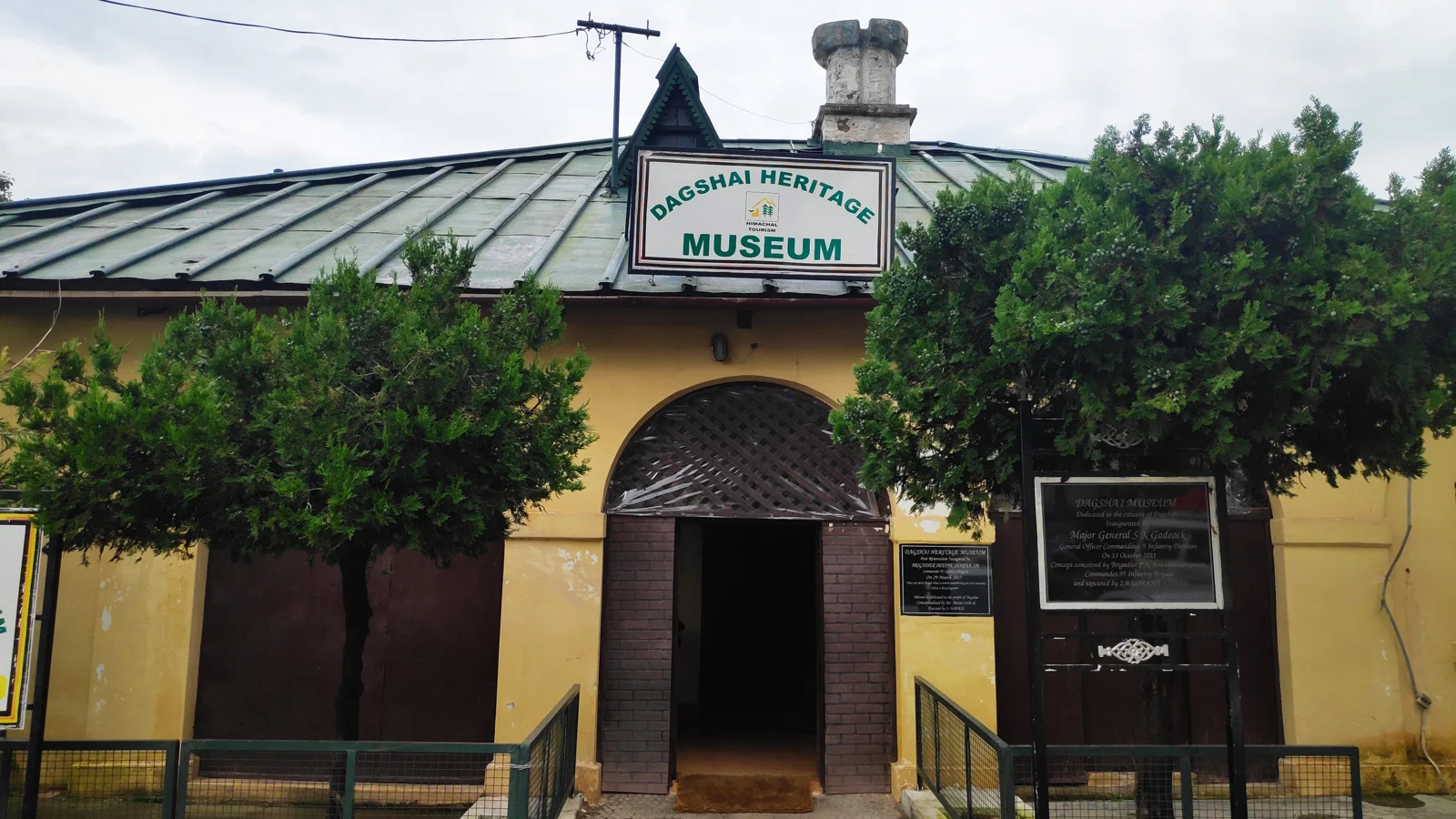
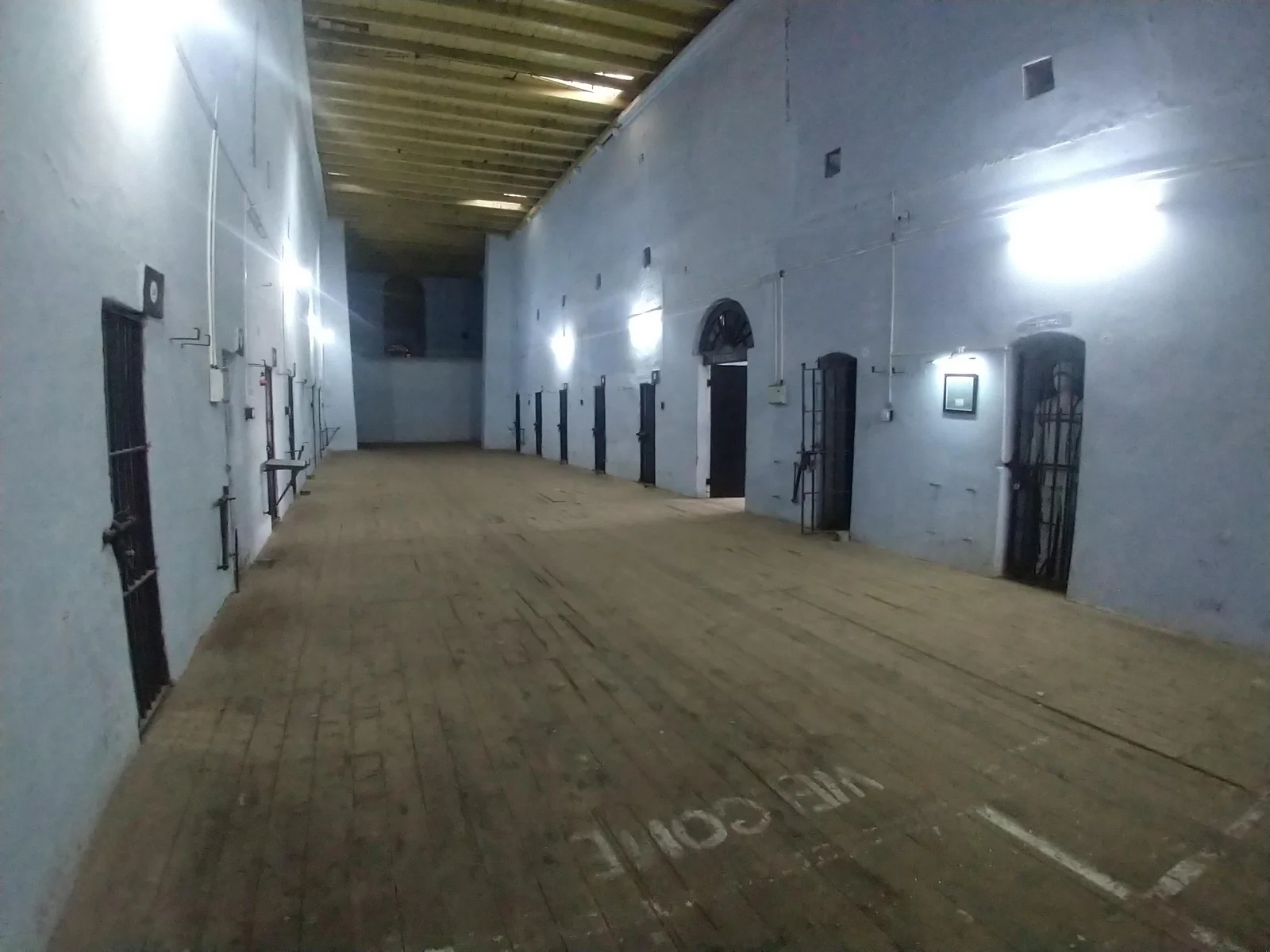
On 2 November 1920, a British firing squad shot Daly at Dagshai. He was buried in India. British military authorities confirmed his sentence while commuting the others.
Ireland’s protest inside British India
The British government ruled India as well as Ireland. Only a year before the mutiny, troops under Brigadier-General Reginald Dyer had killed hundreds at Jallianwala Bagh in Amritsar.
Thomas Bartlett connects the decision to execute Daly with British fears about discipline in India. He cites Viceroy Lord Chelmsford’s concern that failing to impose the severest punishment on British soldiers would weaken the authorities’ position when dealing with Indian troops. It was an argument for maintaining imperial authority, not evidence that the Rangers had organised an Indian rebellion.
Bartlett also finds no attempt by the mutineers to coordinate their protest with the Indian national movement. Their action challenged the army they served, but its immediate demand concerned Ireland. His account separates that protest from the wider Indo-Irish solidarity later associated with it.
Freedom did not restore their pensions
The surviving mutineers were released in 1923. Imprisonment had cost them years of their lives, while convictions had stripped them of British Army pension rights. Public welcomes in Ireland did not provide a livelihood. Former mutineers campaigned for state assistance, and some lived in poverty during the following decade, as Silvestri documents.
The Irish state eventually passed the Connaught Rangers (Pensions) Act in 1936. It provided a framework for service and disability pensions, gratuities and allowances for dependants. Applicants had to establish that they met its conditions. The law recognised both service and the consequences of the mutiny through specific categories of support.
The gap between release and legislation was thirteen years. Official recognition came through applications, evidence and payments, after a prolonged campaign by men whose break with the British Army had left them financially exposed.
Bringing the dead home
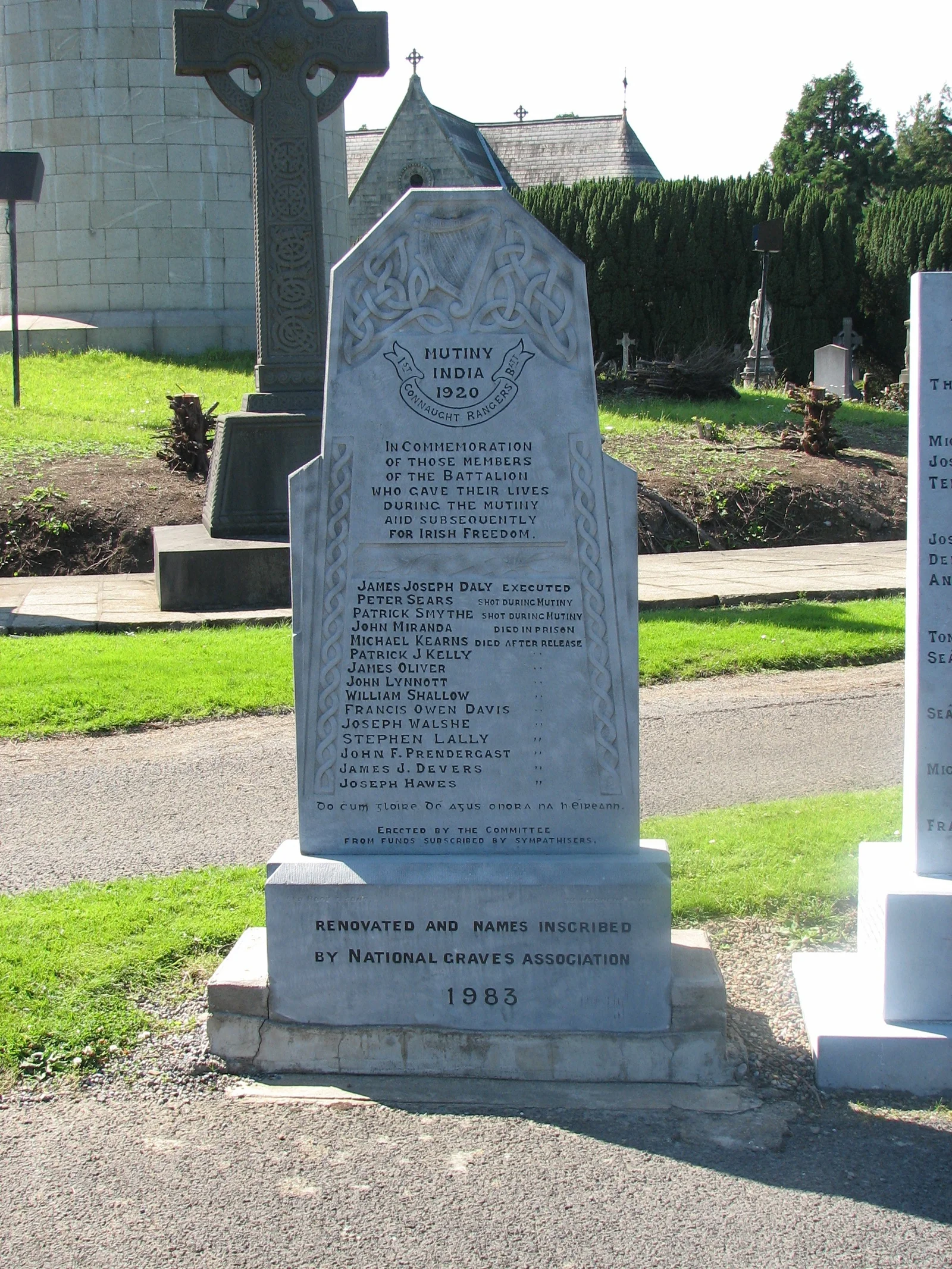
A memorial to the mutineers was unveiled in Glasnevin Cemetery in 1949. In 1970, Daly’s remains and those of Smythe and Sears were returned from India. Daly was reburied in Tyrellspass; Smythe and Sears were reinterred in Glasnevin.
Commemoration continued long after the surviving participants had gone. At a memorial unveiling in Tubbercurry in 2021, President Michael D. Higgins recalled the soldiers’ refusal of duty and discussed the relationship between imperial service, resistance and historical memory. The commemorative address shows how the episode became part of Ireland’s public remembrance.
The men had made a specific demand about British power in Ireland. The British Army imprisoned them and executed Daly. Their later recognition in Ireland took decades, extending the consequences of a brief protest far beyond the barracks where it began.
Frequently asked questions
Why did the Connaught Rangers mutiny?
The men protested against British military repression in Ireland and refused further duty. Letters from home helped spread news of the conflict. Historians also identify poor relations between officers and soldiers as a contributing factor.
Where did the mutiny happen?
It began at Jullundur, now Jalandhar, in Punjab in late June 1920 and spread to Solan, then commonly written Solon. A third garrison at Jutogh did not join.
Why was James Daly executed?
British military authorities convicted Daly for his leadership at Solan, including the attempt to recover weapons from the guarded magazine. He was the only mutineer executed, at Dagshai on 2 November 1920.
Did the mutineers fight for Indian independence?
They protested against British conduct in Ireland while serving in British-ruled India. They did not organise a joint uprising with the Indian independence movement. Later commemorations connected their story with wider resistance to empire.
What happened to the surviving mutineers?
They were imprisoned and released in 1923. The Irish state later provided pensions and other assistance under legislation passed in 1936. Daly, Patrick Smythe and Peter Sears were brought back to Ireland for reburial in 1970.
Sources & further reading
- National Army Museum: The Connaught Rangers ↗
- David Murphy: James Joseph Daly, Dictionary of Irish Biography ↗
- Michael Silvestri: Irish Mutiny in the Punjab, An Cosantóir, June 2015, pp. 22–23 ↗
- Thomas Bartlett: The Connaught Rangers Mutiny India, July 1920 ↗
- Mario Draper: Mutiny under the Sun ↗
- Military Service Pensions Archive: Mutiny in India ↗
- Hansard: Connaught Rangers, 27 July 1920 ↗
- Connaught Rangers (Pensions) Act, 1936 ↗
- President Michael D. Higgins: Connaught Rangers commemoration, 2021 ↗
Image credits
- Entrance to the former military jail at Dagshai, now a museum
Pankajkukreti03 / Wikimedia Commons · CC BY-SA 4.0
Resized where necessary and converted to WebP, without cropping or altering historical detail. This version retains the same CC BY-SA 4.0 licence.
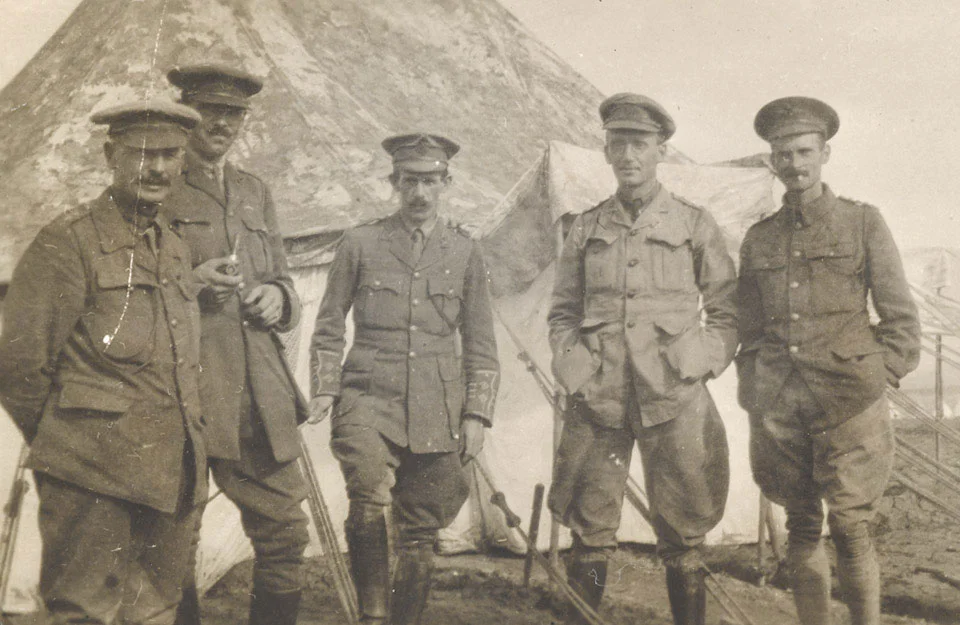
- Five officers of the Connaught Rangers standing together at Gallipoli
Unknown photographer / National Army Museum, via Wikimedia Commons · Public domain
Resized where necessary and converted to WebP, without cropping or altering historical detail.
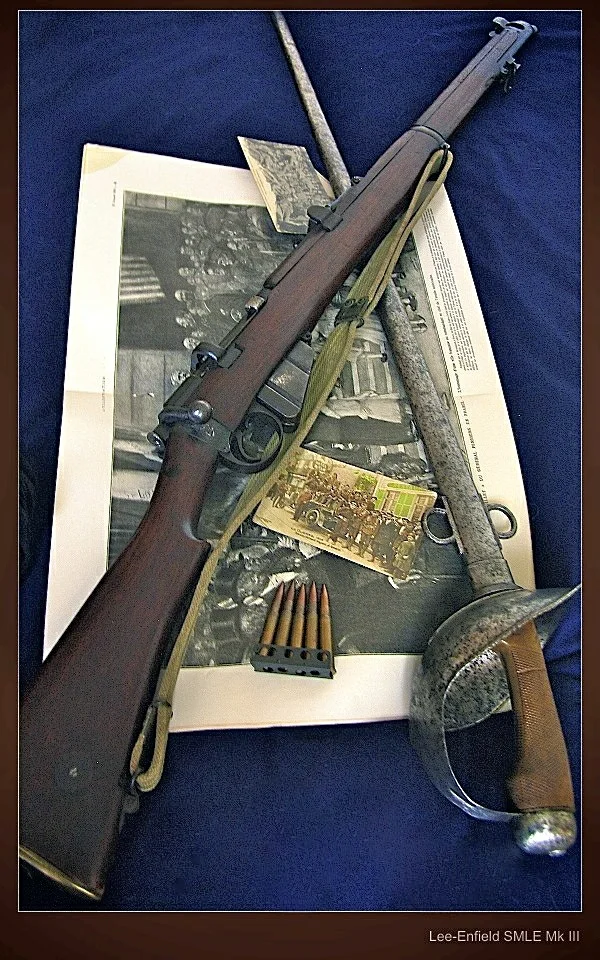
- Lee-Enfield rifle and British military equipment displayed in a museum
vasse nicolas,antoine / Wikimedia Commons · CC BY 2.0
Resized where necessary and converted to WebP, without cropping or altering historical detail.
- A long corridor with cell doors inside Dagshai Jail Museum
Pankajkukreti03 / Wikimedia Commons · CC BY-SA 4.0
Resized where necessary and converted to WebP, without cropping or altering historical detail. This version retains the same CC BY-SA 4.0 licence.
- Stone memorial to the Connaught Rangers mutineers in Glasnevin Cemetery
Domer48 / Wikimedia Commons · Public domain (released by photographer)
Resized where necessary and converted to WebP, without cropping or altering historical detail.


Something we should correct? Send a correction.
Keep reading
More stories
World history · 8 min read
How the British Empire Rose and Fell
How Britain built its empire through conquest, trade and slavery, and how resistance, world wars and independence movements ended colonial rule.
Australian history · 7 min read
British Invasion of Australia: Land and Aboriginal Resistance
How Britain’s invasion of Australia took Aboriginal land, from Sydney Cove and Pemulwuy to Tasmania, Myall Creek, the Stolen Generations and Mabo.
Irish history · 7 min read
The Guildford Four: False Confessions and Wrongful Convictions
How police evidence put the Guildford Four in prison, why their convictions collapsed and what happened to Giuseppe Conlon and the Maguire Seven.