Scottish history
England’s Invasions of Scotland: Independence and Union
How English invasions changed Scotland, from Edward I and Bannockburn to Cromwell, the Acts of Union and Culloden.
English armies invaded Scotland repeatedly, but Scotland did not become part of Great Britain through one lasting medieval conquest. Edward I overthrew a Scottish king in 1296. Scottish resistance recovered independence. Cromwell's forces imposed another conquest in the seventeenth century, while the permanent parliamentary union of 1707 followed negotiations, economic pressure and votes in both kingdoms.
Between those events, Scotland and England shared a monarch from 1603 without sharing a parliament.
Why did Edward I invade Scotland in 1296?
A disputed succession gave Edward I an opening. After the deaths of Alexander III and his granddaughter Margaret, Scotland lacked an agreed monarch. Edward became involved in deciding between rival claimants. John Balliol took the Scottish throne in 1292, but Edward demanded recognition as his overlord.
That claim reduced the authority Balliol could exercise as king. Edward expected military support against France. Scottish leaders instead made an alliance with France, turning a struggle over royal authority into a wider diplomatic conflict.
In 1296 Edward invaded. His forces defeated the Scots at Dunbar, captured strongholds and removed Balliol. The Royal Household's account of Balliol's reign records the king's forced abdication and Edward's removal of the Stone of Scone to Westminster.
Taking the coronation stone carried a political message: Edward was claiming authority over the kingdom as well as defeating its army. Yet possession of castles and royal symbols did not secure lasting acceptance of English rule. Resistance continued beyond Balliol's removal.
How did Wallace and Bruce recover Scottish independence?
William Wallace and Andrew Moray defeated an English army at Stirling Bridge in September 1297. Wallace became Guardian of Scotland in Balliol's name. His defeat at Falkirk the following year did not end resistance, although Wallace was eventually captured and executed in 1305. The Royal Household's biography of Wallace traces those reversals.
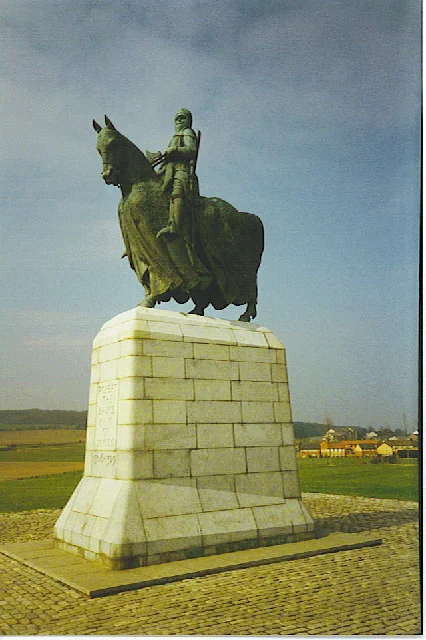
Robert Bruce became king in 1306. At Bannockburn in 1314, his army defeated Edward II's invasion force. The victory strengthened Bruce's position, but winning a battle and obtaining recognition of an independent kingdom were separate tasks.
The Declaration of Arbroath, sent to Pope John XXII in 1320, pressed Scotland's case internationally. It defended the kingdom's independence and Bruce's kingship. It was a diplomatic appeal by Scottish nobles, not a modern referendum. National Records of Scotland places the document between the victory at Bannockburn and English recognition of Scottish independence in 1328.
Edward I's attempt to subordinate Scotland had not produced a permanent union.
Why did Tudor armies burn Edinburgh?
The wars commonly called the Rough Wooing began with a proposed royal marriage. Henry VIII wanted the young Mary, Queen of Scots to marry his son Edward. Such a marriage offered a route to control over Scotland through its monarchy.
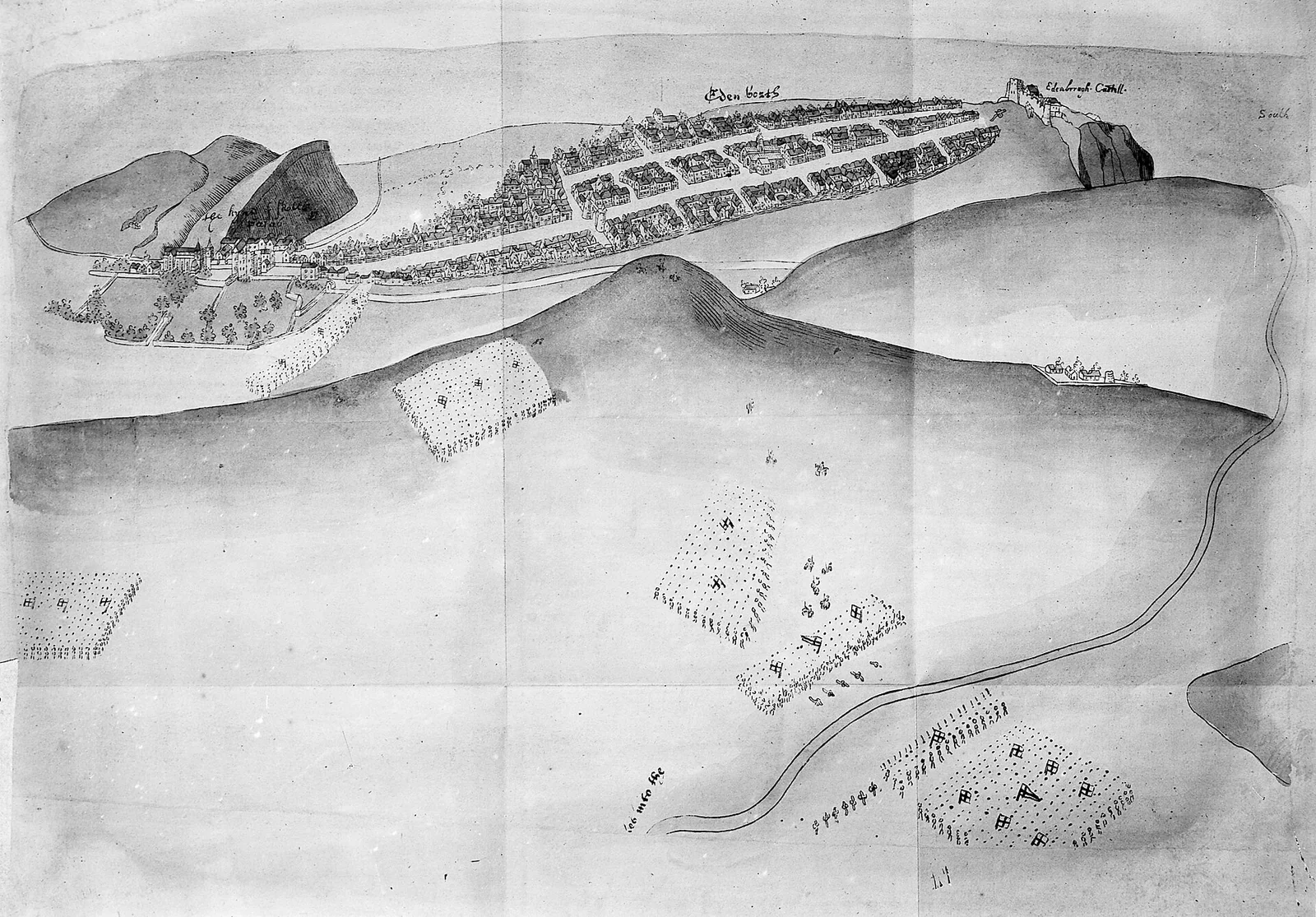
The Scottish Parliament rejected the marriage agreement. In 1544 an English army burned Edinburgh and sacked Holyrood. The historical drawing at the top of this article depicts the city and English troops during that campaign.
War continued after Henry's death. An English victory at Pinkie in 1547 was followed by efforts to hold castles and garrison Scottish territory. Scottish resistance and French assistance frustrated those plans. Mary was promised to the French dauphin, and the English marriage never took place.
Historian Amy Blakeway's account for Historic Environment Scotland explains the campaigns and their dynastic purpose. The familiar name Rough Wooing can conceal how a marriage policy produced attacks on towns, homes and livelihoods.
What changed in 1603, and why did Cromwell invade later?
In 1603 James VI of Scotland inherited the English throne when Elizabeth I died. He became James I in England. One king now ruled both kingdoms, but Scotland retained its own parliament. James wanted a closer union, which he did not achieve. Parliament's history of the Union of the Crowns distinguishes the shared monarchy from the later parliamentary settlement.
A common ruler did not prevent war between his kingdoms. During the seventeenth-century civil wars, Scottish armies intervened in England and English forces invaded Scotland. Allegiances also divided people within each kingdom. The execution of Charles I in 1649 did not create an agreed republican settlement across Britain.
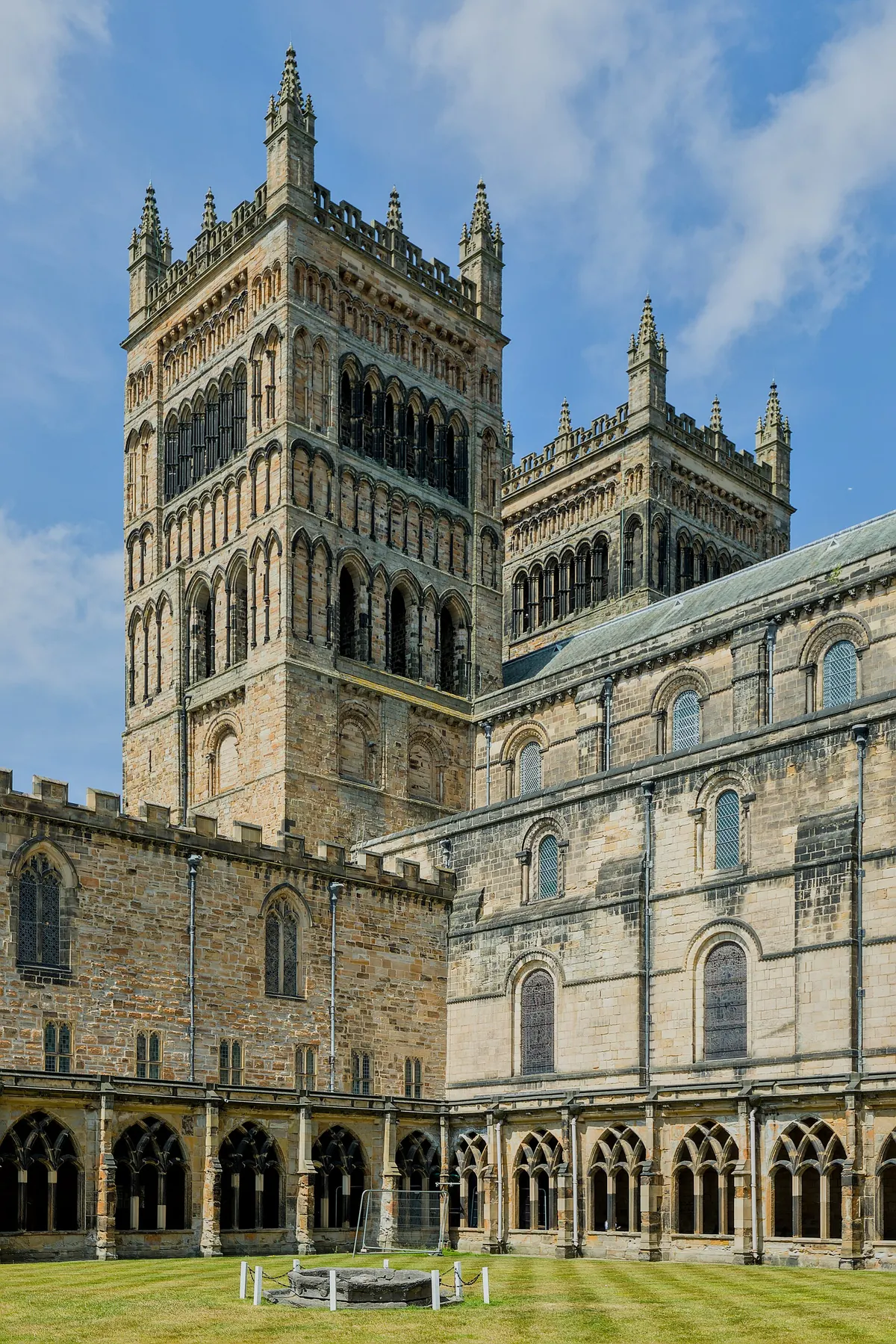
Cromwell invaded Scotland in 1650 to strike at Scottish support for Charles II, the executed king's son. The National Army Museum describes this as a pre-emptive campaign. Cromwell defeated a Scottish army at Dunbar that September. Thousands of prisoners were marched south. Durham Cathedral records that around 3,000 were confined there, with many hundreds dying from disease and malnutrition. Survivors were sent into forced labour, including indentured service overseas. These were prisoners denied freedom, not voluntary migrants. Their circumstances should not be collapsed into the different legal system of hereditary chattel slavery. The cathedral's account of the Scottish soldiers describes their imprisonment and dispersal.
Scotland was incorporated into the Commonwealth, with Scottish representatives sitting at Westminster in 1654. Parliament's account describes a settlement supported by military force. Cromwell's campaign in Ireland belonged to the same wider struggle, although the consequences in each country differed.
The Commonwealth arrangement did not become the lasting union. After the monarchy returned in 1660, a separate Scottish Parliament met again in 1661. The Records of the Parliaments of Scotland document this restored institution. The union agreed in 1707 therefore followed another period of separate parliamentary government.
How did the Acts of Union change Scotland in 1707?
The Acts of Union created the Kingdom of Great Britain on 1 May 1707. The Scottish and English parliaments were replaced by one Parliament of Great Britain at Westminster. Scottish representation included 45 MPs and 16 representative peers, as set out in the Articles of Union.
This was a negotiated legislative settlement, but negotiations took place under pressure. England's Alien Act of 1705 threatened Scottish trade and property privileges unless Scotland accepted conditions concerning union negotiations or the royal succession. Access to trade consequently carried considerable weight in the bargaining.
Within Scotland, politicians argued over the terms. The royal court built support through appointments, honours, pensions and payments. The settlement also included a guarantee for the Presbyterian Church of Scotland. Parliament's account of ratification describes both the political inducements and the legislation.
Outside Parliament, opposition produced demonstrations and petitions. Parliament's history of the protests records 96 petitions against union during the debates. Parliamentary approval therefore cannot be treated as proof that the population unanimously welcomed it.
Nor was 1707 simply the final battle of Edward I's campaign. The decision came more than four centuries later, after recovered independence, a shared crown and a temporary Commonwealth union. War had repeatedly changed the balance of power, but the lasting union was enacted through the two parliaments.
Was Culloden a war between England and Scotland?
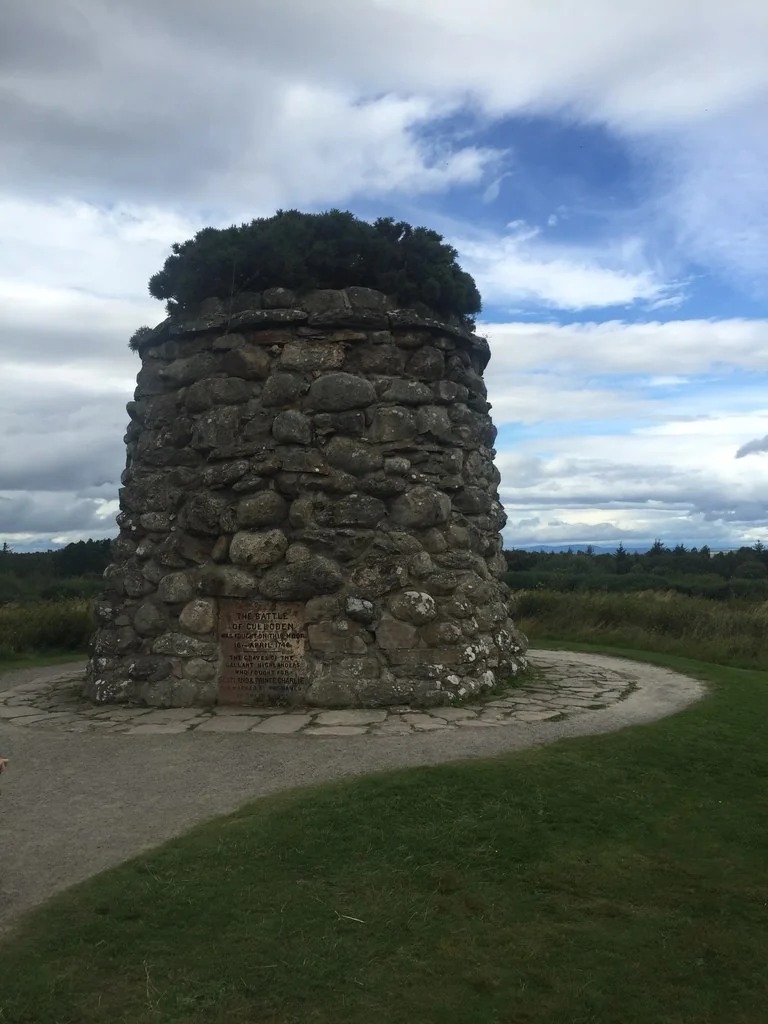
The Battle of Culloden took place on 16 April 1746, decades after parliamentary union. The British government army defeated the Jacobites, who sought to restore the Stuart dynasty. It was not a battlefield on which all Scots faced an entirely English enemy.
Scots fought on both sides, including Highlanders and Lowlanders. The National Trust for Scotland's battlefield discussion explains those divided loyalties. Calling the battle simply England against Scotland hides the political and religious choices made within Scottish society.
Government reprisals after the defeat brought violence beyond the battlefield. Homes, crops and livestock were attacked, with consequences for communities as well as combatants. Historian Allan Macinnes's account for the National Trust for Scotland describes the punitive campaign against the clans.
The modern memorial cairn marks a battlefield within an already united British state, not the moment when an independent Scotland first entered it.
What returned with the Scottish Parliament in 1999?
Following the 1997 referendum and the Scotland Act 1998, the devolved Scottish Parliament first met on 12 May 1999. The Parliament's own history sets out the sequence from referendum to legislation and elections.
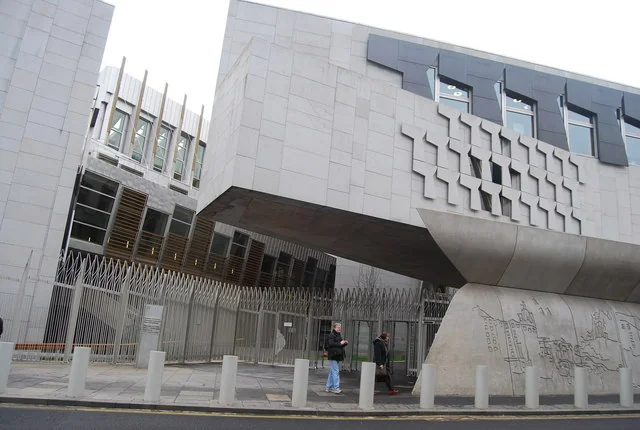
Devolution restored a legislature in Scotland with powers set by that legislation. It did not recreate the independent medieval kingdom or simply reverse every provision of 1707. The photograph below shows the modern Parliament building, taken in 2011, rather than the chamber in which union was debated three centuries earlier.
Scotland's relationship with England changed through several distinct arrangements: attempted medieval subordination, recovered independence, a shared crown, military incorporation and parliamentary union. The devolved Parliament added another form of government within the union rather than restoring the pre-1707 state.
Frequently asked questions
Did England permanently conquer Scotland in 1296?
No. Edward I removed John Balliol and asserted control, but Scottish resistance continued. England recognised Scottish independence in 1328.
Did the Union of the Crowns create Great Britain in 1603?
No. James VI of Scotland inherited the English throne, but the kingdoms kept separate parliaments. Parliamentary union followed in 1707.
Did Cromwell conquer Scotland?
Cromwell invaded in 1650 and his forces helped impose Commonwealth rule. That military union was temporary. A separate Scottish Parliament returned after the Restoration.
Was Culloden England against Scotland?
No. The British government army defeated the Jacobites in 1746. Scots fought on both sides. Government reprisals afterwards caused severe harm in Highland communities.
Did devolution in 1999 restore Scottish independence?
No. It established a devolved Scottish Parliament under the Scotland Act 1998. It did not restore an independent kingdom.
Sources & further reading
- Royal Household's account of Balliol's reign ↗
- Royal Household's biography of Wallace ↗
- National Records of Scotland ↗
- Historian Amy Blakeway's account for Historic Environment Scotland ↗
- Parliament's history of the Union of the Crowns ↗
- National Army Museum ↗
- The cathedral's account of the Scottish soldiers ↗
- Parliament's account ↗
- Records of the Parliaments of Scotland ↗
- Articles of Union ↗
- Alien Act of 1705 ↗
- Parliament's account of ratification ↗
- Parliament's history of the protests ↗
- National Trust for Scotland's battlefield discussion ↗
- Historian Allan Macinnes's account for the National Trust for Scotland ↗
- Parliament's own history ↗
Image credits
- Historical drawing of Edinburgh with columns of English soldiers approaching the city
Wellcome Collection / Wikimedia Commons · CC BY 4.0
Converted to WebP and resized where necessary, without cropping. This version uses the same CC BY 4.0 licence.
- Equestrian statue of Robert the Bruce on a stone plinth at Bannockburn
Colin Smith / Geograph, via Wikimedia Commons · CC BY-SA 2.0
Converted to WebP and resized where necessary, without cropping. This version uses the same CC BY-SA 2.0 licence.
- Durham Cathedral tower and stone exterior seen from the cloister
Benjamin Smith / Wikimedia Commons · CC BY-SA 4.0
Converted to WebP and resized where necessary, without cropping. This version uses the same CC BY-SA 4.0 licence.
- Stone memorial cairn standing beside a path on Culloden battlefield
Darren Haddock / Geograph, via Wikimedia Commons · CC BY-SA 2.0
Converted to WebP and resized where necessary, without cropping. This version uses the same CC BY-SA 2.0 licence.
- Exterior of the modern Scottish Parliament building in Edinburgh
N Chadwick / Geograph, via Wikimedia Commons · CC BY-SA 2.0
Converted to WebP and resized where necessary, without cropping. This version uses the same CC BY-SA 2.0 licence.


Something we should correct? Send a correction.
Keep reading
More stories
Irish history · 7 min read
Churchill and Ireland: Reprisals, the Treaty and the Four Courts
How Churchill backed reprisals in Ireland, pressured the Treaty government and supplied arms for the Four Courts, then opposed returning the Treaty Ports.
Irish history · 6 min read
The Doolough Tragedy: A Famine Walk Under Threat of Losing Relief
Why starving families were ordered from Louisburgh to Delphi in March 1849, who died at Doolough and how officials faced accusations over the journey.
Irish history · 7 min read
The Guildford Four: False Confessions and Wrongful Convictions
How police evidence put the Guildford Four in prison, why their convictions collapsed and what happened to Giuseppe Conlon and the Maguire Seven.