Irish history
San Patricios: The Irish Soldiers Who Fought for Mexico
Why the San Patricios joined Mexico against the US invasion, what happened at Churubusco and why fifty captured soldiers were hanged.
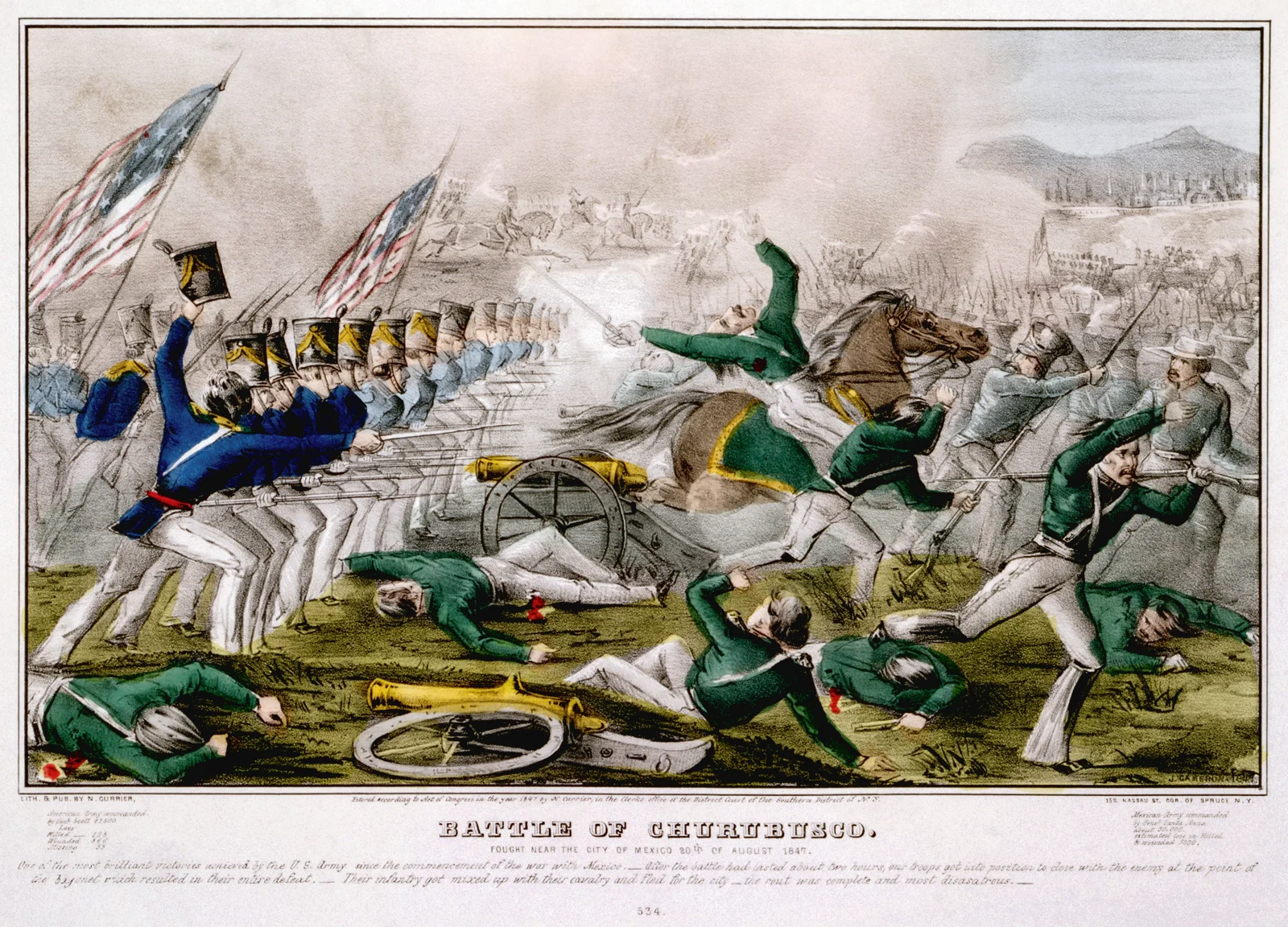
The San Patricios, or Saint Patrick’s Battalion, fought for Mexico against the United States during the Mexican-American War of 1846–48. Many were Irish immigrants who had left the US Army. They joined Mexican soldiers resisting an invasion that would cost Mexico much of its territory. After American forces captured members of the battalion at Churubusco, US military authorities hanged fifty of them.
John Riley, from County Galway, became the unit’s best-known Irish figure. Its ranks also included Germans and other foreigners. Religious persecution, harsh military discipline, Mexican recruitment and opposition to the invasion drew men across the lines. Their story connects Irish emigration with the conquest of Mexico and the punishment of soldiers who refused to keep fighting for the invading army.
Why did the United States invade Mexico?
President James K. Polk sought to expand American territory westward. The United States annexed Texas in 1845, while Mexico rejected the loss of the former Mexican province. A further dispute concerned its southern boundary: the United States backed the Texan claim to the Rio Grande, while Mexico placed the boundary farther north at the Nueces River.
Polk sent troops under Zachary Taylor into the disputed region. He also sought to acquire California and New Mexico. Fighting on the frontier became the basis for a declaration of war in May 1846. American armies then advanced deep into Mexico, beyond the disputed borderland.
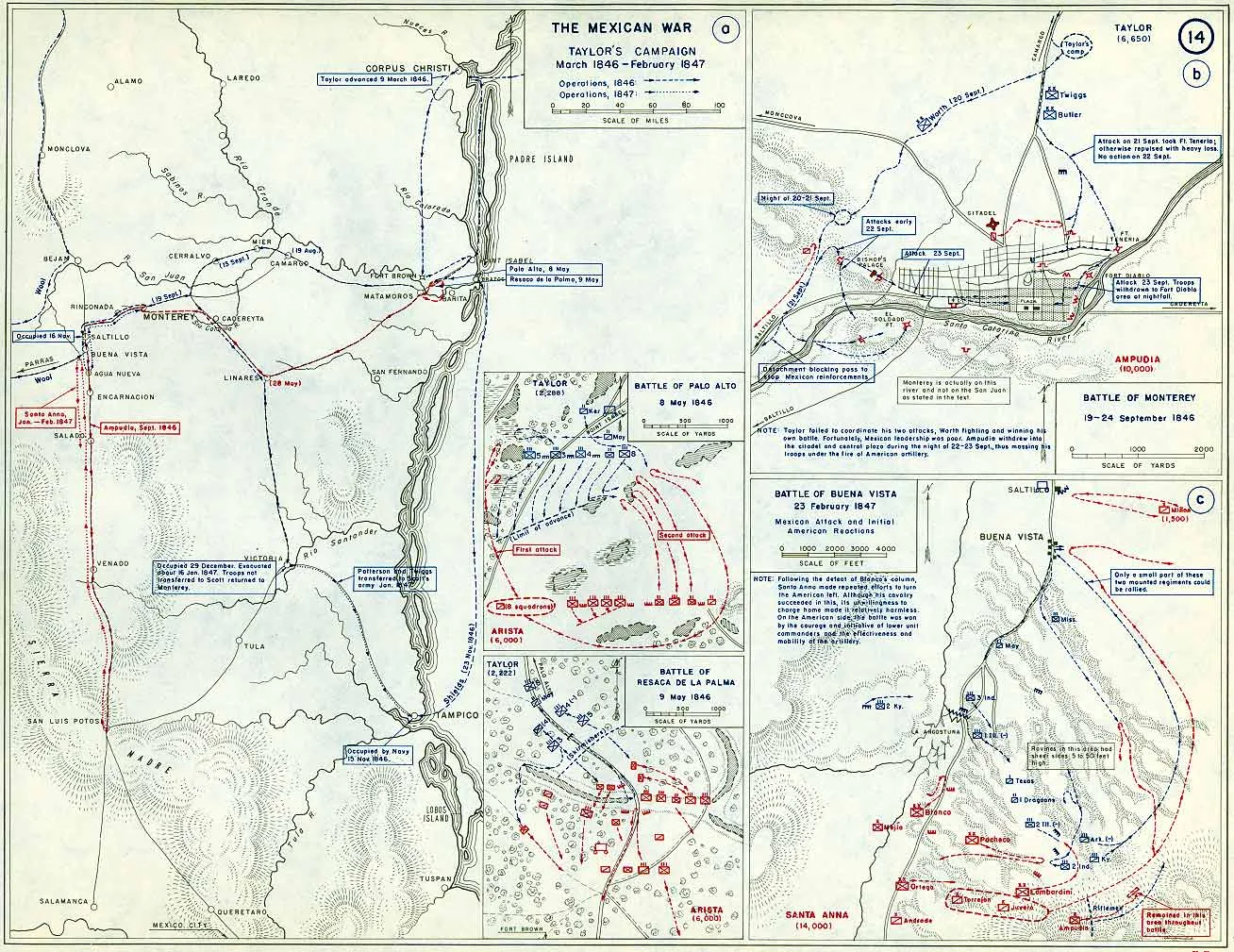
The US State Department’s historical account places the war within Polk’s programme of territorial expansion. General Winfield Scott’s campaign from Veracruz toward Mexico City brought the invasion to the capital’s defences. The San Patricios fought on the Mexican side of that advance.
Who was John Riley?
Riley was born in Clifden, County Galway, around 1817. By September 1845 he had enlisted in the US Army at Fort Mackinac, Michigan. He served in the 5th Infantry before being sent toward the Mexican frontier.
On 12 April 1846 he left the American lines. He entered Mexican service before the formal declaration of war, a distinction that later saved him from execution. David Murphy’s Dictionary of Irish Biography entry describes Riley recruiting Irishmen for the Mexican cause.
Mexican officers commanded the unit during the war. Its membership extended beyond Irish deserters. Its foreign recruits included men already living in Mexico. The Irish name reflected a strong identity within a multinational force.
Why did Irish soldiers change sides?
Irish Catholics encountered hostility in the United States and within its army. Religion affected everyday service. Historian Amy S. Greenberg, interviewed in Smithsonian’s account of the San Patricios, describes Protestant officers obstructing attendance at Catholic Mass and compelling Catholic soldiers to attend Protestant services. Immigrant recruits faced an institution in which rank, nationality and faith could reinforce their exclusion.
Mexican commanders appealed directly to these grievances. General Mariano Arista’s 1846 invitation to American soldiers condemned the seizure of a neighbouring country’s land. It urged recruits to stop serving the invasion and settle in Mexico. Arista promised privates 320 acres, with grants for other ranks scaled accordingly.
The appeal combined conscience with a material offer. Shared Catholicism could make Mexico feel less alien than the army the men had joined. Land offered a possible future beyond military service. Individual motives varied; the land grant was a recruitment promise, not proof that every man joined for money.
Leaving the US Army also meant accepting the danger of capture by former comrades. For those who fought for Mexico, desertion became a military commitment against the force they had left. They served as artillerymen and later as infantry, contributing trained soldiers to Mexico’s defence.
What happened at Churubusco?
On 20 August 1847, American troops attacked the Mexican positions at Churubusco, near Mexico City. The defences included a fortified bridgehead and a convent. San Patricios fought alongside Mexican troops as the attacking forces closed in.
The Texas State Historical Association’s account describes artillery positions, dwindling ammunition and the retreat into the convent. The defenders could not hold the position. American forces captured surviving members of the battalion after the fighting.
Defeat exposed the former US soldiers to punishment by the army they had deserted. Their capture led to courts martial while the American advance toward the capital continued.
Why were fifty San Patricios hanged?
US courts martial tried captured deserters, and General Winfield Scott approved fifty death sentences. The charge was desertion from the US Army. Scott retained responsibility for confirming the punishments after reviewing the verdicts and appeals.
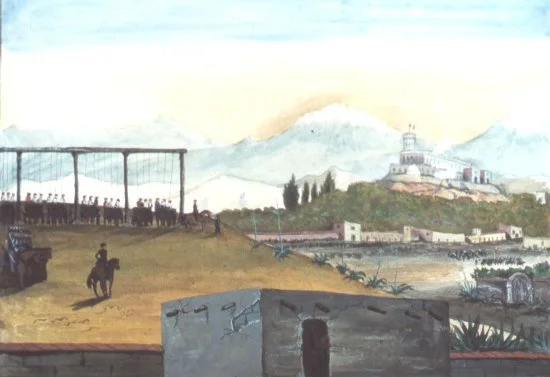
On 13 September, Colonel William S. Harney delayed the hanging of thirty men until the American flag rose over Chapultepec Castle. He made the executions coincide with the conquest they had fought against. The trial and execution history records that deliberate timing.
Riley escaped hanging because he had deserted before war was declared. American authorities nevertheless flogged him and branded his face with a D for deserter. The distinction in military law spared his life while leaving him subject to severe bodily punishment.
The fifty deaths were executions following capture, separate from losses on the battlefield. Mexico’s defenders had suffered a military defeat; the condemned San Patricios were then killed on the orders of the victorious army.
What did Mexico lose after the war?
American forces occupied Mexico City in September 1847. The Mexican government negotiated from a position of military defeat. The Treaty of Guadalupe Hidalgo, signed on 2 February 1848, formally ended the war.
The US National Archives’ treaty account describes Mexico surrendering vast territories, including present-day California, Nevada and Utah, with other lands across what became the American Southwest. Mexico also relinquished its claim to Texas and accepted the Rio Grande boundary.
The treaty turned battlefield conquest into an international settlement. The border moved across communities already living in the transferred territory. The war that the San Patricios had resisted therefore changed more than military control of the capital: it permanently enlarged the United States at Mexico’s expense.
Surviving San Patricios had different futures. Riley returned to Mexican service after his release and received a pension in 1850. His later movements remain uncertain.
How does Mexico remember the San Patricios?
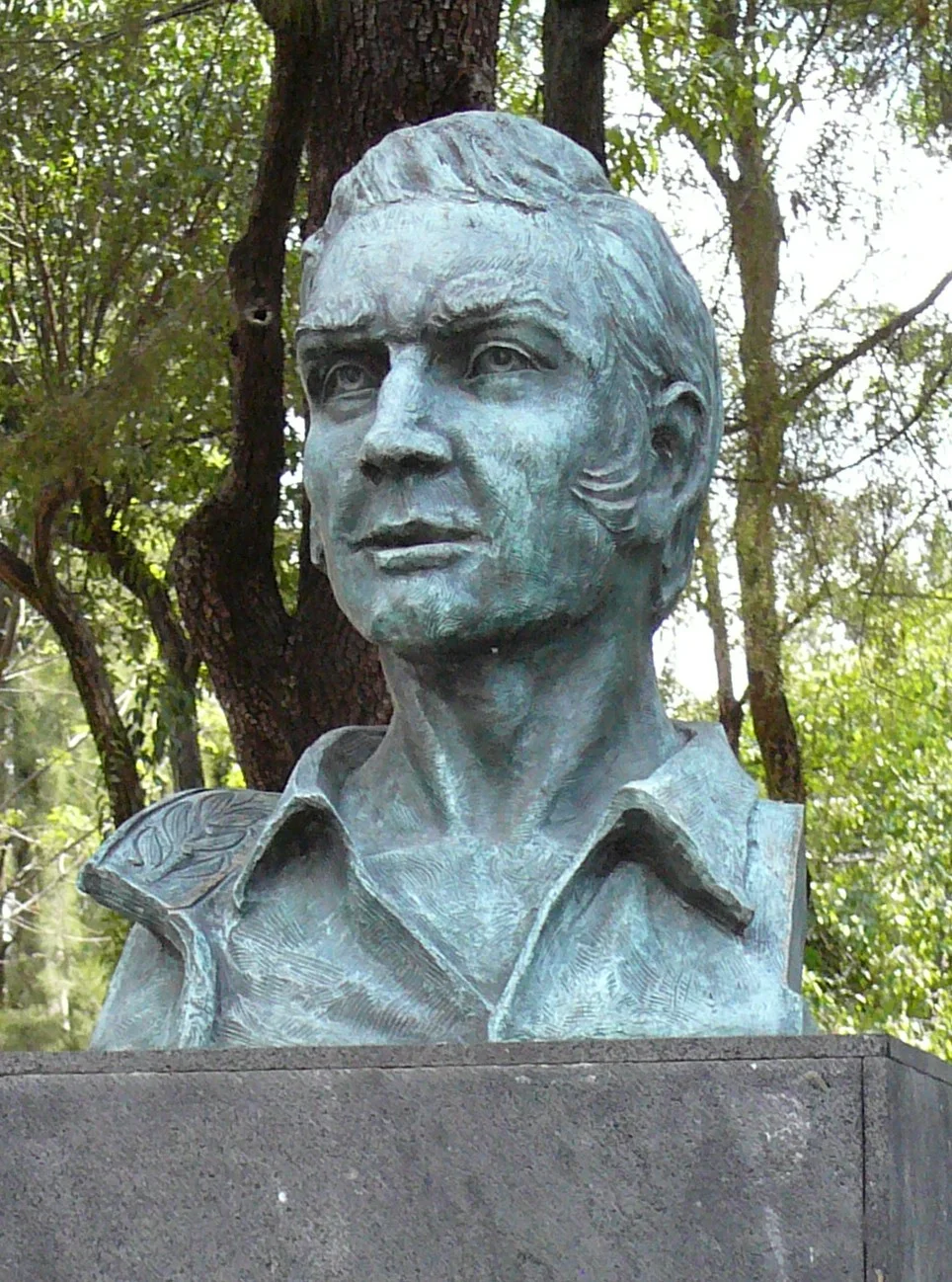
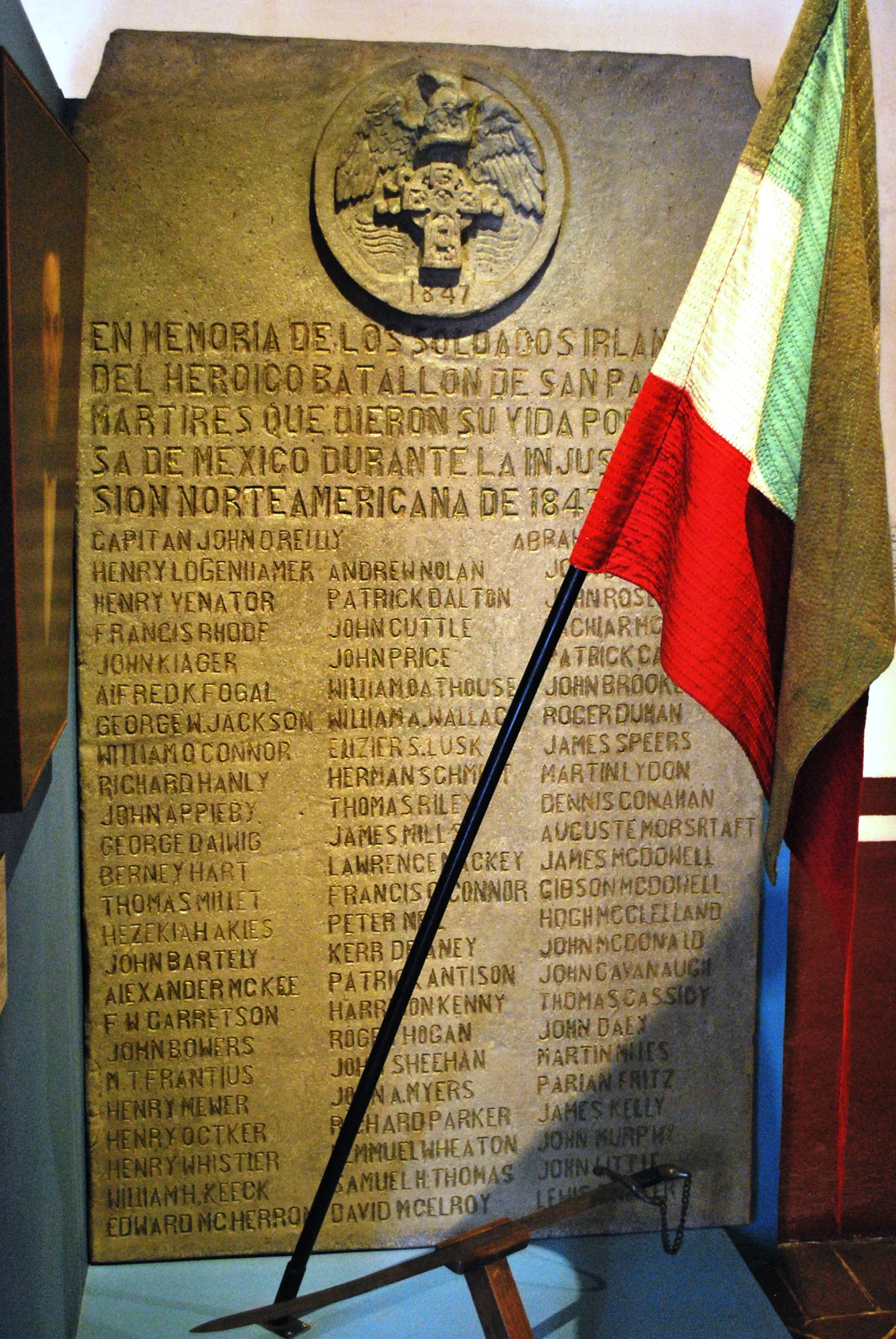
Mexico commemorates the battalion as part of the defence against the American invasion. The museum at the former Churubusco convent preserves that history at the site of the fighting. A memorial display there names the Irish soldiers, while a bust of Riley stands in Mexico City’s Plaza San Jacinto.
In August 2024, Mexico’s National Institute of Anthropology and History reported a commemoration of the battle’s 177th anniversary. The National Museum of Interventions, Irish diplomatic representatives and local authorities took part. The ceremony remembered Mexican defenders and the San Patricios together.
That shared commemoration places the foreign volunteers within Mexico’s own history of resistance. Their Irish identity remains visible without displacing the Mexican soldiers beside whom they fought or the country whose territory was invaded.
How does their story connect Ireland and the Americas?
The San Patricios belonged to an Irish diaspora whose experiences reached far beyond Britain and Ireland. Emigration brought people into foreign armies, political conflicts and relationships that could turn in unexpected directions. Riley’s journey from Galway to American enlistment and Mexican service crossed several of those worlds.
In the same year as Churubusco, Choctaw donors collected money for people starving in Ireland. Our story of the Choctaw donation during the Great Famine follows a different connection across the Atlantic, built through relief rather than military service.
Mexico’s remembrance of the San Patricios rests on their decision to defend it. They fought against the American invasion, and fifty captured men were executed by the army they had left. The memorials preserve their names alongside the history of the country they chose to serve.
Frequently asked questions
Were all the San Patricios Irish?
No. The battalion had a strong Irish identity but also included Germans and other foreigners, including some already living in Mexico.
Why did John Riley survive when others were hanged?
Riley had left the US Army before the formal declaration of war. That timing spared him execution, but American authorities flogged and branded him.
How many San Patricios were executed?
US military authorities hanged fifty captured San Patricios after courts martial for desertion. These deaths were separate from battlefield casualties.
When was the Battle of Churubusco?
The battle took place on 20 August 1847, near Mexico City. Mexican soldiers and San Patricios defended a fortified bridgehead and convent against American troops.
Sources & further reading
Image credits
- Battle of Churubusco in an 1847 hand-coloured lithograph
J. Cameron / N. Currier / Library of Congress; restoration by Durova and Adam Cuerden · Public domain
Resized where necessary and converted to WebP without cropping or upscaling. Adaptations retain the stated licence.
- Map of Scott’s campaign from Veracruz to Mexico City in 1847
US Military Academy / Wikimedia Commons · Public domain
Resized where necessary and converted to WebP without cropping or upscaling. Adaptations retain the stated licence.
- Bronze bust of John Riley in Mexico City
Osioni / Wikimedia Commons · CC BY-SA 4.0
Resized where necessary and converted to WebP without cropping or upscaling. Adaptations retain the stated licence.
- Samuel Chamberlain painting showing the gallows used to execute San Patricios
Samuel Chamberlain / Wikimedia Commons · Public domain
Resized where necessary and converted to WebP without cropping or upscaling. Adaptations retain the stated licence.
- Memorial display naming Irish soldiers at the former Churubusco convent
Thelmadatter / Wikimedia Commons · CC BY-SA 3.0
Resized where necessary and converted to WebP without cropping or upscaling. Adaptations retain the stated licence.


Something we should correct? Send a correction.
Keep reading
More stories
World history · 8 min read
How the British Empire Rose and Fell
How Britain built its empire through conquest, trade and slavery, and how resistance, world wars and independence movements ended colonial rule.
Australian history · 7 min read
British Invasion of Australia: Land and Aboriginal Resistance
How Britain’s invasion of Australia took Aboriginal land, from Sydney Cove and Pemulwuy to Tasmania, Myall Creek, the Stolen Generations and Mabo.
Irish history · 7 min read
The Guildford Four: False Confessions and Wrongful Convictions
How police evidence put the Guildford Four in prison, why their convictions collapsed and what happened to Giuseppe Conlon and the Maguire Seven.