Irish history
Why the Choctaw Helped Ireland During the Great Famine
The Choctaw donation to Irish Famine relief in 1847, the disputed $170 figure and the friendship remembered through memorials and scholarships.
In 1847, Choctaw people in Indian Territory collected money for Irish Famine relief. They gave while rebuilding their own communities after the United States government had forced them from their homeland. The Choctaw Nation remembers the gift as $170. Its importance lay in who gave it and the suffering they recognised across the Atlantic.
The donation passed through American relief committees. Later generations renewed the connection through visits, memorials and scholarships. During the COVID-19 pandemic, Irish donors drew on that history when they sent help to Navajo and Hopi communities. The story begins with people who had already endured dispossession choosing to help others facing hunger.
What had happened to the Choctaw before 1847?
The Choctaw homeland extended across much of present-day Mississippi and into neighbouring areas. Farming, trade and settled communities sustained a society with its own political and cultural institutions. The National Park Service's account of Choctaw history describes productive agriculture and longstanding trade. Removal meant losing homes, cultivated land and places of belonging.
President Andrew Jackson and Congress made removal federal policy through the Indian Removal Act of 1830. The Treaty of Dancing Rabbit Creek followed that September. The Choctaw Nation's history of the removals describes chiefs signing under threat, seeking to preserve their people's future and sovereignty against American coercion.
During the first removals of 1831–33, disease, exposure and federal neglect killed many of those forced west. Families lost elders and children. The survivors established a government in Indian Territory, adopted a constitution in 1834 and rebuilt institutions. Further removals continued afterward.
Some Choctaw people remained in Mississippi. Their descendants include the Mississippi Band of Choctaw Indians, whose tribal history records coercion, fraudulent loss of land and pressure from white settlers. The experience was dispossession imposed by the United States, followed by continuing efforts to maintain Choctaw communities on both sides of the Mississippi River.
Why did Ireland need help?
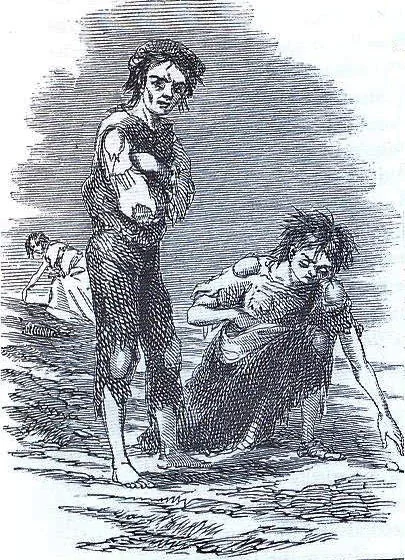
Potato blight destroyed the staple food of millions in Ireland from 1845 onward. Repeated crop failure left households without food or the means to buy enough of it. Hunger, disease and eviction spread while Ireland was governed from Westminster.
British policy deepened the catastrophe. Ministers permitted commercial food exports to continue and restricted relief. Parliament shifted the financial burden onto Irish landowners, encouraging further evictions as owners sought to reduce their costs. The UK Parliament's historical account identifies the limitations imposed on aid under Lord John Russell's government and Charles Trevelyan's administration of relief. Around a million people died from hunger and disease.
Charitable collections supplied help to people whom government measures were failing. Donations from abroad entered that emergency. For the decisions over markets, soup kitchens and land that shaped it, read our account of food exports and British relief during the Great Famine.
How did the Choctaw donation reach Ireland?
In 1847, a collection at Skullyville in Indian Territory brought together Choctaw donors and others. In her account for the Smithsonian's National Museum of the American Indian, Choctaw historian Judy Allen describes money passing through the Memphis Irish Relief Committee and then the General Irish Relief Committee in New York.
That route connected a local collection with an international relief effort. Donors did not need to travel to Ireland to assist its hungry population. Relief organisations could receive money and direct it toward the emergency across the ocean. The New York committee recognised the Choctaw contribution in its reporting to Ireland.
Allen places the gift within Choctaw traditions of helping people in need. The donors were still living with the consequences of removal, yet made room for another people's suffering. They were rebuilding their own society while contributing to relief thousands of miles away.
Was the donation $170 or $710?
The Choctaw Nation's account of its Irish connection records $170. That is the sum most often associated with the friendship and its commemorations. There is a genuine disagreement in the historical literature about the amount collected.
In Recognition, Resilience and Relief, scholar Padraig Kirwan discusses accounts giving $710. He cites a description of the Skullyville collection that includes traders, agency officials and missionaries, with Choctaw contributors providing the largest share. Kirwan also examines the smaller sums found in other histories. Historian Mark McGowan likewise flags the figure as disputed in his study of Indigenous donations to Irish Famine relief.
The surviving accounts do not justify a neat claim that $170 was definitely the Choctaw share of a proven $710 total. Both versions record a contribution to Irish relief from a community still recovering from removal.
How did Ireland commemorate the gift?
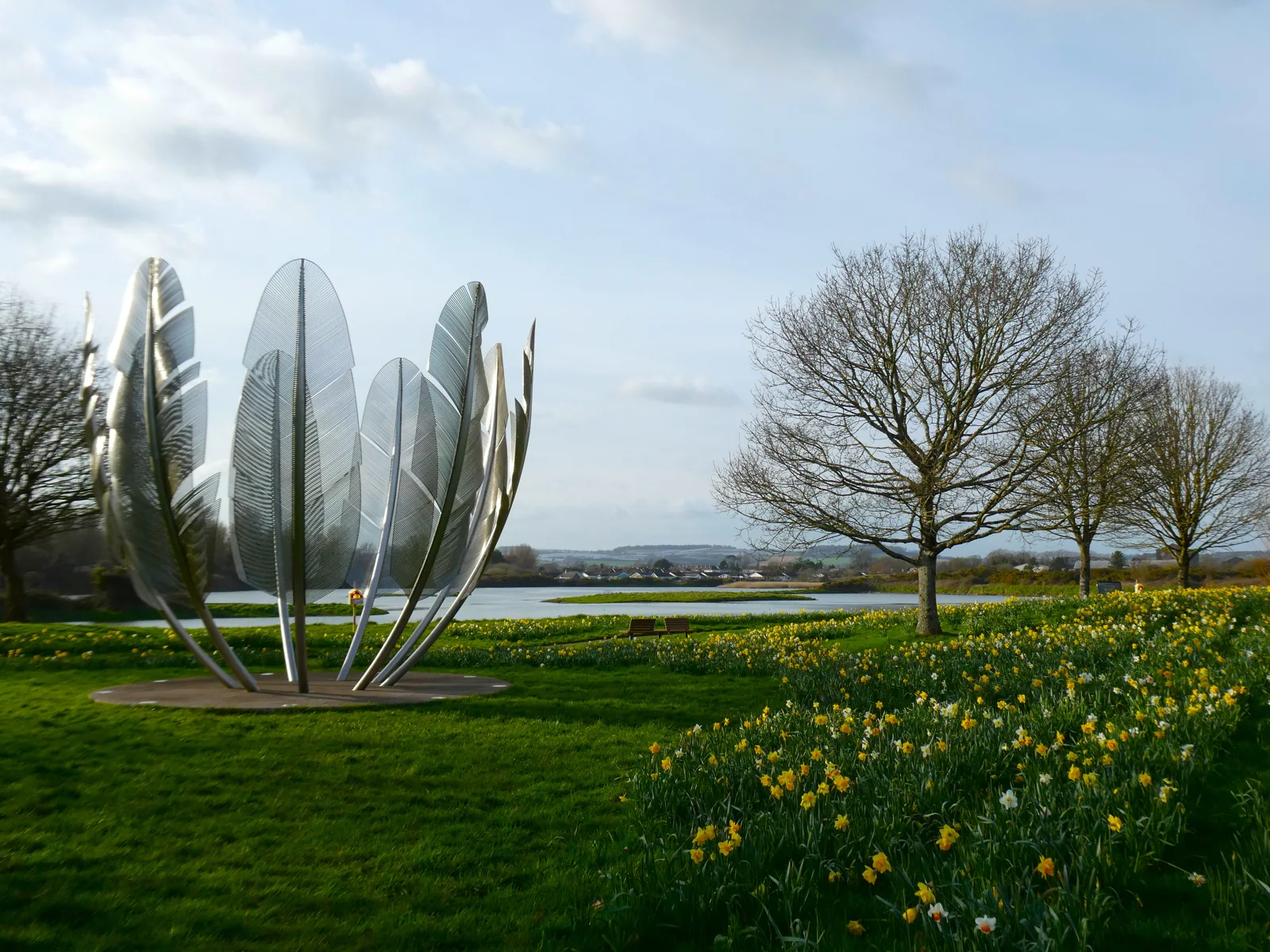
Public exchanges brought renewed attention to the relationship in the late twentieth century. Irish President Mary Robinson visited the Choctaw Nation in 1995. In Midleton, County Cork, Alex Pentek's Kindred Spirits memorial was dedicated in 2017. Its steel feathers make the donation visible in a public space where later generations can encounter the story.
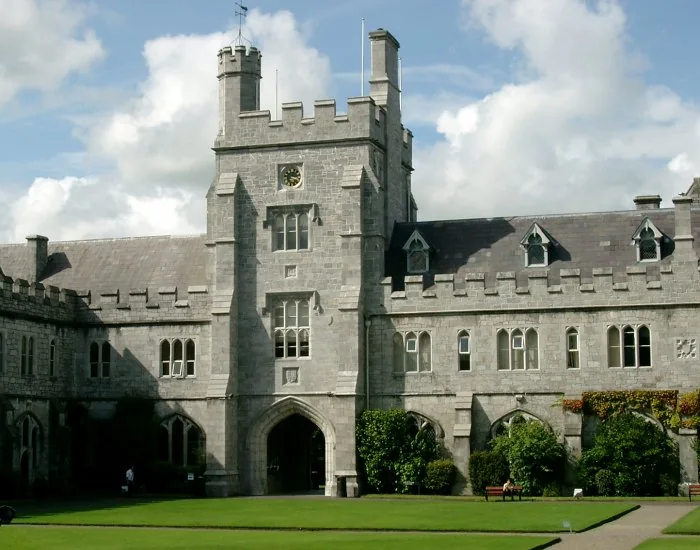
Education became another part of the connection. A Choctaw-Ireland scholarship was announced in 2018, followed by the first recipient beginning study in 2019. University College Cork's programme description explicitly connects the scholarship with the Famine gift. It provides a route for members of the Choctaw Nation of Oklahoma to undertake taught postgraduate study at UCC.
The university's published scheme covers tuition and contributes toward living expenses. Its academic setting gives the relationship a practical form beyond ceremonial visits. A student can spend a year studying in Ireland through a programme established to remember help sent in the opposite direction. Eligibility and application dates belong to the programme's own guidance, which applicants should check directly.
Why did Irish donors support Navajo and Hopi communities in 2020?
During the COVID-19 pandemic, Irish people contributed to relief for Navajo and Hopi communities, recalling the Choctaw gift of 1847. The Choctaw Nation's June 2020 newspaper report records this response and Chief Gary Batton's welcome for it.
The recipients were distinct Native American peoples. These donations were not money returned to the Choctaw Nation. Irish contributors were extending help to other communities facing an emergency, inspired by the earlier generosity. The later response widened the circle of people connected through the memory of the Famine donation.
What does Eternal Heart commemorate?
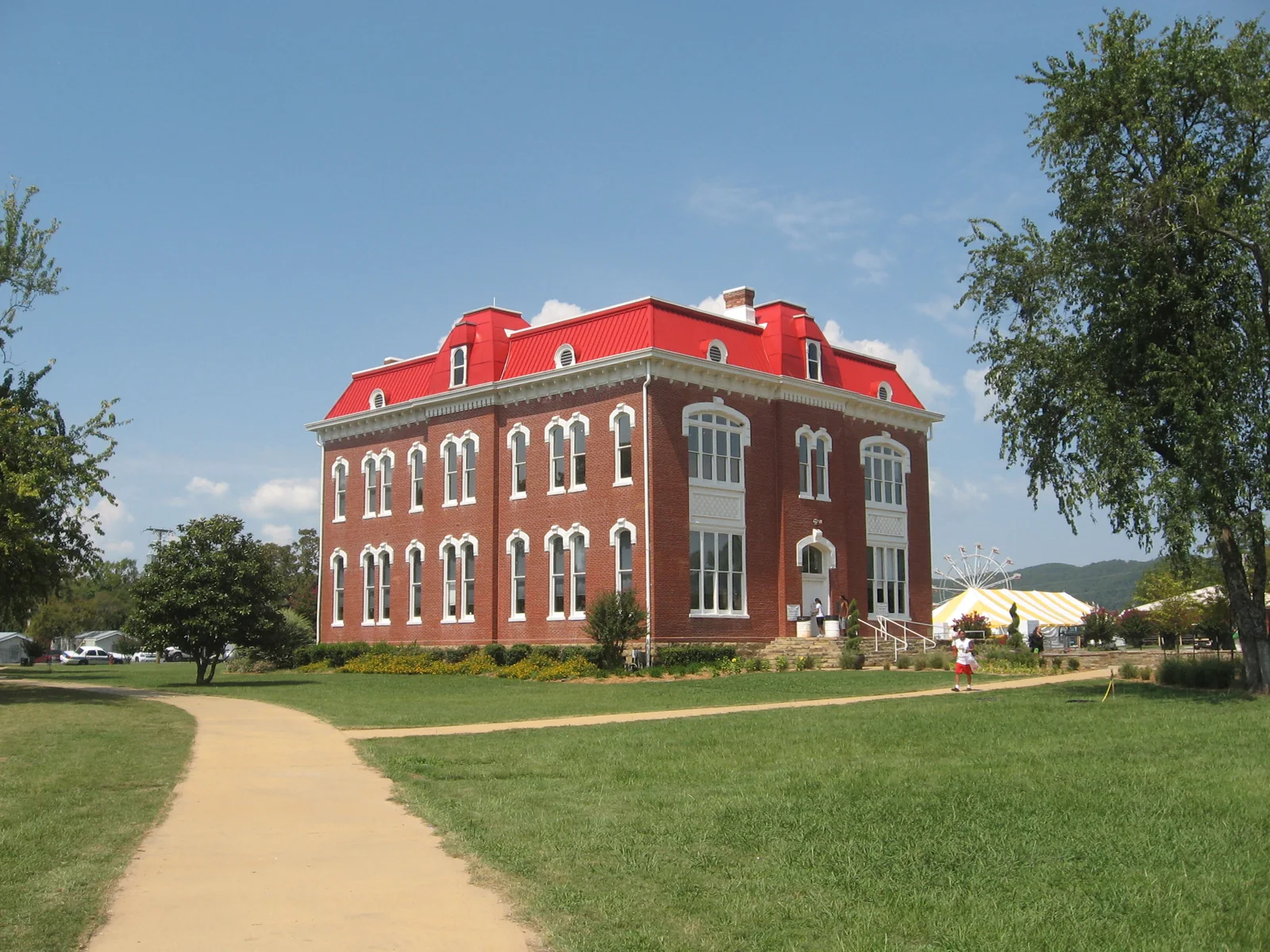
On 30 August 2024, a second major memorial was unveiled on the Choctaw Capitol grounds at Tuskahoma, Oklahoma. Eternal Heart, made by Choctaw artist Samuel Stitt, combines a heart with a Celtic trinity form. It faces toward Ireland.
The Government of Ireland and the Chahta Foundation jointly funded the sculpture. Its location brings the commemoration to the Choctaw Nation's own grounds, alongside the memorial in Midleton. The two works recognise a relationship that descendants and institutions have actively renewed through exchanges, education and public remembrance.
The original act remains a concrete one. People whom the United States had dispossessed collected money for families starving under British rule in Ireland. Later generations have chosen to remember those donors by offering opportunities and assistance of their own.
Another Irish connection in the Americas took shape that year through the San Patricios, who fought for Mexico against the US invasion. Their story follows emigrants into military service and the defence of Mexico.
Frequently asked questions
Which Native American people helped Ireland during the Famine?
Choctaw donors in Indian Territory contributed to Irish Famine relief in 1847, while their communities were rebuilding after forced removal by the United States.
How much money did the Choctaw send to Ireland?
The Choctaw Nation commemorates a gift of $170. Historical scholarship also discusses a $710 collection, and the exact amount remains disputed.
Where is the Kindred Spirits memorial?
Kindred Spirits, by Alex Pentek, is in Midleton, County Cork. It was dedicated in 2017 to commemorate the Choctaw donation.
Did Ireland repay the Choctaw during COVID-19?
Irish donors supported Navajo and Hopi communities in 2020, inspired by the Choctaw gift. These are distinct Native American peoples, so the donations were not a repayment to the Choctaw Nation.
Sources & further reading
- National Park Service's account of Choctaw history ↗
- Choctaw Nation's history of the removals ↗
- tribal history ↗
- UK Parliament's historical account ↗
- account for the Smithsonian's National Museum of the American Indian ↗
- Choctaw Nation's account of its Irish connection ↗
- Recognition, Resilience and Relief ↗
- study of Indigenous donations to Irish Famine relief ↗
- University College Cork's programme description ↗
- Eternal Heart ↗
- Biskinik, June 2020: Irish support for Navajo and Hopi relief ↗
Image credits
- Steel feathers of the Kindred Spirits memorial beside the water in Midleton
Maoileann / Wikimedia Commons; sculpture by Alex Pentek · CC BY-SA 4.0
Resized and converted to WebP without cropping or upscaling. Adaptations retain the stated licence.
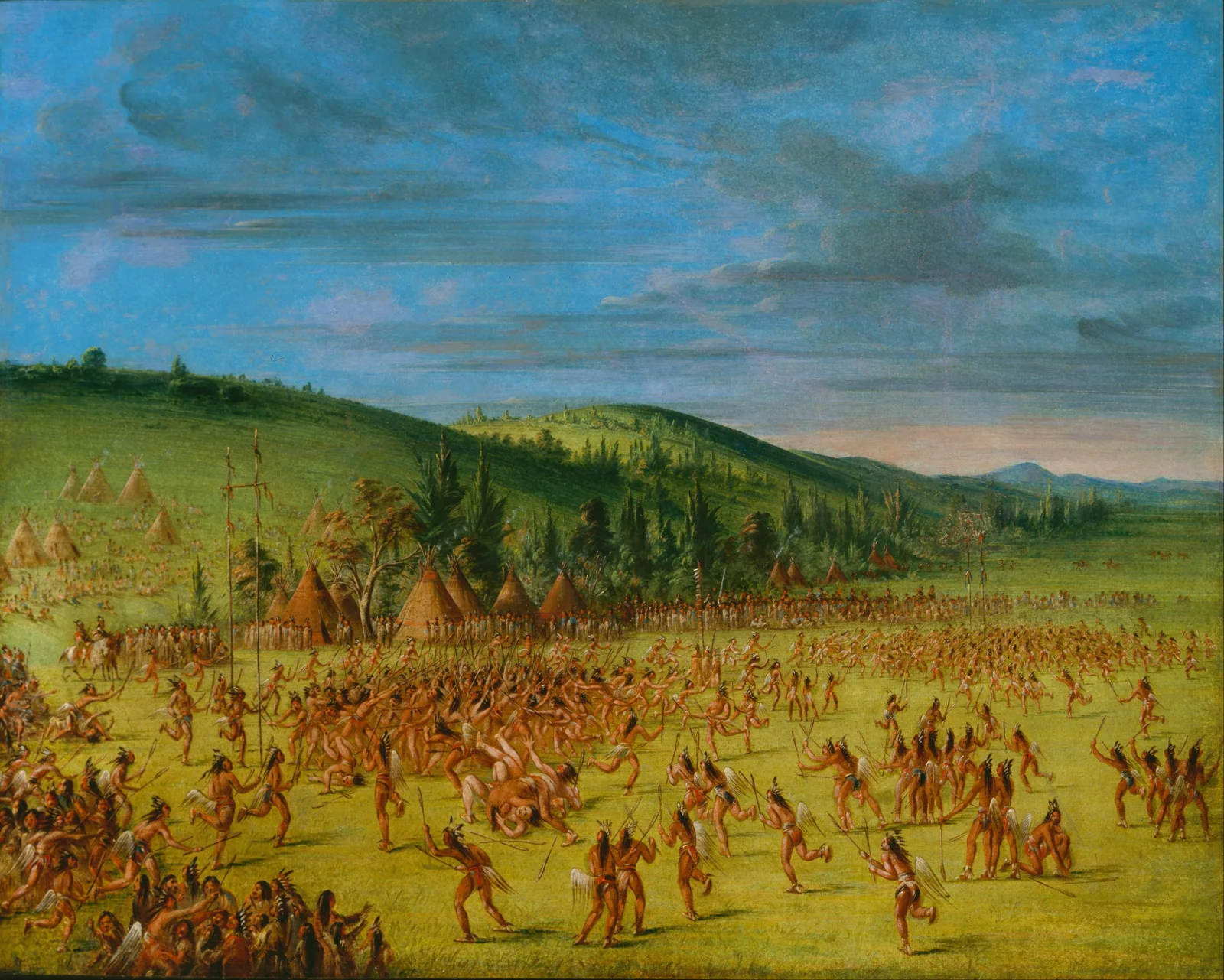
- George Catlin painting of Choctaw players taking part in a stickball game
George Catlin / Smithsonian American Art Museum, via Wikimedia Commons · Public domain
Resized and converted to WebP without cropping or upscaling. Adaptations retain the stated licence.
- James Mahony illustration of a boy and girl searching the ground for potatoes
James Mahony / The Illustrated London News, via Wikimedia Commons · Public domain
Converted to WebP and resized where necessary, without cropping or upscaling.
- Stone buildings and lawn of the quadrangle at University College Cork
Paul Egan / Wikimedia Commons · CC BY-SA 2.5
Resized and converted to WebP without cropping or upscaling. Adaptations retain the stated licence.
- Red brick Choctaw Capitol Museum with a tower and white columns
Urbanative / Wikimedia Commons · Public domain
Resized and converted to WebP without cropping or upscaling. Adaptations retain the stated licence.


Something we should correct? Send a correction.
Keep reading
More stories
World history · 8 min read
How the British Empire Rose and Fell
How Britain built its empire through conquest, trade and slavery, and how resistance, world wars and independence movements ended colonial rule.
Australian history · 7 min read
British Invasion of Australia: Land and Aboriginal Resistance
How Britain’s invasion of Australia took Aboriginal land, from Sydney Cove and Pemulwuy to Tasmania, Myall Creek, the Stolen Generations and Mabo.
Irish history · 7 min read
The Guildford Four: False Confessions and Wrongful Convictions
How police evidence put the Guildford Four in prison, why their convictions collapsed and what happened to Giuseppe Conlon and the Maguire Seven.