Irish history
Ireland’s Great Famine: Food Exports and British Relief
Why did Ireland export food during the Great Famine? How potato blight, British relief policy, soup kitchens and evictions shaped the disaster.
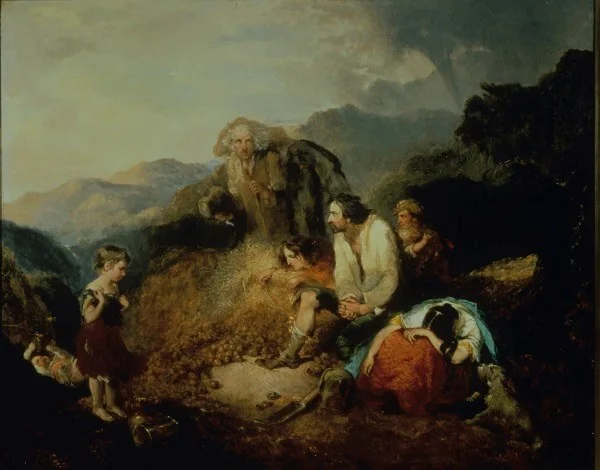
Potato blight destroyed the staple food of millions in Ireland. British government policy helped turn that crop disaster into mass death. Ministers allowed food exports to continue, relied on markets that starving families could not afford and withdrew a soup-kitchen system that had fed millions. Parliament also made poor families surrender land before they could qualify for relief.
Ireland was governed from Westminster. The British government controlled the relief framework and received repeated reports of suffering. Its decisions about food, funding and eligibility shaped who could eat, who lost their holding and who was left without enough help. Around a million people died from hunger and disease during the Great Famine.
Why did so many people depend on potatoes?
A small rented potato plot could support a household that had little cash. Cottiers and agricultural labourers worked within a rural economy dominated by estates, tenants and layers of subletting. Commercial crops paid bills and rent, while potatoes supplied much of the family's own food. Losing that crop meant losing a meal that previously did not have to be bought at market prices.
The distribution of land had developed through centuries of conquest and confiscation in Ireland. By the 1840s, insecure employment and tiny holdings left many families without reserves. University College Cork's short history of the Famine describes widespread poverty among labourers and cottiers before the blight appeared.
The first failure was followed by a much worse one in 1846. Families that had sold belongings or used savings to get through the first year had less to fall back on in the second. The Public Record Office of Northern Ireland's chronology also records a small harvest in 1847 and renewed blight in 1848. Hunger continued across successive seasons.
Why was Irish food still exported to Britain?
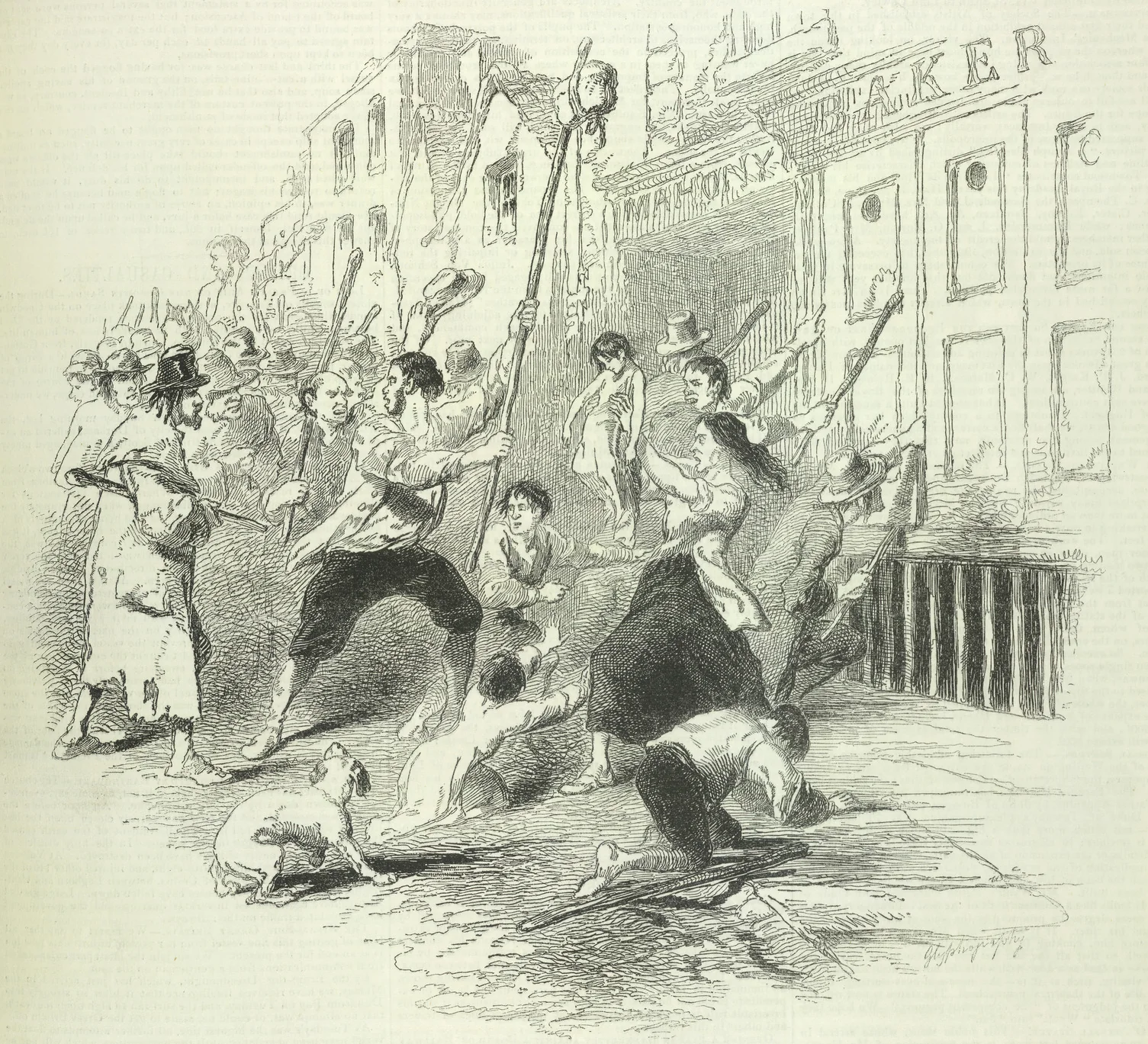
British ministers allowed commercial exports to continue while people starved. Grain, livestock and dairy products went to buyers, mainly in Britain, while Irish households without money went hungry. These were commercial shipments, but the government's decision to leave trade operating on those terms was a political choice with consequences for people who had lost their staple crop.
Historian Christine Kinealy's study of food exports in 1846–47 identifies continued shipments and warns against treating grain figures as a complete account of food trade. Livestock and other foods also left Ireland. She draws attention to the timing of imports: substantial supplies arrived after the lethal shortages of the winter of 1846–47.
Grain imports exceeded exports in 1847, but an annual balance conceals the months when people had already gone hungry. It also says nothing about a family's ability to pay. Food could enter Ireland and remain beyond the reach of those who had lost their crop, their wages or both. The government needed to secure access to food as well as its supply. Depending on purchases through the market left destitute people without that protection.
Why did relief wages fail to prevent starvation?
Robert Peel's government bought £100,000 worth of maize from the United States after the first crop failure. It also supported public works. Peel resigned in June 1846, and Lord John Russell became prime minister. The change of government preceded the more destructive second failure. Parliament's account traces that change in leadership and relief policy.
Russell's administration relied heavily on private merchants to bring in replacement food and on paid public works to let people buy it. The work often involved roads. People already weakened by hunger had to labour for wages whose buying power fell as food prices rose.
J. McPartlin's study of diet and famine records more than 700,000 people on relief works at their March 1847 peak. Employment on that scale did not guarantee sufficient food. A wage was useful only if it could buy enough to sustain a worker and the dependants at home.
How did soup kitchens change the relief effort?
Direct feeding offered a different route. A household could receive cooked food without first earning money on a road scheme. Local organisers and charities had already established soup kitchens. Research on Skibbereen's relief efforts shows that local initiatives helped shape the wider programme. People in distressed districts petitioned, raised funds and organised assistance themselves. Overseas donations included the Choctaw collection for Irish Famine relief in 1847, sent by people rebuilding after forced removal.
The Temporary Relief Act of 1847 expanded direct feeding. At its height, the government soup-kitchen system fed about three million people daily. It demonstrated that large-scale food distribution was possible.
British ministers ended this mass-feeding programme as the harvest approached in 1847. They transferred responsibility to the Poor Law system and its local funding while distress continued. The National Museum of Ireland's relief timeline records both the scale of feeding and its withdrawal. Poor Law unions were districts responsible for local relief, including workhouses. The burden fell on communities already damaged by hunger, lost income and unpaid rates. Workhouse and outdoor assistance continued, but closing the kitchens removed an effective national emergency measure.
The Doolough tragedy of March 1849 shows how a relief inspection could itself endanger starving people. Families were ordered from Louisburgh to Delphi under threat of losing assistance.
What was the quarter-acre rule?
Parliament made access to relief conditional on giving up land in its 1847 Poor Relief legislation. The provision known as the Gregory clause excluded occupiers of more than a quarter of a statute acre from relief unless they gave up their rights to the excess holding. A family could therefore possess a small plot, have no food from it and still be treated as ineligible.
The consequences were challenged before the law passed. During the Commons debate of 29 March 1847, William Smith O'Brien warned that surrendering land for short-term assistance could leave a person permanently dependent. The committee nevertheless approved the clause by 117 votes to seven. Parliament imposed the condition despite an explicit warning about the lasting poverty it could create.
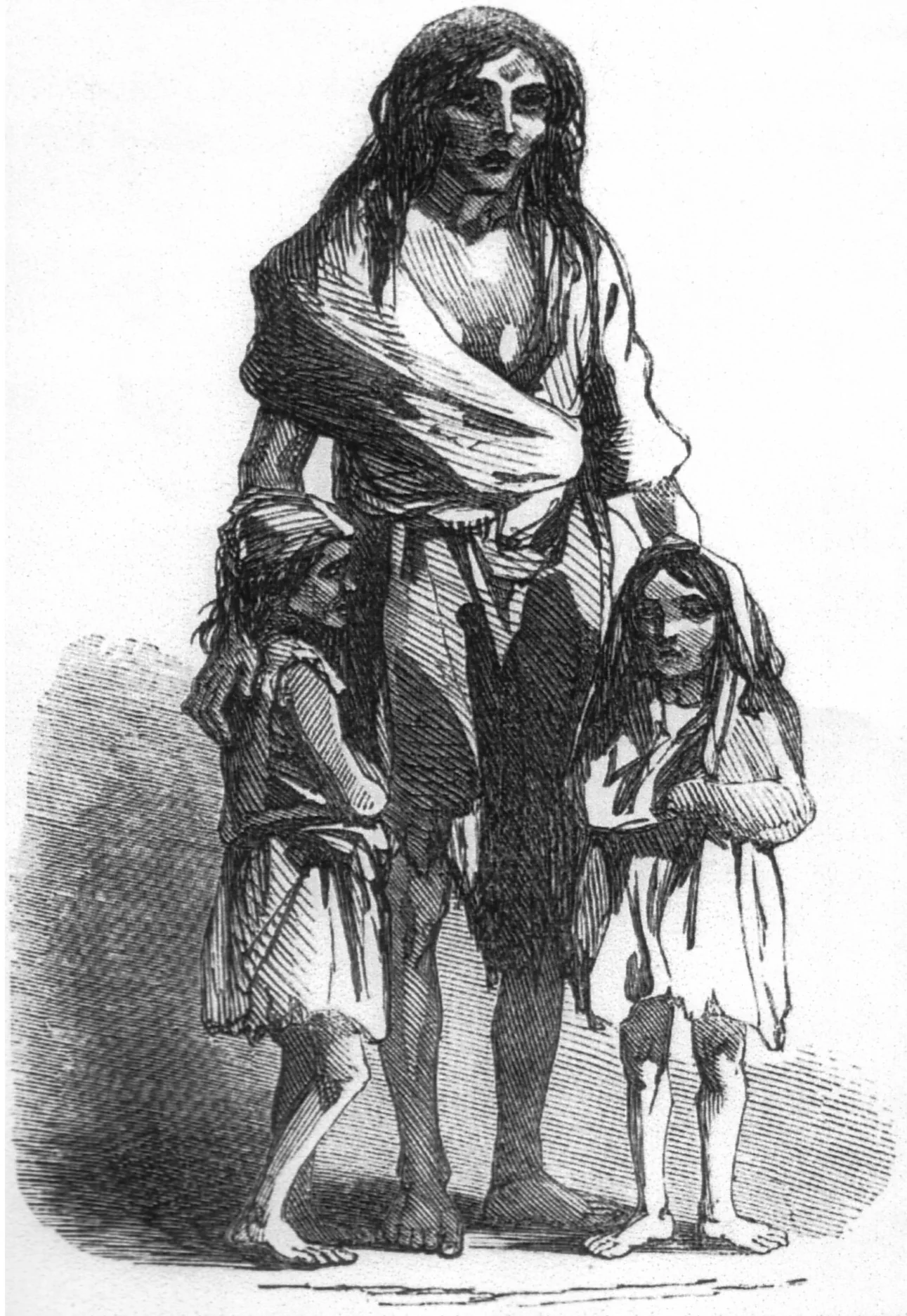
Eviction added exposure and homelessness to hunger. The Illustrated London News published Bridget O'Donnel's account in December 1849. She described being removed while ill as her home was demolished. Neighbours carried her out. Her testimony described a stillbirth and the death of a thirteen-year-old son. Her account and the accompanying illustration were published while famine conditions persisted.

What did British officials know?
Reports of suffering reached the authorities repeatedly. The National Archives of Ireland's Distress Papers include letters, petitions and reports pleading for help from 1846 onwards. These covered local conditions, proposed relief committees and requests for funding. The state was receiving evidence of the emergency while deciding how much assistance to provide.
Charles Trevelyan, the senior Treasury official associated with relief administration, defended policy in The Irish Crisis, published in 1848. He presented the catastrophe as capable of bringing a beneficial transformation in Irish society. That argument placed future economic and social change beside the immediate destruction of lives.
Historian Peter Gray's analysis of the Famine's colonial dimensions identifies the Treasury, under Chancellor Charles Wood and senior official Trevelyan, as the main centre of famine policy from 1846. He connects its response to economic doctrine, colonial stereotypes and a determination to remake Irish society. Humanitarian need was subordinated to perceived British national interests.
Disagreement within the administration demonstrates that its course was contested at the time. Gray describes Lord Clarendon's demands for increased relief and his warnings about the deadly consequences of inaction in late 1848. Those appeals brought little additional help. Ministers had reports of suffering and calls for a different response, yet maintained restrictions on assistance.
How many people died or left Ireland?
Around a million people died from hunger and disease. That is an estimate, not a complete register of named victims. Illness spread through weakened households and crowded places of refuge. The Famine's deaths cannot be counted only as people who literally starved without food.
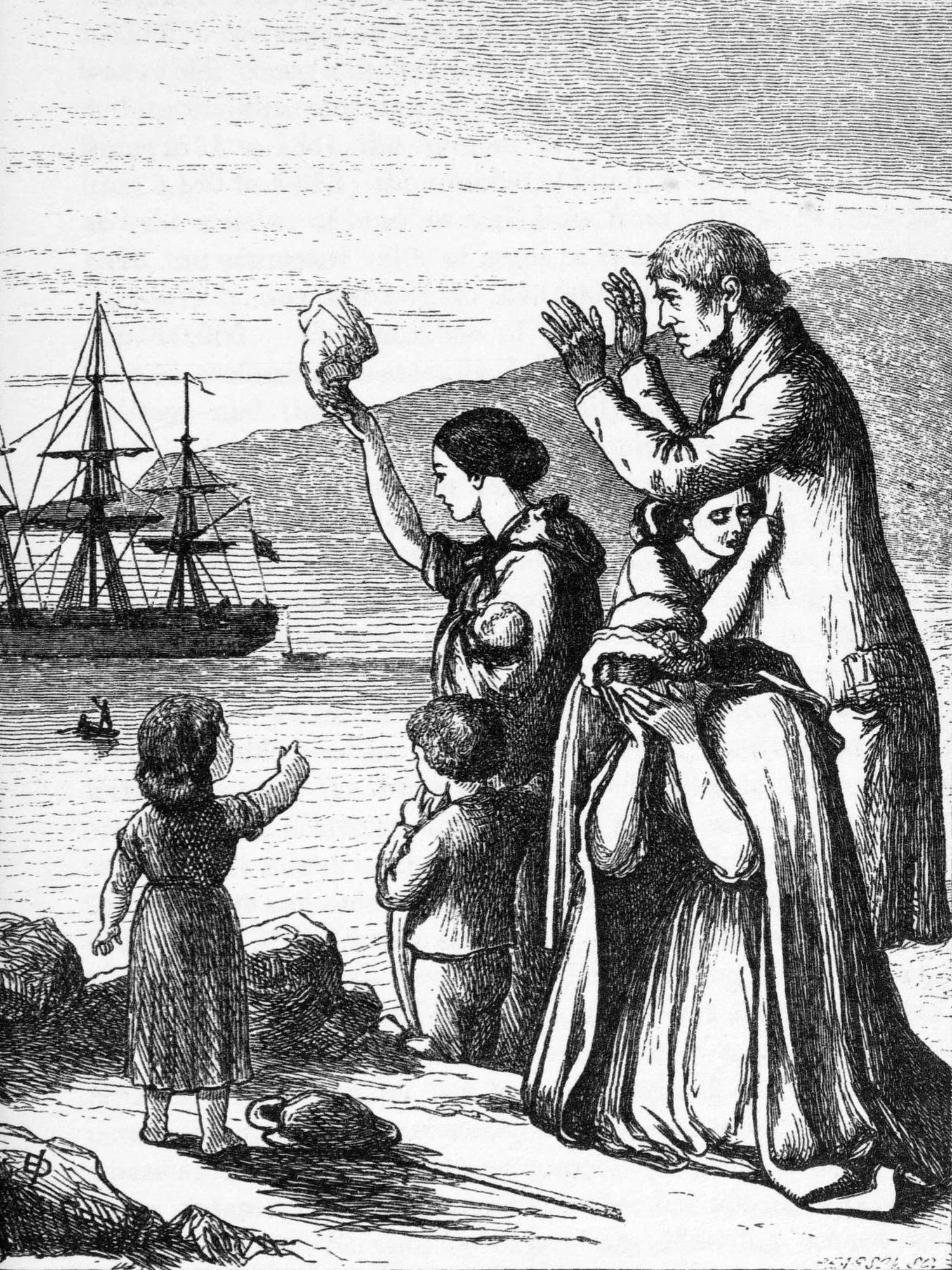
Emigration also changed Ireland. McPartlin records approximately 2.1 million departures between 1845 and 1855, a period extending beyond the worst famine years. Some people received assisted passages; others drew on family resources. Leaving required money or help, so it was not an option available to every starving household.
Voyages carried their own dangers. Mark Holan's account for the US National Archives examines passenger records containing both births and deaths at sea. Overcrowded cargo vessels and illness made some crossings disastrous, though conditions varied. Those who reached a new country had survived one danger without necessarily escaping poverty.
Death and emigration also broke the connections through which families passed on Irish. Our history of Irish-language decline follows the damage to speaker communities and the later revival.
Could different decisions have saved lives?
The government had already demonstrated that direct feeding could reach millions. Continuing adequate emergency relief, funding it beyond the resources of devastated local districts and removing conditions that excluded hungry households could have saved lives. The soup kitchens and the objections raised in Parliament show that alternatives were available and discussed during the crisis.
Food imports and relief expenditure must be assessed against the people they reached and the needs they left unmet. Grain imports exceeded exports in 1847, but that did not feed a family without money. Poor Law assistance continued after the soup kitchens closed, but its restrictions and local funding left severe gaps. These facts explain how government policy failed people even when food and relief existed.
Blight caused the crop failure. British ministers and Parliament were responsible for the relief decisions that followed: leaving access to food dependent on inadequate wages and purchasing power, ending mass feeding and attaching the surrender of land to assistance. Those choices deepened hunger, dispossession and death. Britain's responsibility lies in those actions and their consequences.
Frequently asked questions
Did Ireland export food during the Great Famine?
Yes. Grain, livestock and dairy products continued leaving Ireland, mainly for Britain. British ministers allowed commercial trade to continue while many households could not afford food.
Did Ireland also import food during the Famine?
Yes. Grain imports exceeded exports in 1847. Their timing and the ability of hungry families to pay remained crucial.
Why did the government close the soup kitchens?
British ministers ended the temporary programme as the 1847 harvest approached, despite continuing distress. They shifted relief to the Poor Law system and local Irish funding.
What did the Gregory clause require?
Occupiers of more than a quarter of a statute acre had to surrender rights to the excess land before qualifying for Poor Law relief.
How many people died in the Great Famine?
Around a million died from hunger and disease. Estimates vary because the surviving records do not provide a complete count.
Sources & further reading
- University College Cork: A Short History of the Great Irish Famine ↗
- PRONI: The Great Irish Famine chronology ↗
- Christine Kinealy: Food Exports from Ireland 1846–47 ↗
- UK Parliament: The great famine ↗
- J. McPartlin: Diet, politics and disaster ↗
- Coping with the Great Irish Famine: the agency of Skibbereen ↗
- National Museum of Ireland: relief timeline ↗
- Hansard: Commons debate, 29 March 1847 ↗
- Bridget O’Donnel: illustration and testimony published in 1849 ↗
- National Archives of Ireland: Distress Papers and Relief Commission ↗
- Charles Edward Trevelyan: The Irish Crisis (1848), CELT edition ↗
- Peter Gray: Was the Great Irish Famine a Colonial Famine? ↗
- Mark Holan: Ireland’s Famine Children Born at Sea ↗
Image credits
- A newspaper illustration of a crowd confronting soldiers during a food riot in Dungarvan
The Pictorial Times / British Library, via Wikimedia Commons · CC0 1.0
Converted to WebP and resized where necessary, without cropping or upscaling.
- Daniel MacDonald painting of an Irish family examining potatoes affected by blight
Daniel MacDonald / Wikimedia Commons · Public domain
Converted to WebP and resized where necessary, without cropping or upscaling.
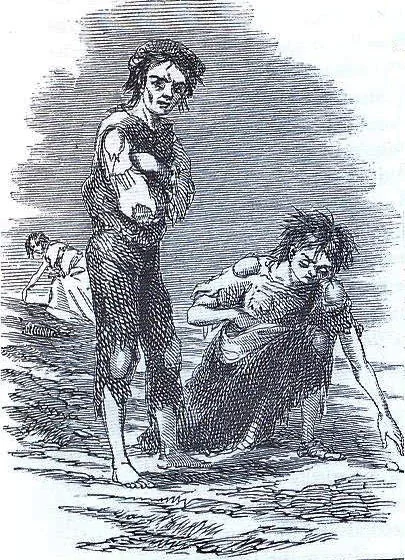
- James Mahony illustration of a boy and girl searching the ground for potatoes
James Mahony / The Illustrated London News, via Wikimedia Commons · Public domain
Converted to WebP and resized where necessary, without cropping or upscaling.
- Illustration of Bridget O’Donnel standing with her children during the Great Famine
The Illustrated London News / Wikimedia Commons · Public domain
Converted to WebP and resized where necessary, without cropping or upscaling.
- Henry Doyle engraving of people saying farewell beside a ship leaving Ireland
Henry Edward Doyle / Wikimedia Commons · Public domain
Converted to WebP and resized where necessary, without cropping or upscaling.


Something we should correct? Send a correction.
Keep reading
More stories
World history · 8 min read
How the British Empire Rose and Fell
How Britain built its empire through conquest, trade and slavery, and how resistance, world wars and independence movements ended colonial rule.
Australian history · 7 min read
British Invasion of Australia: Land and Aboriginal Resistance
How Britain’s invasion of Australia took Aboriginal land, from Sydney Cove and Pemulwuy to Tasmania, Myall Creek, the Stolen Generations and Mabo.
Irish history · 7 min read
The Guildford Four: False Confessions and Wrongful Convictions
How police evidence put the Guildford Four in prison, why their convictions collapsed and what happened to Giuseppe Conlon and the Maguire Seven.