Irish history
Why the Irish Language Declined Under British Rule
How conquest, English-language schooling, famine and emigration weakened Irish, and how speakers and the Gaelic League sustained its revival.
British rule helped turn Irish from the language of much of Ireland into a minority language. Conquest weakened the families and institutions that supported Gaelic learning. Government and schooling privileged English, while famine, eviction and emigration devastated communities that passed Irish from parents to children.
Gaeilge survived because people continued speaking it. Its decline was neither inevitable nor the result of one law. It developed through centuries of unequal power, followed by the daily decisions families made within that unequal society. Our full documentary follows that history and the efforts to restore Irish to everyday use.
Irish before the language shift
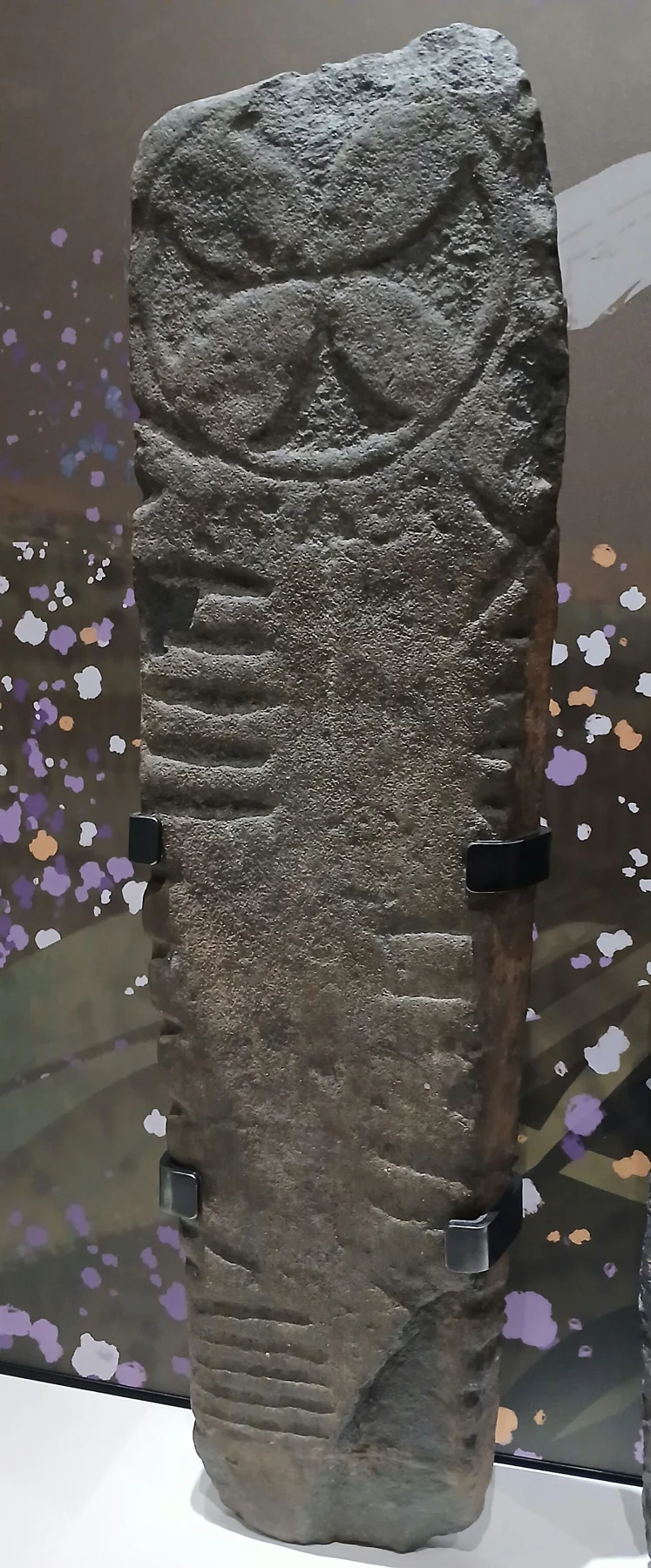
Irish had a written history long before English became dominant in Ireland. Ogham inscriptions preserve early forms of the language. Later manuscripts contain poetry, stories and learned writing, while spoken Irish carried the work and conversations of households across the island.
The arrival of Anglo-Norman settlers in the twelfth century did not immediately replace Irish. Many settlers and their descendants adopted it. Ireland became multilingual, with different languages serving different social settings. The survival and spread of Irish in this period make the later shift to English a historical development to explain, not an automatic consequence of first contact. Údarás na Gaeltachta traces these changes.
Learned Irish also depended on institutions. Poets trained in specialist schools and worked for aristocratic patrons, including Gaelic lords and descendants of Anglo-Norman settlers. A poem could defend a family's claims to authority, celebrate its generosity or preserve its reputation. Patrons supplied payments, hospitality and protection. Irish learning had an economic foundation as well as a body of texts.
Conquest broke the support for Gaelic learning
English conquest in the sixteenth and seventeenth centuries attacked that foundation. Military defeat, confiscation and plantation stripped Gaelic families of estates and political power. A dispossessed lord could no longer support poets and scholars on the same terms. Changes in landownership damaged the networks through which learned work was commissioned and sustained.
Historians Evan Bourke and Deirdre Nic Chárthaigh examine those relationships in their study of Gaelic literary patronage. Their account shows why taking control of land could also disrupt cultural production. It did not require every speaker to abandon Irish at once.
Ordinary people continued using the language after their rulers lost power. But English acquired increasing importance in administration and legal business. Irish could remain a family's language while English controlled access to an official decision. Our account of England's conquest of Ireland explains the wars and transfers of land behind this change.
Why families began teaching their children English
Parents faced a practical problem. Their children needed to deal with an English-speaking state and labour market. English could assist someone seeking employment or preparing to emigrate. Learning it promised advantages that Irish alone increasingly could not provide.
That demand existed before the national school system began in 1831. A 2024 economic-history working paper, using census evidence, argues that education acquired by earlier generations helped shape later language use. It draws attention to privately funded schooling and families' demand for English before state provision expanded.
Parents did not decide which language courts, officials or employers would require. When English offered greater security, a family could teach it out of concern for its children while still valuing Irish. Over successive generations, bilingualism could give way to children learning English without acquiring their grandparents' language.

National schools and punishment for speaking Irish
The national school system established in 1831 reinforced the position of English. Irish-speaking children entered classrooms where their home language had little recognised place. Education could therefore mean learning through an unfamiliar language as well as learning new subjects. The NCCA's historical review of Irish teaching connects educational policy with the negative associations attached to speaking Irish.
Some teachers punished children for using it. Accounts of the bata scóir, or tally stick, describe marks recording occasions when a child spoke Irish. Those marks could determine physical punishment. Nena Židov discusses this use in the Slovene Ethnographic Museum's study of tally sticks. The practice made a child's ordinary speech something to monitor and punish.
In 1936, the Irish Folklore Commission issued its first questionnaire on tally sticks, gathering recollections of their use against Irish in nineteenth-century schools. UCD's account of the questionnaire identifies both its date and purpose. These retrospective records do not establish that every teacher used a stick. They document a remembered practice whose consequences extended beyond a single lesson.
The pressure could reach home. Where English was necessary to understand lessons or avoid punishment, parents had further reasons to use it with their children. Schools helped reproduce the inequality between the two languages.
Famine destroyed Irish-speaking communities
The Great Famine accelerated language loss by killing and displacing speakers. Potato blight triggered repeated crop failures from 1845, but British government decisions intensified the disaster. Lord John Russell's administration failed to provide adequate relief. Treasury official Charles Trevelyan restricted aid, while Parliament placed the financial burden of relief on Irish landowners. Some landlords responded by evicting tenants.
Food exports continued during the crisis. Hunger and disease killed roughly a million people. UK Parliament's historical account describes both the failures of relief and the connection between its financing and eviction. Our history of Famine relief and food exports examines these decisions in greater detail.
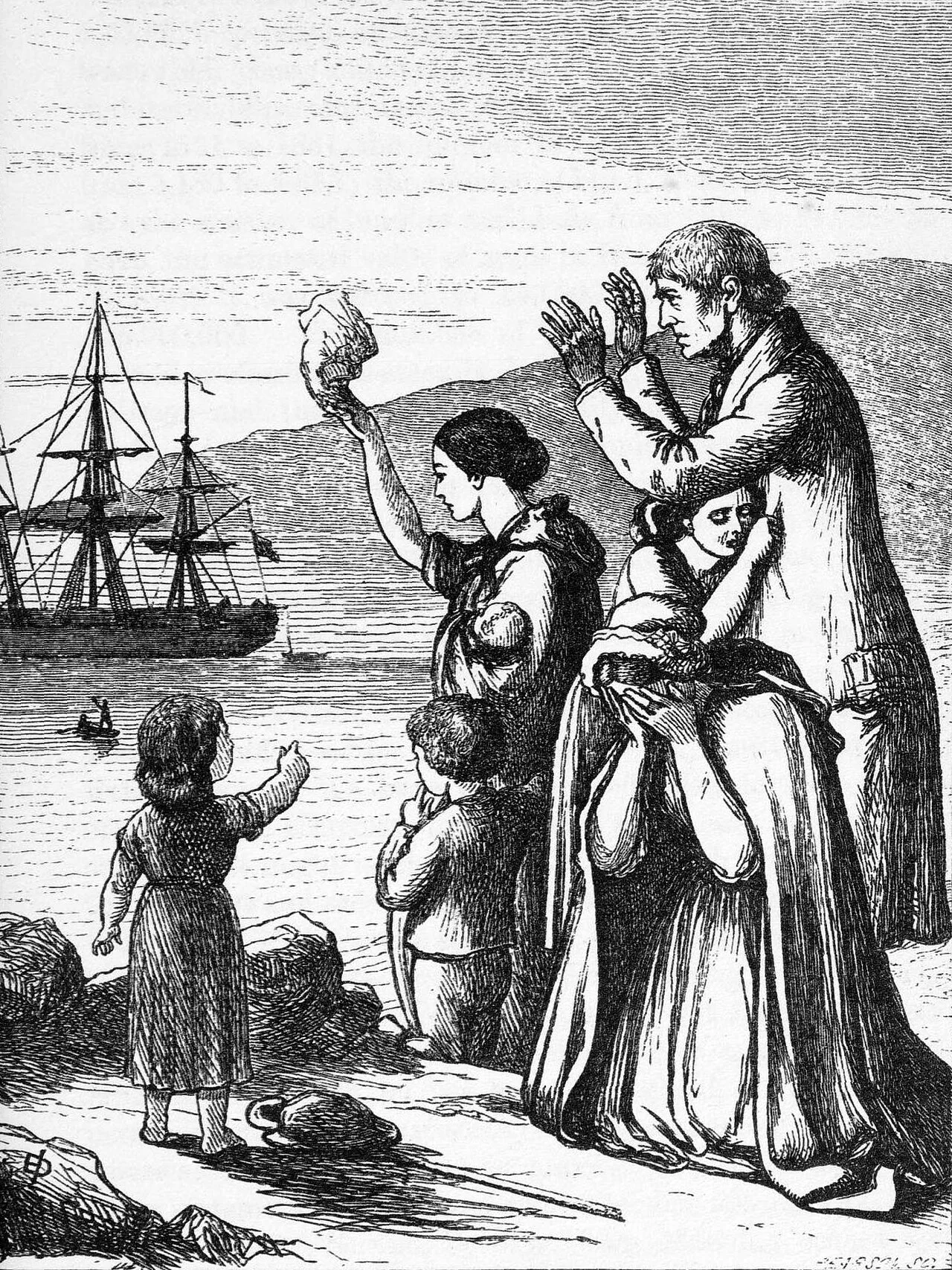
For the language, the loss was also a destruction of everyday relationships. Irish-speaking districts lost parents, children and neighbours. Emigration removed survivors and future families. A language passed on through daily conversation needs people who can continue those conversations. Death and departure broke that chain in many households.
Irish was already declining before the Famine. The catastrophe deepened the damage and strengthened the pressure on survivors to prepare children for lives abroad. An Coimisinéir Teanga's historical overview identifies famine and subsequent emigration as central to the collapse of the monolingual Irish-speaking population.
The Gaelic League built places to use Irish
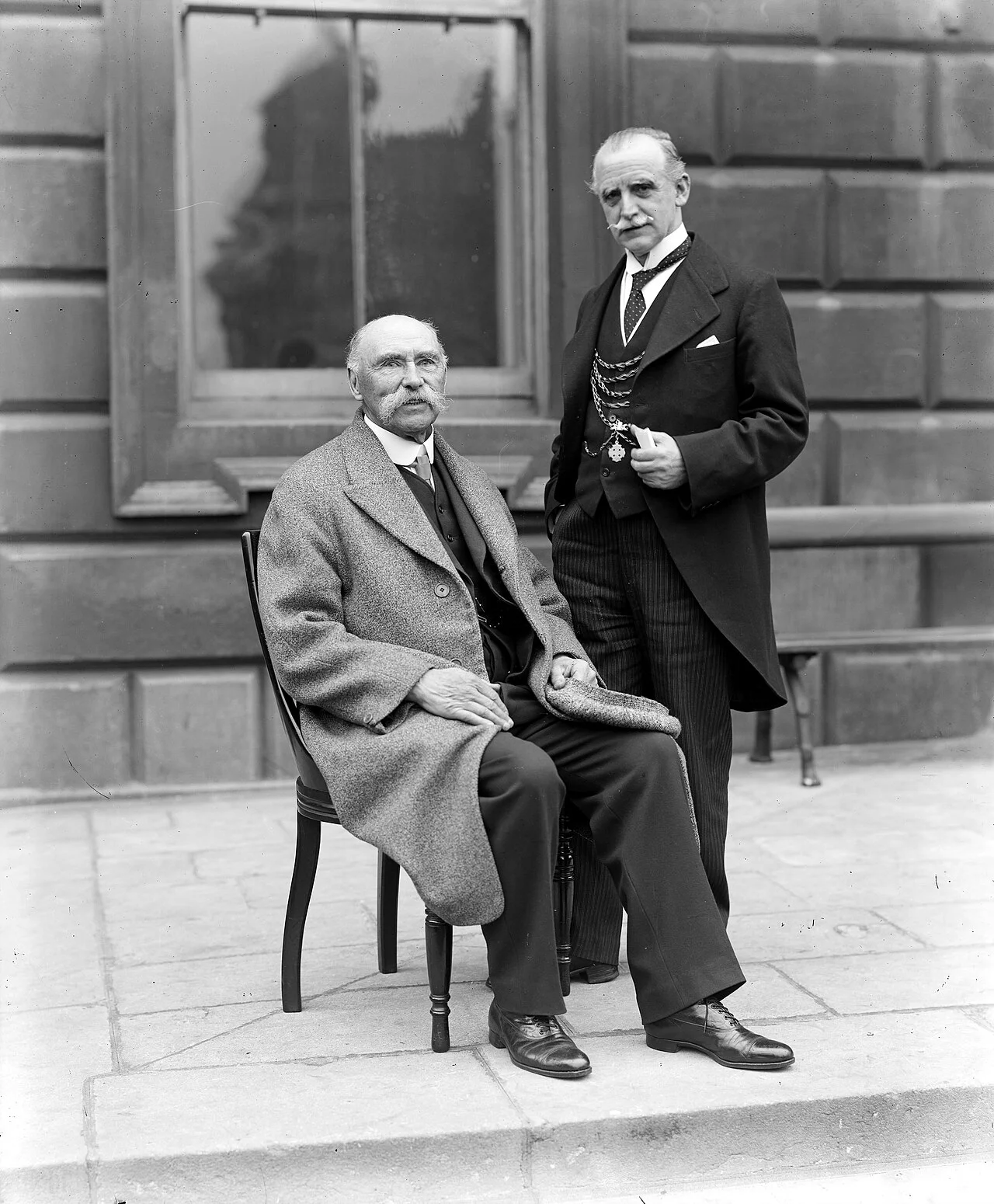
Irish survived in communities that continued speaking it. The Gaelic League, founded in 1893, worked to extend its use and bring learners into contact with speakers. Douglas Hyde chaired the founding meeting convened by Eoin MacNeill and became its first president.
The organisation initially sought members across religious and political divisions. Hyde was the son of a Church of Ireland clergyman. Classes, travelling teachers, concerts and dances offered practical ways to participate. Irish could be used socially as well as studied.
By 1905, the League had 550 branches. Its weekly newspaper, An Claidheamh Soluis, began appearing in 1899. The National Library of Ireland's account describes this combination of teaching, publication and cultural activity.
The League also became a meeting place for people involved in the independence movement, though language revival and support for armed rebellion were not the same commitment. Its political direction changed over time. Its work helped create the cultural setting in which the Easter Rising took place.
Independence changed policy, but not every household
After the Irish Free State was established in 1922, its government made restoring Irish a public priority. Irish gained a central place in schooling and state employment. The 1937 Constitution recognised it as the national and first official language, with English as a second official language.
These measures reversed the state's formal preference for English. They could not by themselves recreate households and communities where children heard Irish throughout the day. Teaching the language to pupils and sustaining it as their ordinary means of conversation were different tasks.
The NCCA's review describes the limits of relying on a curriculum without sufficient support beyond the classroom. That distinction remains essential when assessing the revival: educational provision can support speakers, but lessons alone cannot supply every setting in which they need to use the language.
Knowing Irish and speaking it every day
The Republic of Ireland's 2022 census recorded 1,873,997 people aged three or over who said they could speak Irish. Of these, 71,968 reported speaking it daily outside education, 1,835 fewer than in 2016. These are self-reported census measures, not a test of fluency or an all-island count. The CSO publishes ability and frequency separately.
Irish-language media provide additional settings for hearing and using Gaeilge. TG4 launched the dedicated children's channel Cúla4 in September 2023, offering entertainment and news through Irish. Such services give children access to the language beyond a textbook.
British rule changed the distribution of land, power and opportunity, while schooling and famine carried those changes into homes. Irish endured through speakers who kept passing it on. Its future depends on whether people can continue doing that in daily life.
Frequently asked questions
Why did English replace Irish across much of Ireland?
Conquest and land loss weakened Gaelic institutions. English dominated government and early national schooling, while famine and emigration destroyed Irish-speaking communities. Families faced strong pressure to prepare their children for work and official life through English.
Were children punished for speaking Irish?
Yes. Historical accounts describe some teachers using tally sticks to record Irish speech and determine physical punishment. The Irish Folklore Commission gathered recollections in 1936. The evidence does not establish that every school used the practice.
Did the Great Famine cause the decline of Irish?
Irish was already losing ground before 1845. Famine deaths and emigration devastated speaker communities and accelerated that decline. British relief failures intensified the human disaster.
What did the Gaelic League do?
Founded in 1893, the League organised classes, travelling teachers and cultural events, published Irish-language material and campaigned for educational recognition. It created ways for learners and existing speakers to use Irish together.
How many people speak Irish every day?
In the Republic of Ireland’s 2022 census, 71,968 people aged three or over reported speaking Irish daily outside education. This is a dated, self-reported measure, not an all-island total or a count of everyone who knows some Irish.
Sources & further reading
- Údarás na Gaeltachta: History of the Irish Language ↗
- Bourke and Nic Chárthaigh: Patronage Networks in Gaelic Ireland ↗
- Fernihough, Colvin and McLaughlin: Mind Your Language (2024 working paper) ↗
- NCCA: Learning and Teaching Irish in English-Medium Schools, Part 1 ↗
- Nena Židov: Tally Sticks (2010), p.119 ↗
- UCD: Collecting Folklore by Questionnaire ↗
- UK Parliament: The Great Famine ↗
- An Coimisinéir Teanga: About the Language ↗
- National Library of Ireland: Douglas Hyde, Eoin MacNeill and the Gaelic League ↗
- CSO: Census 2022, Education and Irish Language ↗
- TG4: Cúla4 launch, September 2023 ↗
Image credits
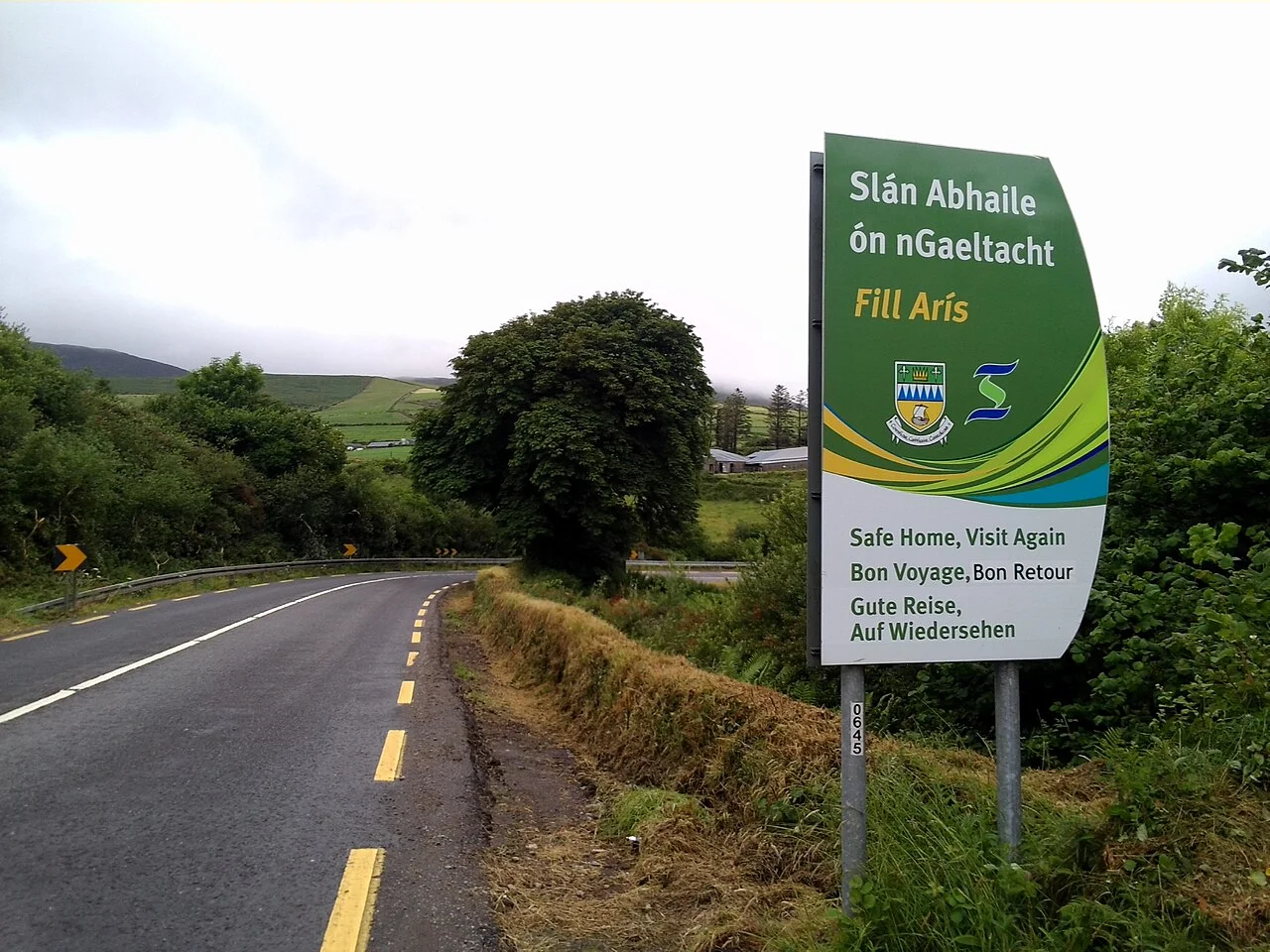
- Bilingual sign beside a road marking the boundary of the Gaeltacht in County Kerry
RHaworth / Wikimedia Commons · CC BY-SA 4.0
Resized where necessary and converted to WebP. No cropping or historical detail altered.
- Ogham stone from Aglish with incised markings and a cross
A.-K. D. / Wikimedia Commons · CC BY-SA 4.0
Resized where necessary and converted to WebP. No cropping or historical detail altered.
- Former Abbeyleix South National School building with pointed windows
A.-K. D. / Wikimedia Commons · CC0
Resized where necessary and converted to WebP. No cropping or historical detail altered.
- Engraving of emigrants waving towards a sailing ship
Henry Edward Doyle / Wikimedia Commons · Public domain
Resized where necessary and converted to WebP. No cropping or historical detail altered.
- Douglas Hyde seated beside Alfie Byrne standing outside a building
Keogh Brothers Ltd (individual photographer unknown) / Wikimedia Commons · Public domain
Resized where necessary and converted to WebP. No cropping or historical detail altered.


Something we should correct? Send a correction.
Keep reading
More stories
World history · 8 min read
How the British Empire Rose and Fell
How Britain built its empire through conquest, trade and slavery, and how resistance, world wars and independence movements ended colonial rule.
Australian history · 7 min read
British Invasion of Australia: Land and Aboriginal Resistance
How Britain’s invasion of Australia took Aboriginal land, from Sydney Cove and Pemulwuy to Tasmania, Myall Creek, the Stolen Generations and Mabo.

Irish history · 7 min read
The Guildford Four: False Confessions and Wrongful Convictions
How police evidence put the Guildford Four in prison, why their convictions collapsed and what happened to Giuseppe Conlon and the Maguire Seven.