Irish history
Brehon Law: How Justice Worked in Medieval Ireland
How Brehon law governed medieval Ireland: compensation for injury, marriage and property rights, cattle debts, legal schools and English conquest.
Brehon law was the native legal tradition that governed much of medieval Ireland before English common law displaced it. Its specialists, the brehons, dealt with injuries, debts, marriage, land and the obligations people owed one another. Compensation and guarantees carried much of the work that modern states assign to criminal punishment and public enforcement.
A judgment could require an offender to support an injured person's recovery. A marriage settlement could recognise a wife's property and labour. A creditor could recover a debt by taking cattle through a prescribed legal process. These rules joined detailed protections to a society in which rank affected a person's rights.
Who were the brehons, and where did their law come from?
The name Brehon derives from brithem, the Irish word for a judge. Legal learning extended beyond a ruler's household: clerics, poets and judges transmitted rules, and later legal families preserved them in manuscripts. Much of the early written material dates from the seventh and eighth centuries. John Biggins's history of the laws explains how these writings survived through later copies.
Christian scholars helped shape the law that reached the page. The historian Donnchadh Ó Corráin rejects the idea that the surviving texts simply preserve pagan rules beneath a thin Christian coating. Their authors worked with inherited customs and Christian learning, developing arguments about property and obligations within that intellectual world.
The texts also differ from a series of court reports. Ó Corráin points out that detailed discussions of marriage survive without the marriage charters or records of property lawsuits that would let historians follow particular couples. A rule describing how assets should be divided cannot establish how every household actually divided them.
How did compensation for an injury work?
An injury created obligations that could continue after the initial dispute. The practice often called sick maintenance required the person responsible for a wrongful serious injury to organise and pay for convalescence. Compensation addressed the injured person's loss, while support during recovery addressed an immediate need for care.
Guarantees helped give agreements force. Other people could stand behind an obligation, with their involvement making the dispute harder for the debtor to ignore. Biggins describes pledges, guarantors and the seizure of property as connected parts of this system.
Rank still affected legal standing. A wealthy or high-ranking person did not enter a dispute on the same terms as someone with restricted legal capacity. Care provisions did not give everyone equal protection.
How could a creditor make someone pay?
A creditor with an unpaid judgment could pursue distraint: the formal seizure of the debtor's property. Noelle Higgins's account of enforcement describes notice requirements and opportunities for the debtor to pay, provide a pledge or arrange a surety. Cattle could be seized after the required process, with a legal specialist overseeing the action.
There was also a procedure for pressing a claim against someone of high rank. The claimant could fast outside that person's house. Under the rule Higgins describes, eating during the claimant's fast could double the amount owed. Refusal therefore carried a further legal cost.
These procedures depended on obligations between people rather than a modern police force or prison service. They also show why the absence of a prison system should not be confused with universal obedience. Lawyers needed ways to deal with refusal, delayed payment and the difficulty of bringing a powerful debtor to account.
What rights did women have in marriage and divorce?
The marriage tract Cáin Lánamna, available in Ó Corráin's translation, distinguishes unions according to the property contributed. In a marriage of common contribution between partners of equal status, certain contracts required both spouses' consent. The text allowed exceptions for transactions benefiting the household, including necessary purchases and arrangements for farming.
A spouse could therefore have a legal objection when the other made a damaging bargain. The household's assets were not treated as something either partner could always dispose of alone.
Divorce involved another calculation. The tract divided proceeds according to contributions of land, livestock and labour. Its detailed treatment of dairy work and textiles recognised work performed within the household as part of the settlement. Contributions made during the marriage could affect what a person received when it ended.
These protections were specific. A rule for partners bringing property into an equal-status union did not grant identical authority in every marriage. Ó Corráin's study of women and law distinguishes marriages based on common contribution, a man's contribution and a woman's contribution. A spouse's rights depended on the type of marriage and the property each partner contributed.
What did the laws say about farming and neighbours?
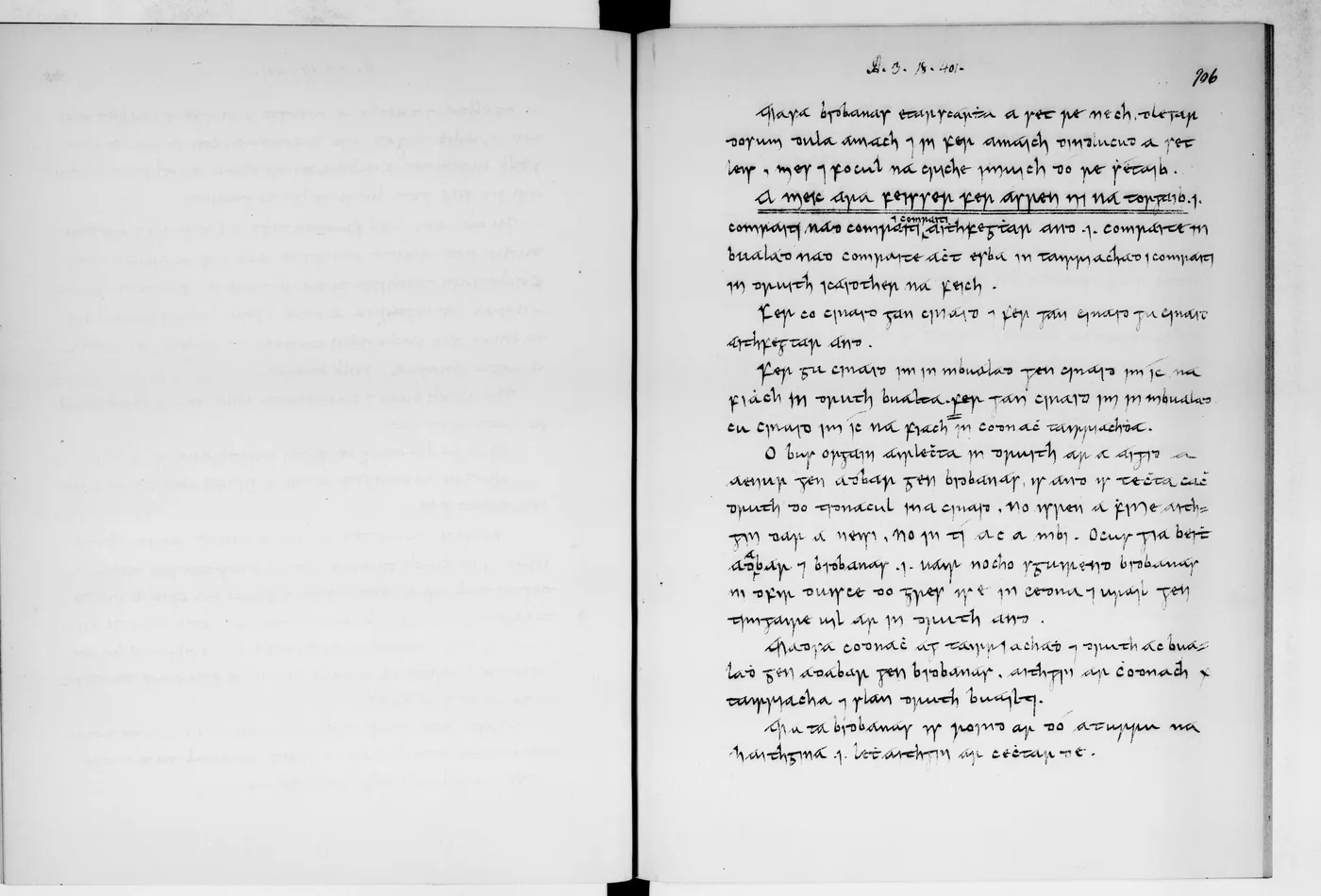
Surviving manuscripts bring the law down to the scale of a field boundary. Trinity College Dublin MS 1387, catalogued by Irish Script on Screen, contains rules concerning shared land, fencing and trespassing cattle. Other passages concern letting land, impounding animals and injuries caused while driving them.
The manuscript is dated to the fifteenth century and associated with a MacEgan law school. A scribe named Seán signed it. Legal statements appear alongside commentary, recording the effort to explain and transmit rules to later readers.
The subjects fit closely together. Neighbours sharing land needed rules about fencing; animals crossing a boundary could damage another person's holding; cattle taken to satisfy a claim still had to be handled properly. The catalogue also identifies material on joint tillage and herding. Farming generated repeated questions about who supplied work, who controlled property and who bore responsibility when an arrangement failed. The seasonal side of Irish community life appears in the history of Samhain and Halloween customs.
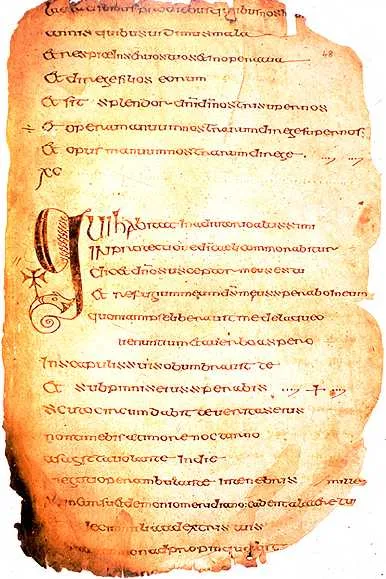
Was a copied book the world's first copyright case?
One of Ireland's best-known legal stories concerns Colmcille, also called Columba. In the legend, he copied a manuscript belonging to Finnian without permission. King Diarmait awarded the copy to the owner of the original, comparing the relationship between a book and its copy to a cow and her calf.
The Irish Script on Screen catalogue of the Cathach identifies this as a sixteenth-century legend. Colmcille died in 597, leaving many centuries between his lifetime and that account. The catalogue explicitly treats the story's historicity as disputed.
The Cathach is an early manuscript of the Psalms, later carried as a battle talisman. Its survival does not authenticate the legend. The copied-book judgment remains a memorable ownership story, but calling it a proven first copyright case treats a disputed legend as an established judgment.
Where did Irish lawyers learn their profession?
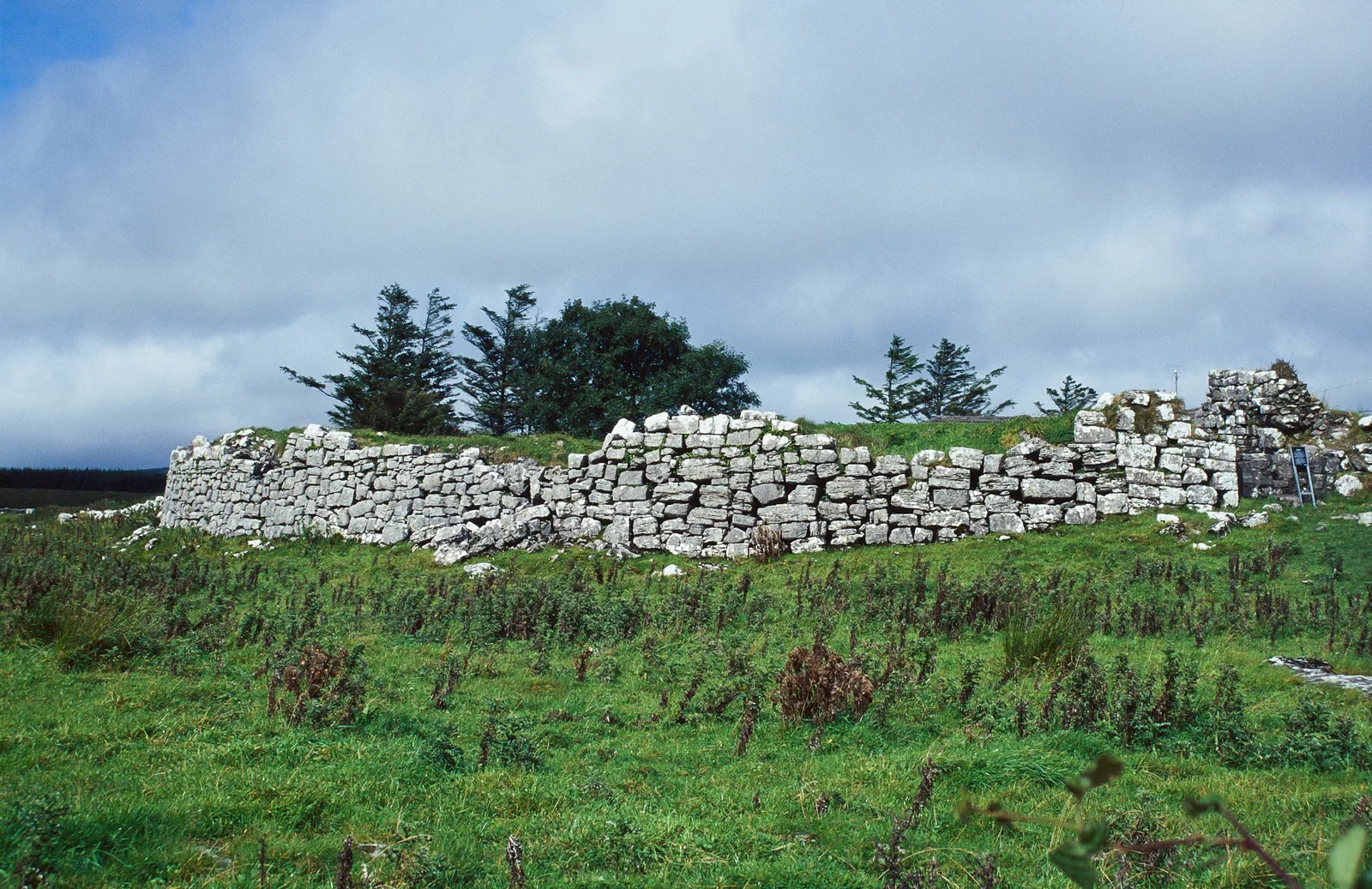
At Cahermacnaghten in County Clare, the O'Davoren family maintained a school of legal learning. The Office of Public Works' account dates its foundation to around 1500 and describes its continued use into the seventeenth century. Its schoolhouse stood outside the stone enclosure shown in the photograph above.
Students learned Latin and Brehon law, while scribes copied legal texts. The Book of Donal O'Davoren gathered legal material, a glossary and literary works. The school had connections with other learned families, including the MacEgans near Tuam and the O'Dorans in County Wexford.
These connections gave legal scholarship institutions as well as individual experts. Teachers, books and patrons sustained the profession. By the late sixteenth century, its students also faced a country in which Brehon law and English law operated alongside one another. Training for legal work meant confronting that divided authority.
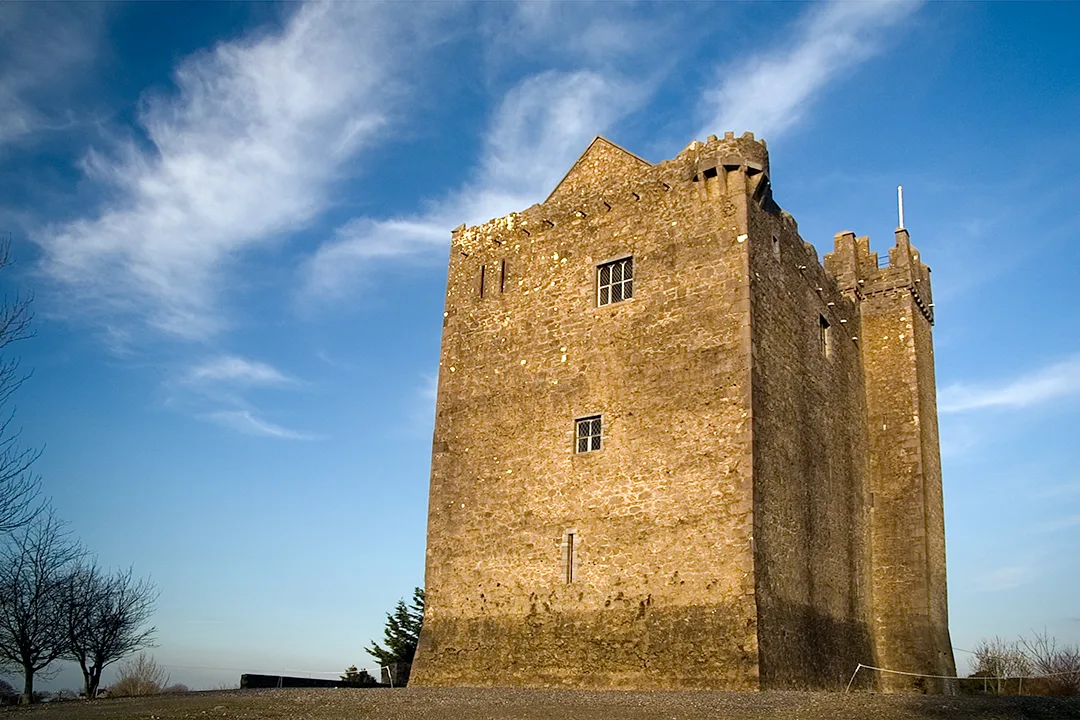
Why was Brehon law replaced?
The Anglo-Norman invasion of 1169 did not immediately end Irish law. English authority spread unevenly, and legal systems coexisted for centuries. The Tudor conquest greatly strengthened the Crown's ability to impose its own institutions.
James Meighan's account for the Law Society identifies early seventeenth-century judgments concerning gavelkind and tanistry as major steps in rejecting Gaelic rules over property and succession. A family's claim to land increasingly depended on the rules English courts would recognise. Our history of England's conquest of Ireland follows the campaigns and transfers of land behind that change.
The legal schools also depended on patrons whose power conquest undermined. As Gaelic institutions lost their place, learned families lost the support that had sustained their work. The profession declined alongside the political order it had served. Manuscripts nevertheless survived: texts on injury, marriage and farming preserved the detailed arguments of lawyers whose schools no longer operated.
Frequently asked questions
What does Brehon mean?
Brehon comes from the Irish word brithem, meaning judge. Brehons were learned legal specialists who interpreted rules and helped settle disputes.
Did Brehon law use prisons?
It did not rely on a prison system comparable to a modern state's. Compensation, guarantors and seizure of property were central means of resolving wrongs and enforcing obligations. That does not mean every judgment was obeyed voluntarily.
Could women own property under Brehon law?
Women could have property interests recognised by law. Marriage rules could protect their contribution and require consent for certain contracts. Rights varied with status and the type of marriage; they were not identical for every woman.
Was the Colmcille book dispute the first copyright case?
It is a famous legend, not a securely documented first copyright judgment. The Irish Script on Screen catalogue identifies the copying story as a sixteenth-century legend about events supposedly involving the sixth-century saint.
When did Brehon law end?
English conquest and the expansion of common law displaced it during the seventeenth century. There was no single moment when every local practice stopped: legal rulings, the loss of patrons and the decline of schools all contributed.
Sources & further reading
- Courts Service: History of the law in Ireland ↗
- John Biggins, History Ireland: Afterlives of the Brehon laws ↗
- Donnchadh Ó Corráin, UCC CELT: Women and the Law in Early Ireland ↗
- Noelle Higgins: The Lost Legal System, Pre-Common Law Ireland and the Brehon Law ↗
- UCC CELT: Cáin Lánamna, translated by Donnchadh Ó Corráin ↗
- Irish Script on Screen: Trinity College Dublin MS 1387 ↗
- Irish Script on Screen: Royal Irish Academy MS 12 R 33, The Cathach ↗
- Office of Public Works, Heritage Ireland: The Gaelic Learned Tradition ↗
- James Meighan, Law Society Gazette: Irish ways and Irish laws ↗
Image credits
- Ruined limestone walls of Cahermacnaghten stone fort in the Burren, County Clare
Andreas F. Borchert / Wikimedia Commons · CC BY-SA 4.0
Resized and converted to WebP. This version is available under the same CC BY-SA 4.0 licence.
- Open volume of nineteenth-century handwritten copies of Brehon legal tracts
John O'Donovan and Eugene O'Curry collection / Bibliothèque nationale de France, via Wikimedia Commons · Public domain
Resized where necessary and converted to WebP. No cropping or historical detail altered.
- Cattle grazing in green pasture in the Burren, County Clare
C Michael Hogan / Cattle grazing in Burren meadow / Geograph, via Wikimedia Commons · CC BY-SA 2.0
Resized where necessary and converted to WebP. No cropping or historical detail altered. This version uses the same CC BY-SA 2.0 licence.
- Surviving parchment leaf with decorated lettering from the Cathach of St Columba
Unknown scribe / Wikimedia Commons · Public domain
Resized where necessary and converted to WebP. No cropping or historical detail altered.
- Stone tower of Redwood Castle photographed beneath a blue sky
Steve Ford Elliott / Wikimedia Commons · CC BY 2.0
Resized where necessary and converted to WebP. No cropping or historical detail altered.


Something we should correct? Send a correction.
Keep reading
More stories
World history · 8 min read
How the British Empire Rose and Fell
How Britain built its empire through conquest, trade and slavery, and how resistance, world wars and independence movements ended colonial rule.
Australian history · 7 min read
British Invasion of Australia: Land and Aboriginal Resistance
How Britain’s invasion of Australia took Aboriginal land, from Sydney Cove and Pemulwuy to Tasmania, Myall Creek, the Stolen Generations and Mabo.
Irish history · 7 min read
The Guildford Four: False Confessions and Wrongful Convictions
How police evidence put the Guildford Four in prison, why their convictions collapsed and what happened to Giuseppe Conlon and the Maguire Seven.