Irish history
Halloween’s Irish Origins: Samhain, Turnips and Traditions
How Samhain and Irish Halloween customs shaped the holiday, from turnip lanterns and barmbrack to emigration and American trick-or-treating.
Halloween has deep Irish roots. Samhain marked the beginning of winter, while Irish families developed customs of disguising themselves, sharing food, playing fortune-telling games and carving frightening faces into turnips. Emigrants carried these traditions across the Atlantic, where Halloween acquired new forms, including the pumpkin lantern and modern trick-or-treating.
The celebration also draws on the Christian calendar and traditions shared with Scotland and other parts of Europe. Its history stretches from seasonal gatherings to crowded Irish kitchens, American Halloween parties and children calling at their neighbours’ doors. The familiar customs emerged at different times, rather than arriving together as one unchanged ancient festival.
What was Samhain?
Samhain marked the opening of winter on 1 November in the traditional Irish calendar. Much of the celebration took place the evening before, on 31 October, known in Irish as Oíche Shamhna. It was a seasonal turning point, when the work of gathering food gave way to preparations for the colder months.
Folklorist Jeanmarie Rouhier-Willoughby describes Samhain celebrations in Irish sagas recorded between the ninth and twelfth centuries. Those texts preserve a much older festival, although they do not provide a contemporary written description of every pre-Christian practice.
In the traditions associated with this season, the otherworld came close to ordinary life. Spirits could help or harm, and contact with them required caution. Stories about supernatural visitors gave the darkening evenings a particular character. The seasonal celebration belonged to a society whose farming, households and obligations also shaped traditions such as Ireland’s Brehon law.
Why is it called Halloween?
The English name comes from All Hallows’ Eve, the evening before All Saints’ Day on 1 November. “Hallows” refers to holy people or saints. All Souls’ Day follows on 2 November and commemorates the dead.
These Christian observances occupied the same part of the year as Samhain. They brought prayers, saints and remembrance into a season already associated with death and the supernatural. The Library of Congress’s account of Halloween describes Christian and pre-Christian beliefs mingling rather than one set of customs simply disappearing.
The result could combine religious devotion with fear, play and hospitality. A family might observe Christian practices while telling stories about spirits. Halloween’s name therefore records an important part of its development: the festival known in English through the church calendar retained customs that reached beyond formal worship.
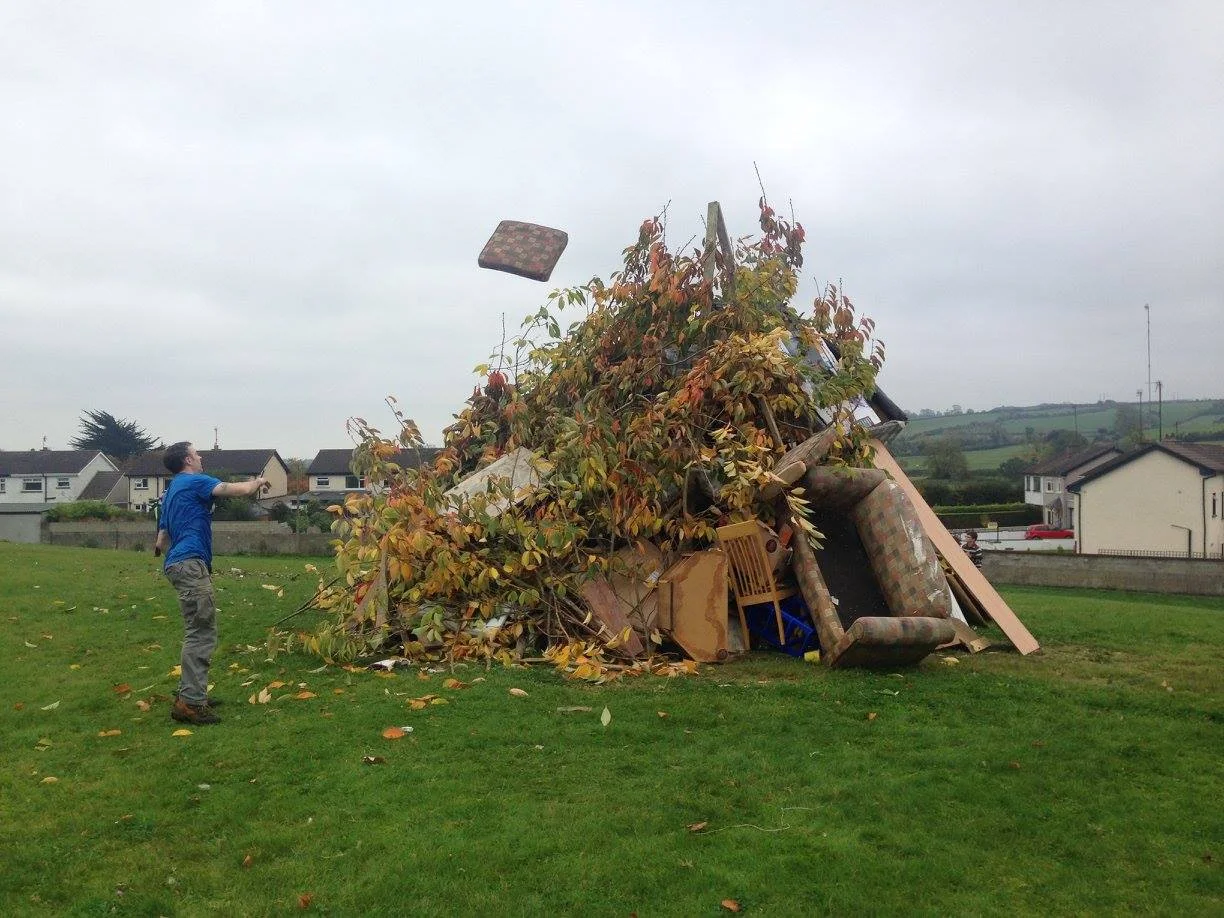
Community bonfires still mark the evening in many places, although local fire traditions vary. The National Museum notes that St John’s Eve in summer was traditionally the more prominent bonfire occasion in parts of western Ireland.
Ghosts, disguises and the family home
In Irish tradition, Halloween was a night when the dead might return to their family home. Other spirits were feared. People could avoid travelling alone, while masks allowed neighbours to frighten one another without immediately being recognised.
The National Museum of Ireland’s account of Samhain customs describes groups of disguised men or children visiting houses and entertaining their neighbours. Small crosses placed over doors offered protection and good luck. The same evening could include an affectionate expectation of returning relatives and anxiety about unwelcome visitors.
Disguise changed how people behaved toward familiar neighbours. Someone normally recognised by their face could become a ghostly stranger at the door. Visiting, performing and frightening people were social activities, with an audience and an expected response. Food and entertainment helped turn a night associated with danger into a shared occasion.
Apples, barmbrack and predicting a marriage
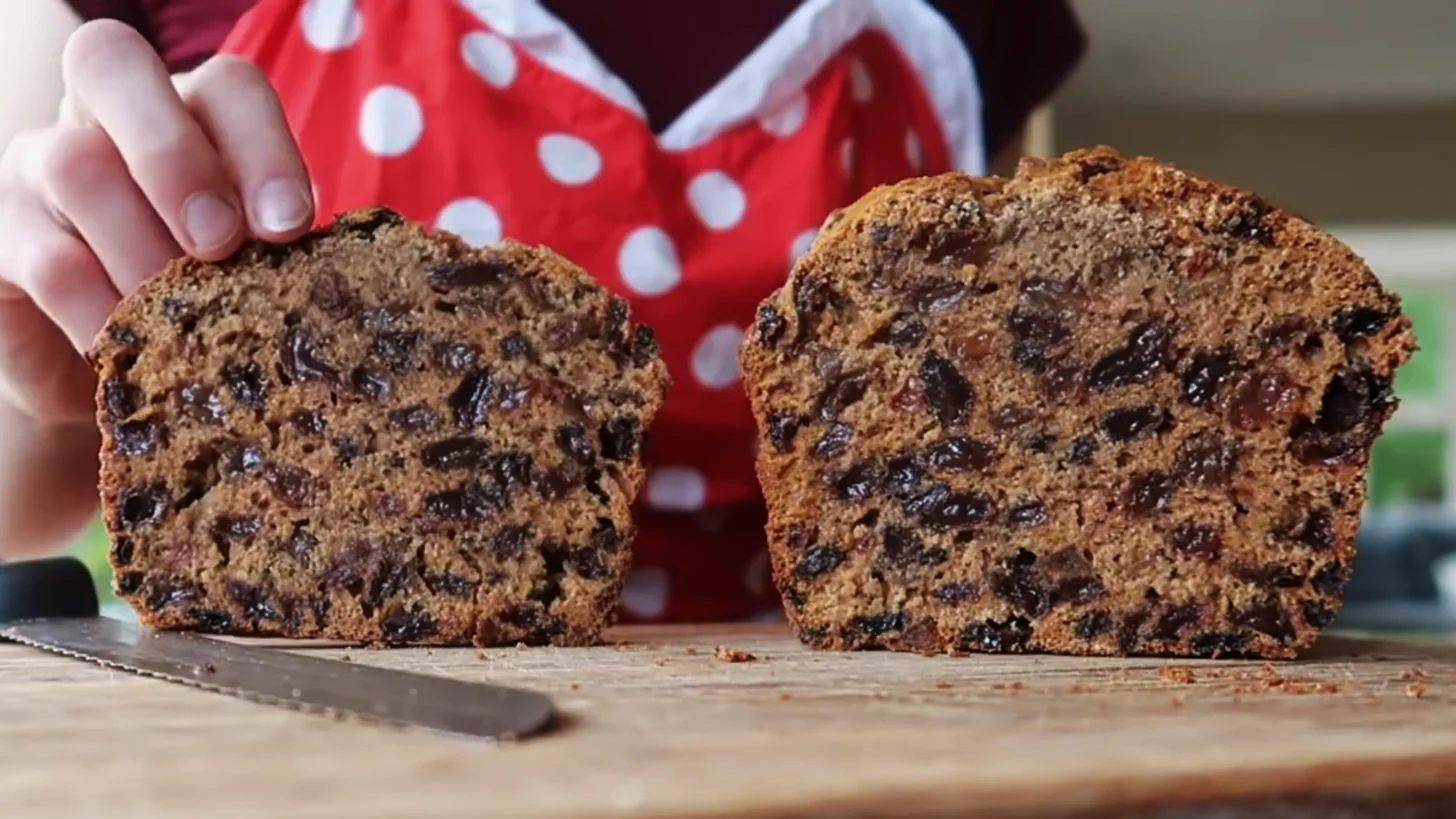
Irish Halloween celebrations also revolved around the table. Apples and nuts supplied both food and games. Barmbrack, or báirín breac, carried small objects whose discovery was interpreted as a prediction. A ring promised marriage, while a coin suggested wealth and a rag poverty. Families treated the objects as signs of what the coming year might bring.
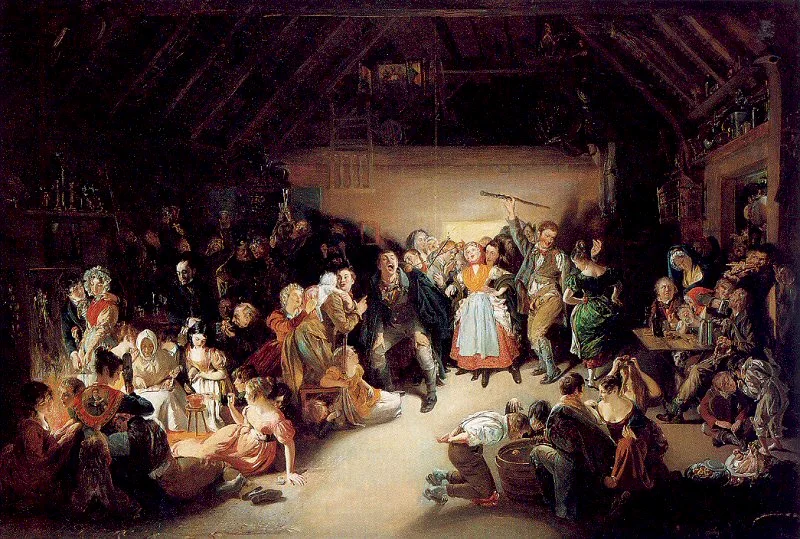
Apple games and marriage divination also appear in Daniel Maclise’s painting Snap-Apple Night. Painted in 1833, it was inspired by a Halloween gathering he attended in Blarney the previous year. The crowded interior shows people dancing and playing games. Its catalogue verse describes nuts used to test love and a participant missing the turning apple.
The painting captures a nineteenth-century Irish celebration. Adults as well as children fill the room. Halloween provided an opportunity for courtship, jokes and speculation about the future. The National Museum’s description of food and fortune-telling places these customs alongside the more familiar masks and lanterns.
Why did Irish people carve turnips?
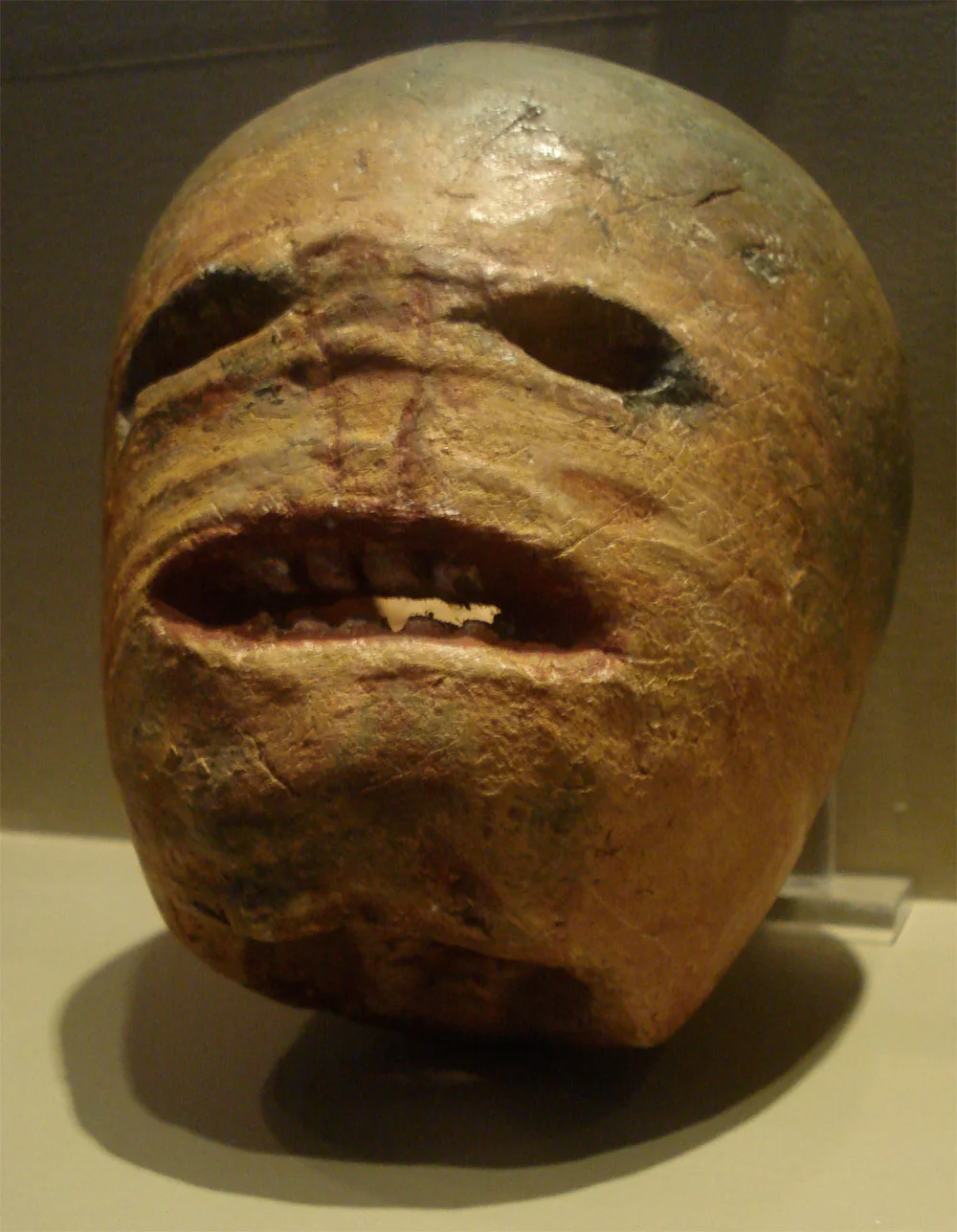
Before pumpkins became Halloween’s best-known lanterns, Irish people hollowed out turnips, cut faces into them and placed candles inside. The distorted features could frighten someone approaching a window or meeting a lantern carried in the dark.
One surviving museum object connects this practice to a particular place. In 1943, teacher Rois Ní Braonáin sent the National Museum of Ireland a turnip lantern from near Fintown, County Donegal. She described it as the type made locally around 1900. Museum artist Eileen Barnes created and painted the plaster model now known as the Ghost turnip.
The museum links the name jack-o’-lantern with the folktale of Jack, barred from both heaven and hell and condemned to wander with a light. That is a story explaining the lantern, rather than a dated account of its invention.
How did Irish Halloween customs reach America?
Irish emigrants brought familiar celebrations into new communities in the nineteenth century. The mass movement of people during the Great Famine formed part of that wider history of migration. Scottish and English customs also contributed to Halloween in North America.
American newspapers show the celebration developing unevenly. A National Endowment for the Humanities survey of historic newspapers finds both mockery of supposedly outdated superstitions and enthusiasm for the games. In 1866, a Philadelphia paper described Halloween mischief involving noisy visits to doors. A Baton Rouge report the following year described games with nuts and apples.
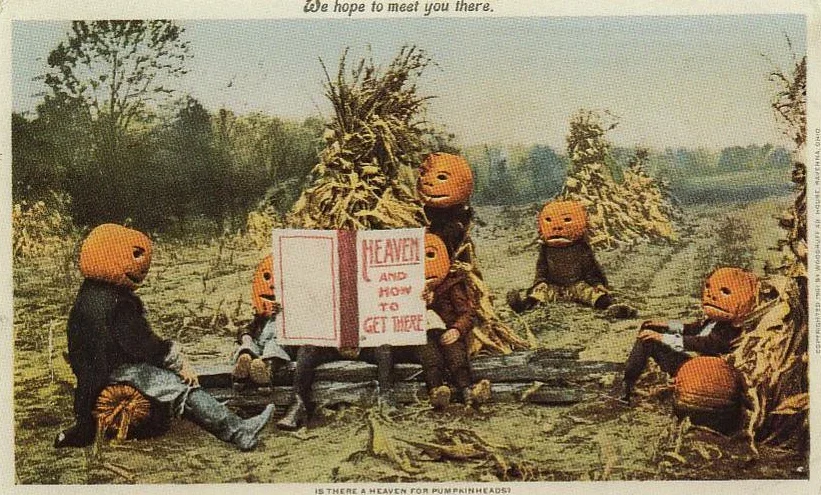
By the early twentieth century, commercial images and party supplies helped spread a recognisable Halloween style. The 1901 Ohio postcard reproduced here uses pumpkin-headed figures for a comic scene. Its joke depends on viewers recognising the pumpkin faces.
Hagley Museum and Library preserves Halloween party books, advertising and postcards. Dennison’s Bogie Books, issued from 1909 through the 1930s, offered menus, games and decorations. Hosts could assemble a themed party from printed instructions and bought materials. Halloween was becoming an occasion that businesses could package and sell.
When did trick-or-treating become familiar?
Going from house to house in disguise has older precedents, but the modern American ritual of children demanding treats developed much later. Similarities between customs do not establish an uninterrupted line from an ancient Samhain gathering to a twentieth-century doorstep.
In her study Gangsters, Pranksters, and the Invention of Trick-or-Treating, 1930–1960, Samira Kawash examines newspaper accounts of the emerging practice. She challenges the familiar explanation that adults simply invented it to contain vandalism. Children helped shape the activity themselves, drawing on existing customs of costumes, pranks and giving treats.
This helps explain why modern Halloween feels both old and new. Disguise and visiting already had long histories. The particular combination of an expected doorstep greeting, neighbourhood rounds and treats developed through children’s play and negotiations with adults. Children helped turn those rounds into a familiar neighbourhood event.
What remains of Irish Halloween?
The pumpkin is now the most recognisable lantern, but the Irish turnip gives that familiar object a different ancestry. Barmbrack, apple games and stories of returning spirits preserve other strands of the celebration.
Irish Halloween has never depended on every household doing exactly the same thing. The family feast, the frightening mask and the marriage game served different purposes. Their survival involved adaptation: different vegetables, new costumes and changing neighbourhoods.
Ireland’s contribution is visible in those specific customs and in the emigrants who carried them abroad. Halloween’s later American development expanded their reach and changed their form. The lantern in a modern window belongs to that long history of people remaking a seasonal celebration for the places where they live.
Frequently asked questions
Did Halloween originate in Ireland?
Ireland supplied major roots through Samhain and customs such as turnip lanterns, disguises and seasonal games. The holiday also developed through Christian observances, traditions elsewhere in Europe and later changes in North America.
Are Samhain and Halloween the same thing?
Samhain marked the beginning of winter on 1 November, with celebrations the evening before. Halloween developed through that seasonal tradition, Christian observances and later customs. Modern Halloween is not an unchanged ancient festival.
Why were turnips used before pumpkins?
Irish people hollowed turnips and carved faces into them to hold a candle and frighten people. Pumpkin lanterns became an American development of the practice.
What did the ring in barmbrack mean?
Finding the ring was traditionally interpreted as a prediction that the person would be next to marry. Other objects could represent wealth or poverty. These were fortune-telling customs.
Is modern trick-or-treating an ancient Irish custom?
It has older parallels in disguised visiting and giving food, but its familiar American form developed in the twentieth century. Historians caution against treating these similarities as proof of an unbroken ancient ritual.
Sources & further reading
- Irish sagas recorded between the ninth and twelfth centuries ↗
- Library of Congress’s account of Halloween ↗
- National Museum of Ireland’s account of Samhain customs ↗
- National Museum’s description of food and fortune-telling ↗
- Ghost turnip ↗
- National Endowment for the Humanities survey of historic newspapers ↗
- Halloween party books, advertising and postcards ↗
- *Gangsters, Pranksters, and the Invention of Trick-or-Treating, 1930–1960* ↗
Image credits
- Daniel Maclise’s painting of an Irish Halloween gathering
Daniel Maclise / Wikimedia Commons · Public domain
Converted to WebP without cropping or upscaling. Adaptations retain the stated licence.
- Wood and branches stacked for a bonfire in County Cavan
EWilson (Volunteer) / Wikimedia Commons · CC BY-SA 4.0
Converted to WebP without cropping or upscaling. Adaptations retain the stated licence.
- A cut barmbrack showing its dried-fruit filling
Sinead Davies / Wikimedia Commons · CC BY 4.0
Converted to WebP without cropping or upscaling. Adaptations retain the stated licence.
- Scary face on a model of a traditional Irish turnip lantern
Rannpháirtí anaithnid at English Wikipedia / Wikimedia Commons · CC BY-SA 3.0
Converted to WebP without cropping or upscaling. Adaptations retain the stated licence.
- Pumpkin-headed figures on a humorous American Halloween postcard
Woodruff House / Wikimedia Commons · Public domain
Converted to WebP without cropping or upscaling. Adaptations retain the stated licence.


Something we should correct? Send a correction.
Keep reading
More stories
World history · 8 min read
How the British Empire Rose and Fell
How Britain built its empire through conquest, trade and slavery, and how resistance, world wars and independence movements ended colonial rule.
Australian history · 7 min read
British Invasion of Australia: Land and Aboriginal Resistance
How Britain’s invasion of Australia took Aboriginal land, from Sydney Cove and Pemulwuy to Tasmania, Myall Creek, the Stolen Generations and Mabo.
Irish history · 7 min read
The Guildford Four: False Confessions and Wrongful Convictions
How police evidence put the Guildford Four in prison, why their convictions collapsed and what happened to Giuseppe Conlon and the Maguire Seven.